
Vietnam Company Registration vs Representative Office: What Foreign SMEs Should Choose in 2026
16/02/2026
Vietnam Company Registration vs Representative Office: What Foreign SMEs Should Choose in 2026
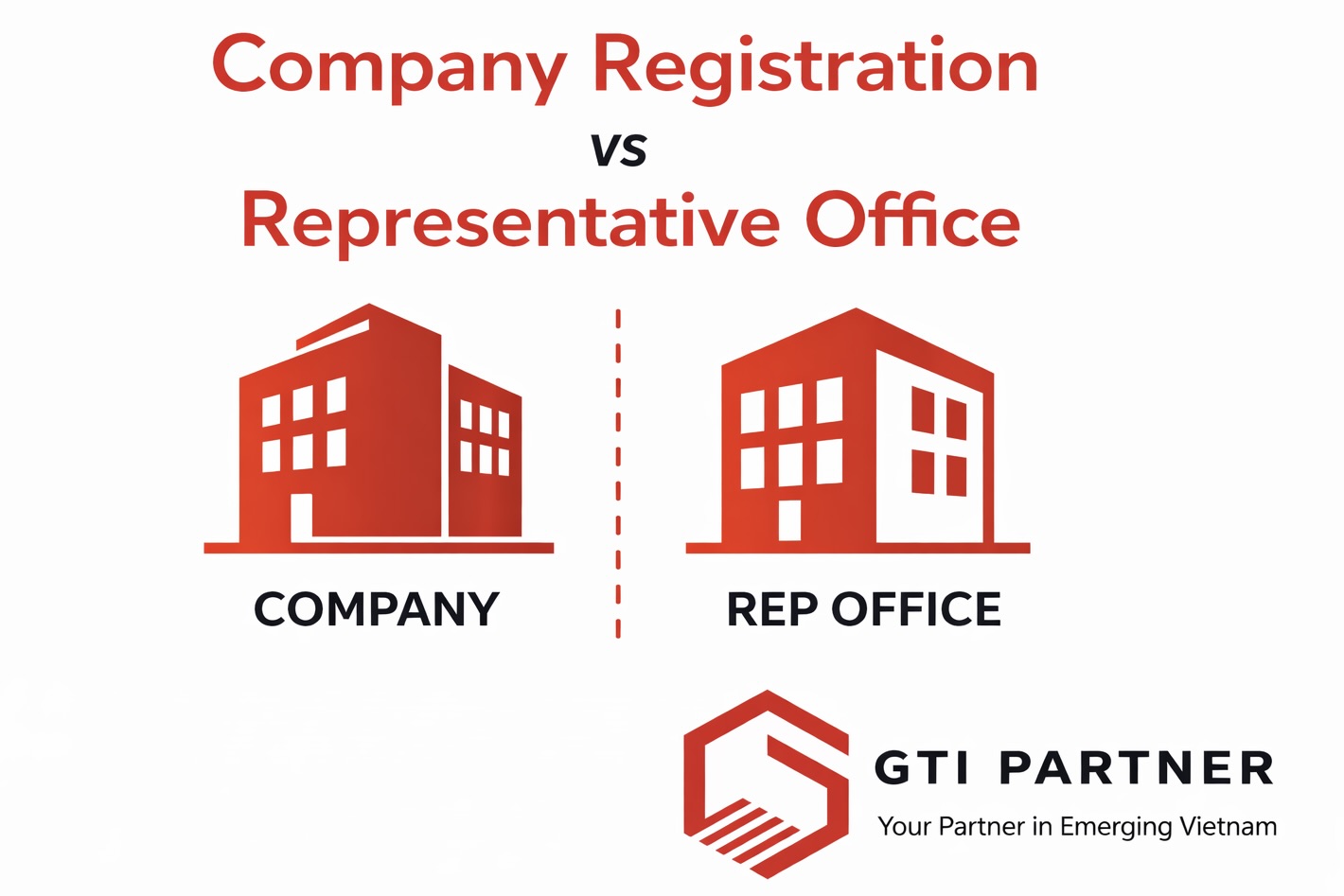
When entering a new market, choosing the right structure is critical. The decision between a representative office Vietnam vs company setup depends on your business goals, operational needs, and long-term strategy. For a detailed guide, see how to set up a representative office in Vietnam.
While a representative office in Vietnam is suitable for market research and relationship building, a company structure allows full commercial activities, including revenue generation. Understanding the differences helps foreign businesses design and execute the right Vietnam market entry strategy.
| Criteria | Representative Office Vietnam | Company Setup Vietnam |
|---|---|---|
| Legal Status | Dependent unit | Separate legal entity |
| Revenue | Not allowed | Allowed |
| Contracts | Cannot sign commercial contracts | Can sign commercial contracts |
| Setup Cost | Low | Higher |
| Purpose | Market research & validation | Full commercial operations |
What Is a Company Registration in Vietnam?
Company registration means establishing a legal business entity that can operate commercially in Vietnam. These structures are governed under Vietnam’s investment and commercial regulations.
Once registered, a company can:
- Sign contracts and issue invoices
- Hire employees directly
- Generate revenue locally
- Import or export products (depending on licensing)
- Open operational bank accounts
For many foreign SMEs, this is the preferred option when they plan to actively sell, operate, or scale in the market. In practical terms, company registration is for businesses ready to move beyond market exploration and begin real operations.
You can explore the full process in our guide to company setup in Vietnam.
What Is a Representative Office?
A representative office is a lighter structure designed mainly for market presence and coordination.
A representative office can:
- Conduct market research
- Build relationships with partners or clients
- Support communication between headquarters and local stakeholders
- Promote the parent company’s brand
However, it cannot:
- Generate revenue directly
- Issue invoices
- Conduct commercial trading activities
Think of it as a strategic outpost rather than a full business entity. It is often used by companies that are still testing the market or preparing for future expansion.
Representative Office Vietnam vs Company: Key Differences
Here are the most important practical differences to consider when defining your entry track:
When to Choose a Company in Vietnam
- Full operational and revenue-generating entity
- Higher setup complexity and compliance requirements
- Suitable for long-term market presence
- Allows hiring, contracting, and local business activities
When to Choose a Representative Office Vietnam
- Limited operational scope
- Faster and simpler setup
- Lower maintenance obligations
- Best for exploration, relationship building, and early-stage validation
For SMEs, the core question is simple: Do you need to operate commercially now, or are you still learning the market?
Which Option Fits Different Growth Stages?
Stage 1 – Exploring the Market
If your business is validating demand or building initial partnerships, a representative office can provide a low-risk way to establish presence.
Best for:
- Early research
- Partner scouting
- Brand visibility
Stage 2 – Preparing for Launch
If you already have clear commercial intent and a go-to-market plan, company registration is usually the better choice.
Best for:
- Product launch
- Sales operations
- Hiring local staff
Stage 3 – Scaling Operations
At this stage, a fully registered company becomes essential for flexibility and growth.
Many SMEs that start with representative offices eventually transition to full company registration once revenue opportunities grow.
Common Mistakes Foreign Investors Make
Foreign SMEs often encounter avoidable problems during setup.
Typical mistakes include:
- Choosing a representative office when operational activity is already planned
- Underestimating licensing and compliance requirements
- Delaying full setup and losing momentum in the market
- Selecting a structure based only on initial cost rather than long-term strategy
Another common issue is focusing only on registration while ignoring execution planning. Structure and operational readiness must align from the beginning.
How GTI Partner Supports Setup and Execution
GTI Partner supports foreign SMEs by combining setup strategy with practical implementation support.
Rather than treating registration as a paperwork process, the focus is on aligning structure with growth objectives, operational needs, and long-term execution in Vietnam.
Our support includes:
- Company setup and structure planning
- Regulatory coordination
- Market entry execution guidance
- Practical local implementation support
If you are evaluating entry options, you may also explore our related services:
Choosing between a representative office Vietnam vs company depends on your business objectives and timeline. Companies planning long-term operations and revenue generation should consider full company setup, while those testing the market may start with a representative office. Choosing the right setup structure early helps reduce risk and accelerates your ability to operate effectively once in market.
Explore Our Vietnam Market Entry Packages
Frequently Asked Questions
What is the difference between company registration and a representative office in Vietnam?
A registered company in Vietnam can conduct commercial activities, sign contracts, issue invoices, and generate revenue locally. A representative office is limited to market research, liaison activities, and business development support and cannot generate income.
Can a representative office in Vietnam hire staff?
Yes. A representative office can hire local employees and foreign staff for coordination and market development activities, but it cannot conduct direct sales or revenue-generating operations.
Is company registration required to sell products or services in Vietnam?
Yes. Foreign businesses that plan to sell products, sign local contracts, or operate commercially generally need a fully registered company rather than a representative office.
Which option is better for foreign SMEs entering Vietnam for the first time?
A representative office is often suitable for early market exploration, while company registration is better for SMEs ready to launch operations and scale in Vietnam.
How long does company setup in Vietnam usually take?
Depending on industry and licensing requirements, company registration typically takes around 4–8 weeks when documentation and planning are prepared correctly.
Related posts

Vietnam IT Outsourcing: How AI is Transforming the Industry
Vietnam IT Outsourcing: How AI is Transforming the Industry The landscape of Vietnam IT outsourcing

Vietnam Industrial Parks 2026: The Strategic FDI Playbook
Insights from the IMC 2026 keynote panel on navigating site selection, technical commissioning, and ESG
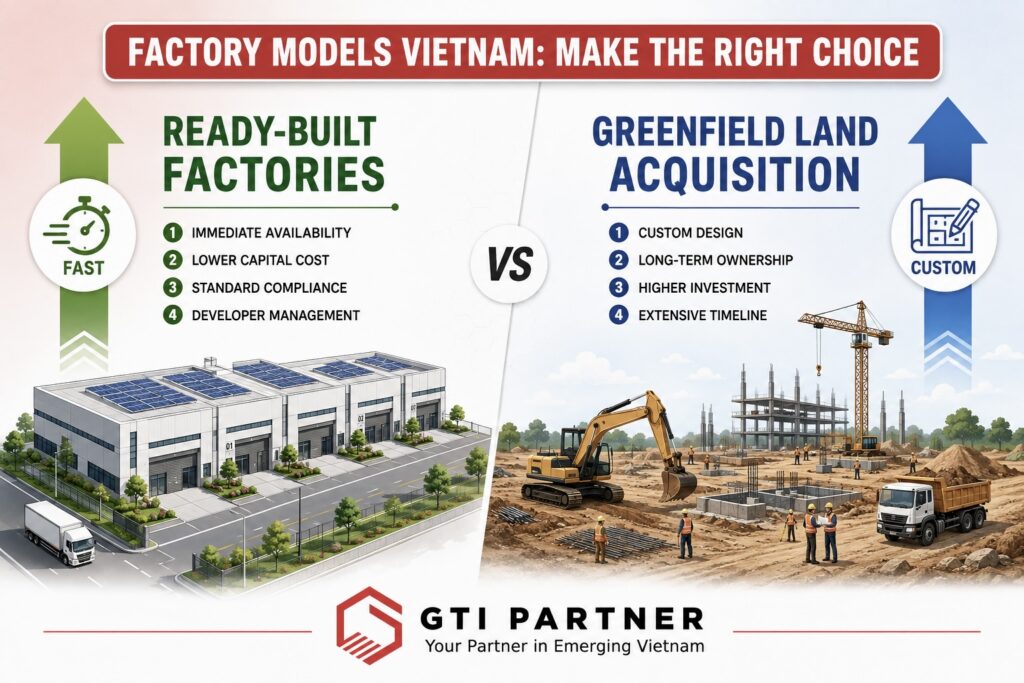
Ready-built factories vs greenfield land acquisition: Choosing the right model in Vietnam
Ready-built factories vs greenfield land acquisition: Choosing the right model in Vietnam When expanding manufacturing

Vietnam’s next generation of industrial parks: What foreign investors need beyond land and infrastructure
Vietnam’s next generation of industrial parks: What foreign investors need beyond land and infrastructure When
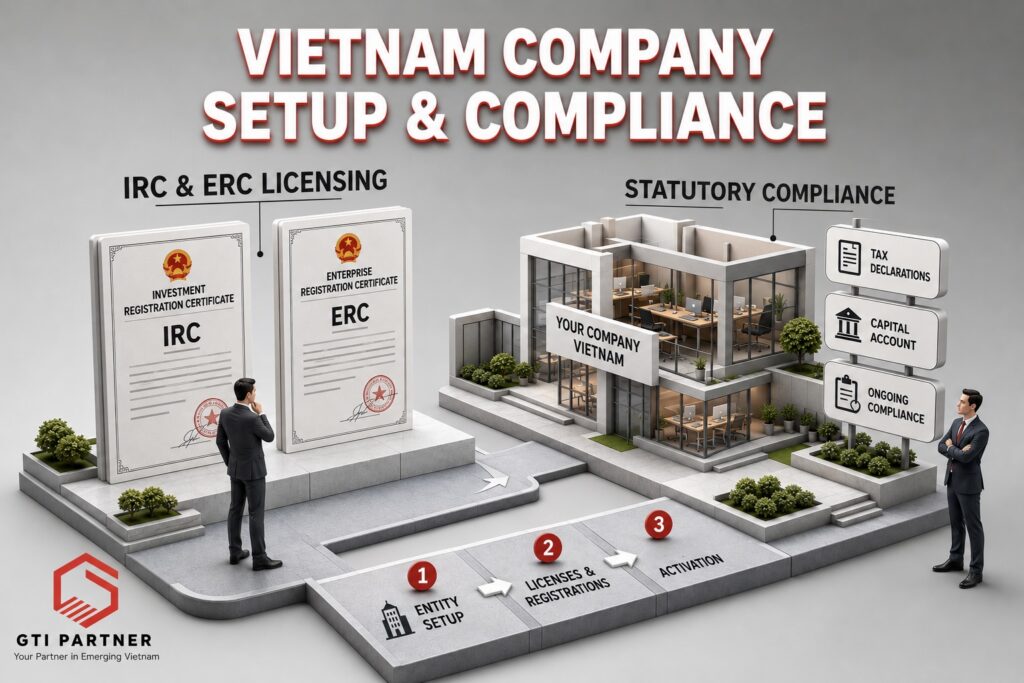
Company registration in Vietnam under the 2026 investment law
Company registration in vietnam under the 2026 investment law Starting a business in Southeast Asia