Vietnam Company Setup requires navigating complex licensing procedures, foreign ownership limits, and statutory compliance frameworks. Without reliable local execution support, foreign investors frequently face costly delays during formal corporate incorporation and market entry.
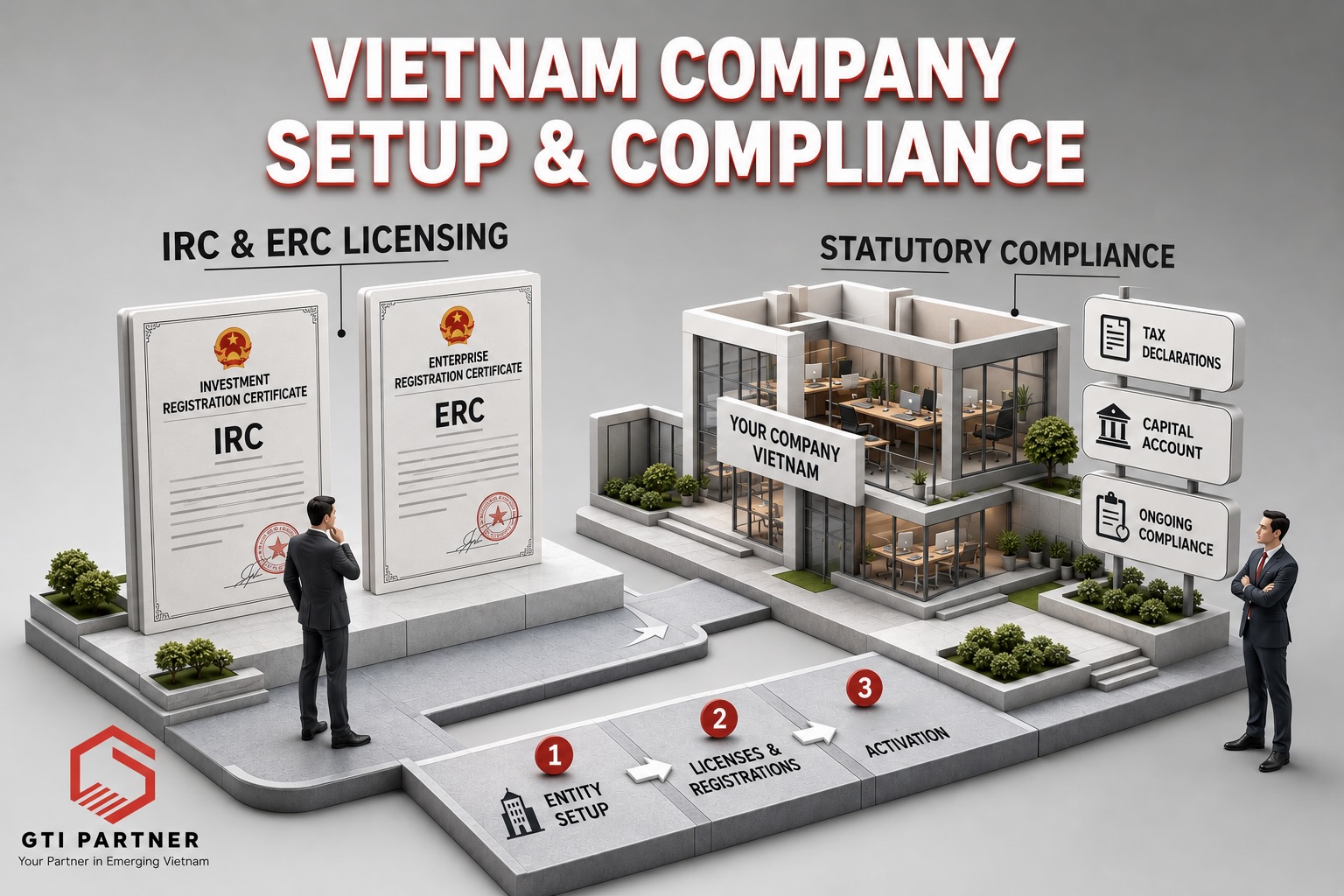
Core Requirements for Vietnam Company Setup
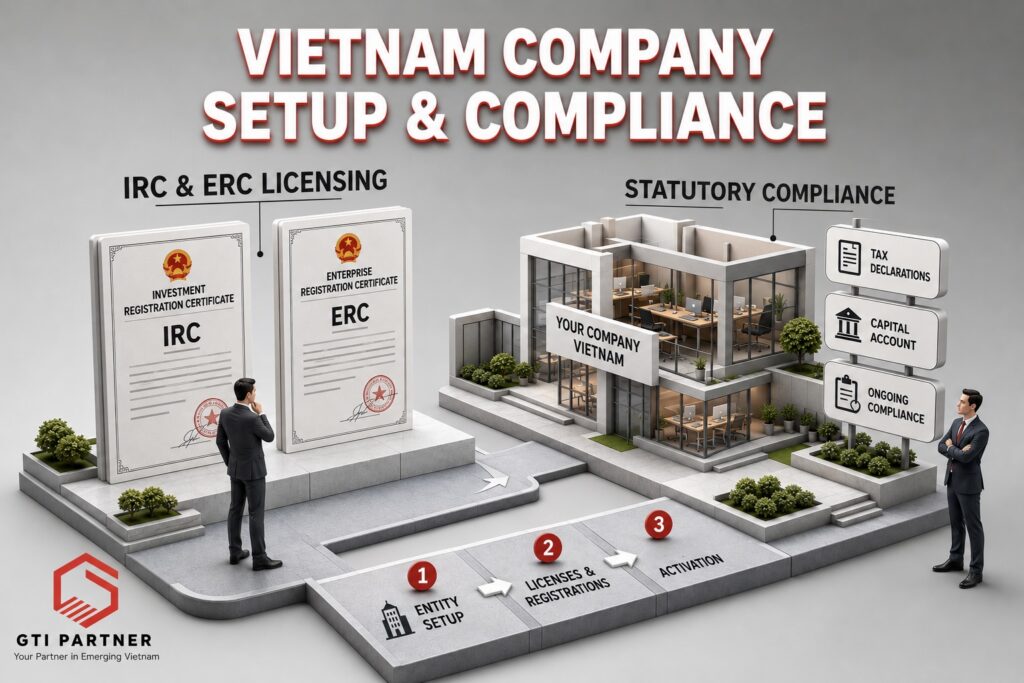
Establishing a legal entity in Vietnam involves securing two primary licenses before operational commencement. Navigating these statutory requirements demands strict adherence to local corporate guidelines regulated through the Ministry of Planning and Investment under the Investment Law and Enterprise Law.
Foreign-owned enterprises must prepare thorough financial documentation, corporate charters, and verified proof of commercial location to satisfy local licensing authorities seamlessly.
Essential Licensing Steps for Vietnam Company Setup and Compliance
To transition from market entry strategy to formal operations, your setup roadmap must follow these legal milestones:
- Investment Registration Certificate (IRC): The foundational license issued by the Department of Planning and Investment (DPI) approving your foreign direct investment project.
- Enterprise Registration Certificate (ERC): The official incorporation document that acts as your business birth certificate, establishing your tax code and corporate identity.
- Charter Capital Validation: Meeting statutory timelines for capital injection and bank account setup to satisfy foreign exchange regulations.
- Post-Licensing Compliance: Registering digital signatures, initial tax declarations, labor union contributions, and local sector-specific permits.
Managing Ongoing Compliance After Setup
Initial incorporation is only the first phase. Maintaining compliance requires ongoing management of statutory audits, annual tax filings, and mandatory updates to business registration certificates whenever operational scopes change.
Partnering with an on-the-ground representative ensures your enterprise avoids regulatory penalties and maintains stable, scalable operations across Vietnamese jurisdictions.
Ready to Launch Your Operations in Vietnam?
Let GTI Partner guide your corporate setup and statutory compliance from start to finish.