
Vietnam Market Entry Strategy for Foreign Companies (2026)
18/03/2026
Vietnam Market Entry Strategy for Foreign Companies
A clear Vietnam market entry strategy is critical for foreign companies seeking sustainable and compliant expansion. Choosing the right structure, understanding local regulations, and aligning execution with market conditions can significantly impact long-term success. Choosing the wrong entry model can lead to delays, compliance issues, and unnecessary costs.
This guide outlines practical entry options, key risks, and how international SMEs can approach Vietnam with a structured and effective strategy. It is designed to help foreign companies choose the right structure and execute effectively in Vietnam.
Why Vietnam Remains a Strategic Market
Vietnam continues to attract foreign investment due to its stable economic growth, competitive labor costs, and strong integration into global trade agreements. For SMEs, it offers both manufacturing opportunities and a fast-growing consumer market.
However, success depends not just on entering the market, but on choosing the right entry model and execution approach.
Vietnam Market Entry Options
Foreign companies typically choose between several entry structures depending on their objectives and level of commitment.
- Representative Office
A representative office in Vietnam is suitable for market research, relationship building, and early-stage presence without revenue generation. - Company Setup
A full company setup in Vietnam allows foreign businesses to generate revenue, sign contracts, and operate commercially in the local market. - Choosing the Right Structure
To understand the differences in detail, see our comparison of representative office Vietnam vs company.
Quick Comparison Table
| Feature | Representative Office (RO) | LLC (WFOE) | Joint Venture (JV) |
|---|---|---|---|
| CIT Rate | Exempt (Non-commercial) | 15% – 20% | 20% |
| Invoicing | No | Yes | Yes |
| Setup Time | 2-4 Weeks | 4-8 Weeks | 8+ Weeks |
Key Risks to Consider
While Vietnam offers strong opportunities, foreign companies should be aware of several risks:
- Regulatory complexity and licensing delays
- Misaligned local partnerships
- Underestimating market differences
- Talent and operational challenges
A structured approach helps mitigate these risks early. Foreign investors should also review official regulations such as Vietnam’s foreign investment framework and licensing requirements published by the Ministry of Planning and Investment. Additional guidance on doing business in Vietnam can be found via international resources such as the World Bank.
Recommended Market Entry Approach
A successful Vietnam market entry strategy typically follows a phased approach:
- Validate market demand and competition
- Select the appropriate entry structure
- Complete legal setup and compliance
- Execute initial market entry and partnerships
- Scale operations based on performance
Companies that follow this structured model reduce risk and improve execution speed.
How GTI Partner Supports Your Vietnam Market Entry Strategy
GTI Partner supports foreign SMEs across the full market entry lifecycle, from strategy and feasibility to company setup and market execution. Whether you are exploring the market or ready to establish operations, having the right local partner ensures faster and more reliable results.
Vietnam offers strong growth potential, but success depends on making the right decisions early. A clear Vietnam market entry strategy, combined with the right structure and local execution, is key to long-term success.
Related posts

Vietnam IT Outsourcing: How AI is Transforming the Industry
Vietnam IT Outsourcing: How AI is Transforming the Industry The landscape of Vietnam IT outsourcing

Vietnam Industrial Parks 2026: The Strategic FDI Playbook
Insights from the IMC 2026 keynote panel on navigating site selection, technical commissioning, and ESG
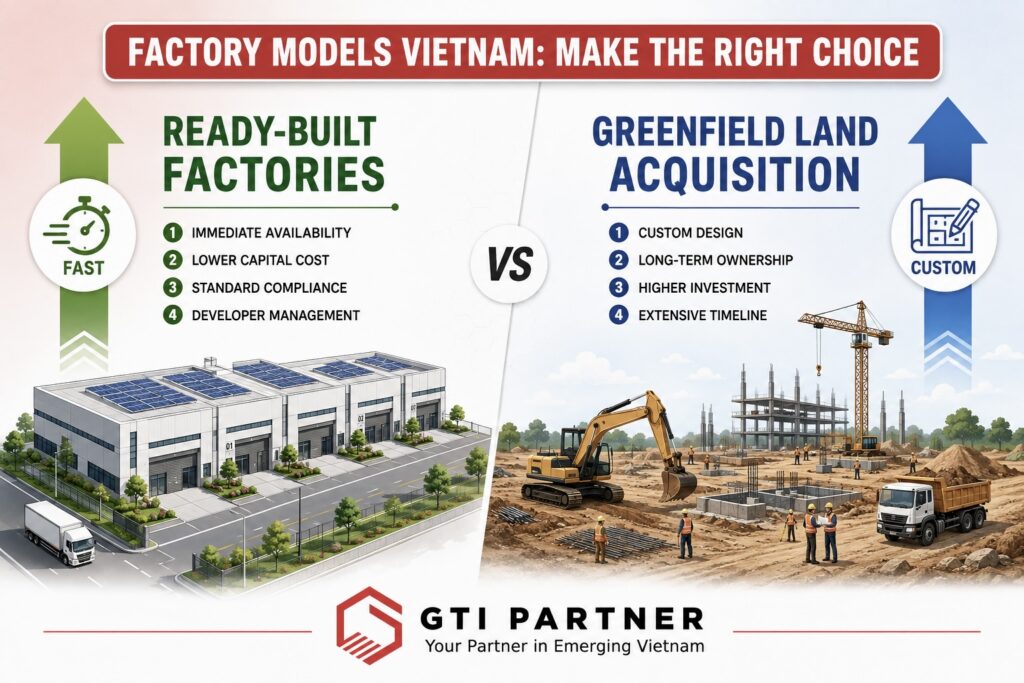
Ready-built factories vs greenfield land acquisition: Choosing the right model in Vietnam
Ready-built factories vs greenfield land acquisition: Choosing the right model in Vietnam When expanding manufacturing

Vietnam’s next generation of industrial parks: What foreign investors need beyond land and infrastructure
Vietnam’s next generation of industrial parks: What foreign investors need beyond land and infrastructure When
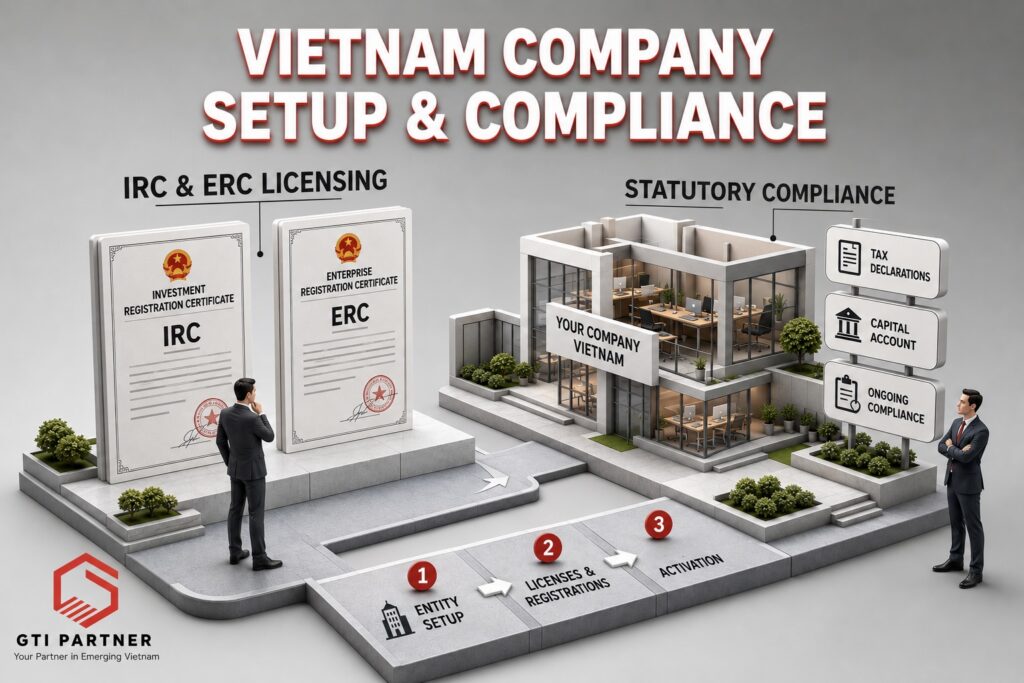
Company registration in Vietnam under the 2026 investment law
Company registration in vietnam under the 2026 investment law Starting a business in Southeast Asia