
5 Key Mistakes to Avoid When Expanding Your Business into Vietnam
03/08/2025
Vietnam Market Entry Mistakes: 5 Pitfalls SMEs Must Avoid
Expanding your business to Southeast Asia offers massive growth potential. However, failing to prepare for common vietnam market entry mistakes can stall your expansion entirely before operations even launch. Many foreign businesses overlook local market nuances, underestimate compliance structures, or rush into cross-border partnerships. This guide highlights the five critical errors you must avoid to ensure your expansion is efficient, compliant, and profitable.
Understanding Common Vietnam Market Entry Mistakes
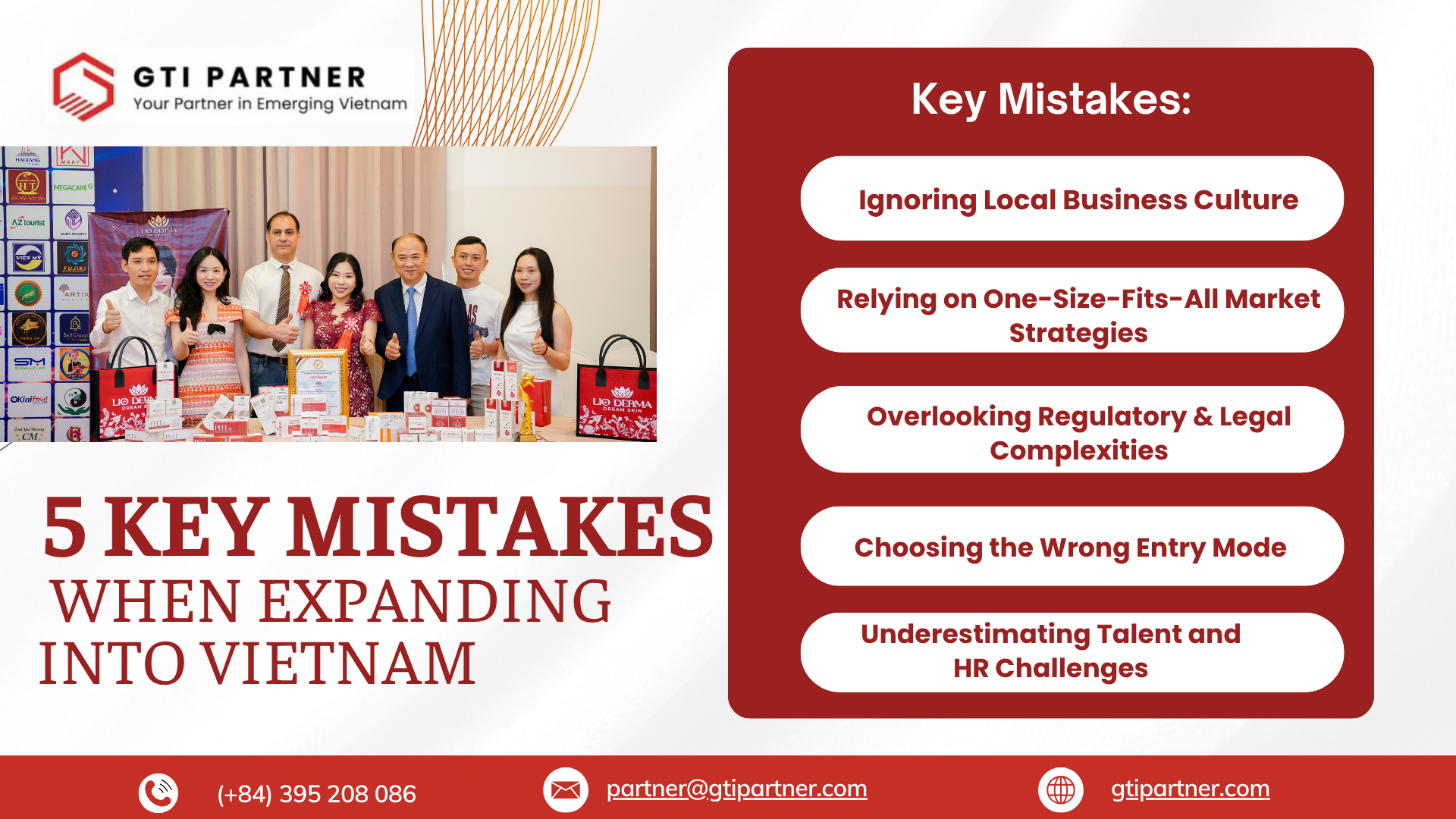
- Ignoring Local Business Culture: Understanding Vietnam’s business etiquette and relationship-driven communication style is essential. Missteps in negotiations can hurt trust. Tip: Build relationships through face-to-face interactions before signing final contracts.
- Relying on One-Size-Fits-All Strategies: Vietnam is not a copy-paste of your home market. Local consumer behavior, pricing tolerances, and competitor landscapes vary between northern and southern regions. Tip: Localize your product offerings using real, on-the-ground market research.
- Overlooking Regulatory and Legal Complexities: Foreign Direct Investment (FDI) rules, licensing processes, and corporate tax structures are strict. For official regulatory standards, refer to the Vietnam Ministry of Planning and Investment. Tip: Work with local compliance consultants to navigate approvals and tax structures from day one.
- Choosing the Wrong Entry Mode: Some SMEs rush to set up a complex legal entity without exploring alternatives. Tip: Start with a light-touch entry track, such as a representative office or a reliable local distributor, and scale gradually.
- Underestimating Talent and HR Challenges: Hiring the right personnel and managing strict local labor laws are key to sustainable growth. Tip: Partner with local HR networks or recruitment experts to manage employment contracts and payroll structures correctly from the start.
How GTI Partner Secures Your Expansion
Avoiding these systematic errors saves your business time, capital, and market reputation. GTI Partner helps foreign SMEs enter the Vietnamese market with confidence. Our execution team provides end-to-end support, from initial market research and legal setup to ongoing HR and compliance management. We bridge the gap between international corporate standards and local execution requirements.
Ready to optimize your investment? Reach out to our team today for a free entry readiness consultation.
Strategic Resources for Your Vietnam Expansion:
Related posts

Vietnam IT Outsourcing: How AI is Transforming the Industry
Vietnam IT Outsourcing: How AI is Transforming the Industry The landscape of Vietnam IT outsourcing

Vietnam Industrial Parks 2026: The Strategic FDI Playbook
Insights from the IMC 2026 keynote panel on navigating site selection, technical commissioning, and ESG
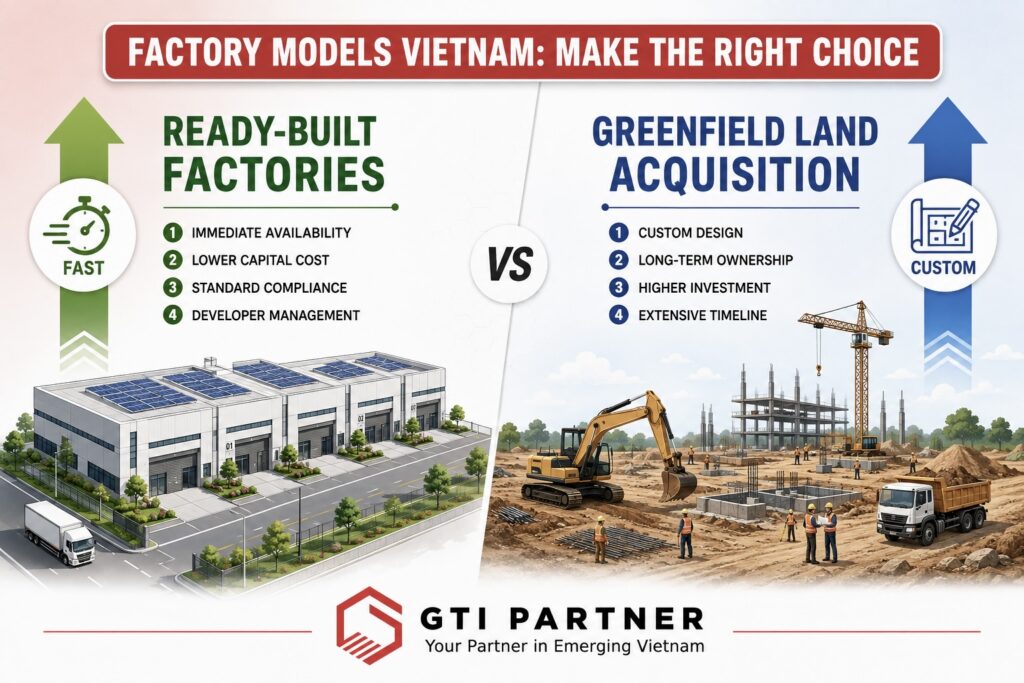
Ready-built factories vs greenfield land acquisition: Choosing the right model in Vietnam
Ready-built factories vs greenfield land acquisition: Choosing the right model in Vietnam When expanding manufacturing

Vietnam’s next generation of industrial parks: What foreign investors need beyond land and infrastructure
Vietnam’s next generation of industrial parks: What foreign investors need beyond land and infrastructure When
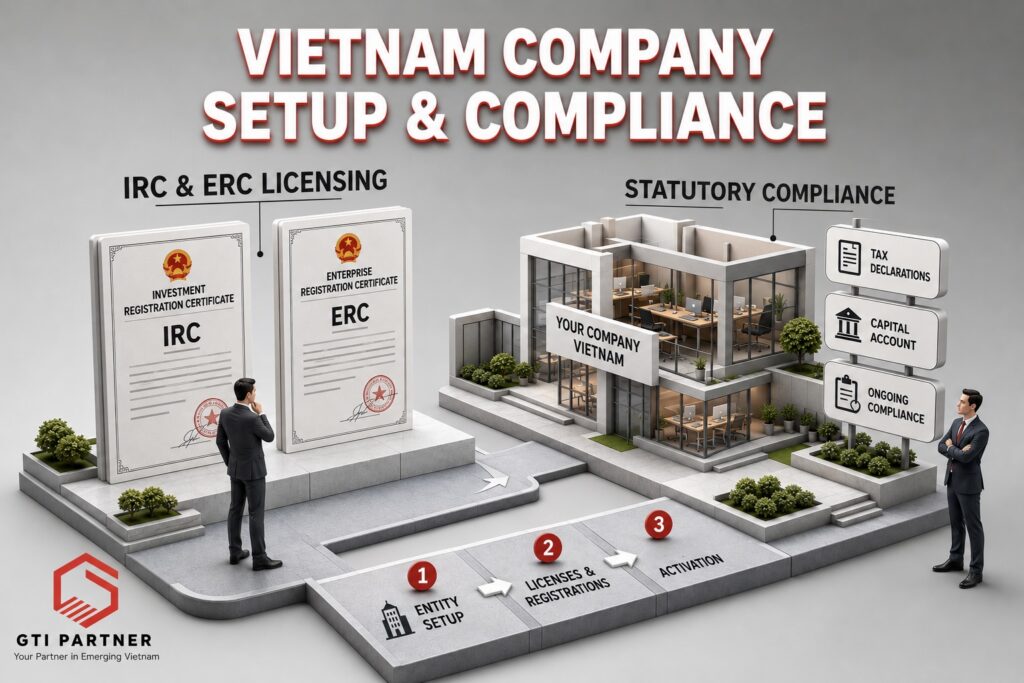
Company registration in Vietnam under the 2026 investment law
Company registration in vietnam under the 2026 investment law Starting a business in Southeast Asia