
Vietnam Industrial Labor Rates: HCMC vs. Adjacent Zones (2026 Guide)
28/05/2026
Vietnam Industrial Labor Rates: HCMC vs. Adjacent Zones (2026 Guide)
For foreign companies planning an expansion, analyzing competitive vietnam labor rates is a primary operational factor. While Ho Chi Minh City (HCMC) is the traditional economic hub, soaring operational costs are driving manufacturers to surrounding provinces.
Understanding these regional wage differences is essential for a successful vietnam market entry strategy.
The Minimum Wage Tier System and Vietnam Labor Rates
Vietnam sets minimum wages across four distinct geographic tiers. HCMC falls under Tier 1, which carries the highest statutory minimum wage. Investors can track baseline macroeconomic data via the General Statistics Office of Vietnam, though actual market rates for skilled industrial labor run higher than legal minimums.
Ho Chi Minh City (Tier 1 Hub)
- Characteristics: High density of skilled workers, top-tier infrastructure, and immediate port access.
- The Trade-off: High competition for talent causes high turnover and wage inflation.
- Average Industrial Market Rate: $450 to $650 USD per month for standard factory operators.
Adjacent Manufacturing Zones: Comparing Vietnam Labor Rates
To optimize budgets, foreign investors evaluate secondary options to balance their outlays. These surrounding areas offer direct highway connections to HCMC ports but operate at lower cost structures.
For a broader view on how these compliance shifts fit into your total entry strategy, see our recent breakdown on the 3 Hidden Vietnam Market Entry Bottlenecks.
1. Binh Duong & Dong Nai (Tier 1 and Tier 2 Pockets)
- Characteristics: Established industrial parks specializing in electronics, textiles, and automotive parts.
- Average Industrial Market Rate: $380 to $500 USD per month.
- The Benefit: You get identical supply chain access to HCMC but save 15% to 20% on baseline payroll costs.
2. Long An (Tier 2 and Tier 3 Zones)
- Characteristics: An emerging logistics and agricultural processing hub located directly south of HCMC.
- Average Industrial Market Rate: $320 to $420 USD per month.
- The Benefit: Offers the lowest labor rates within a 90-minute radius of the HCMC center.
Vietnam Labor Rates Comparison Table
| Region | Minimum Wage Tier | Average Market Industrial Wage (Monthly) | Key Industry Focus |
|---|---|---|---|
| Ho Chi Minh City | Tier 1 | $450 – $650 USD | High-Tech, Precision Engineering |
| Binh Duong | Tier 1 / 2 | $380 – $500 USD | Electronics, Machinery |
| Dong Nai | Tier 1 / 2 | $380 – $500 USD | Heavy Industry, Automotive |
| Long An | Tier 2 / 3 | $320 – $420 USD | Logistics, Light Manufacturing |
Comprehensive Guide Available
This article is part of our definitive 2026 series on Vietnam market entry.
Strategic Implications for Foreign Investors
Choosing a location based purely on the lowest wage can backfire. Lower-tier zones often lack specialized technical talent, forcing companies to pay premium rates to commute managers from HCMC.
Evaluating local labor pools, payroll insurance contributions, and regional infrastructure must be done before committing to a factory site. For a complete analysis of structural launch expenses, regulatory steps, and custom location scoping, view our comprehensive vietnam market entry packages.
Beyond workforce and labor considerations, scaling industrial operations requires alignment with wider manufacturing networks. Review the details for the International Manufacturing Congress 2026.

Related posts

Vietnam IT Outsourcing: How AI is Transforming the Industry
Vietnam IT Outsourcing: How AI is Transforming the Industry The landscape of Vietnam IT outsourcing

Vietnam Industrial Parks 2026: The Strategic FDI Playbook
Insights from the IMC 2026 keynote panel on navigating site selection, technical commissioning, and ESG
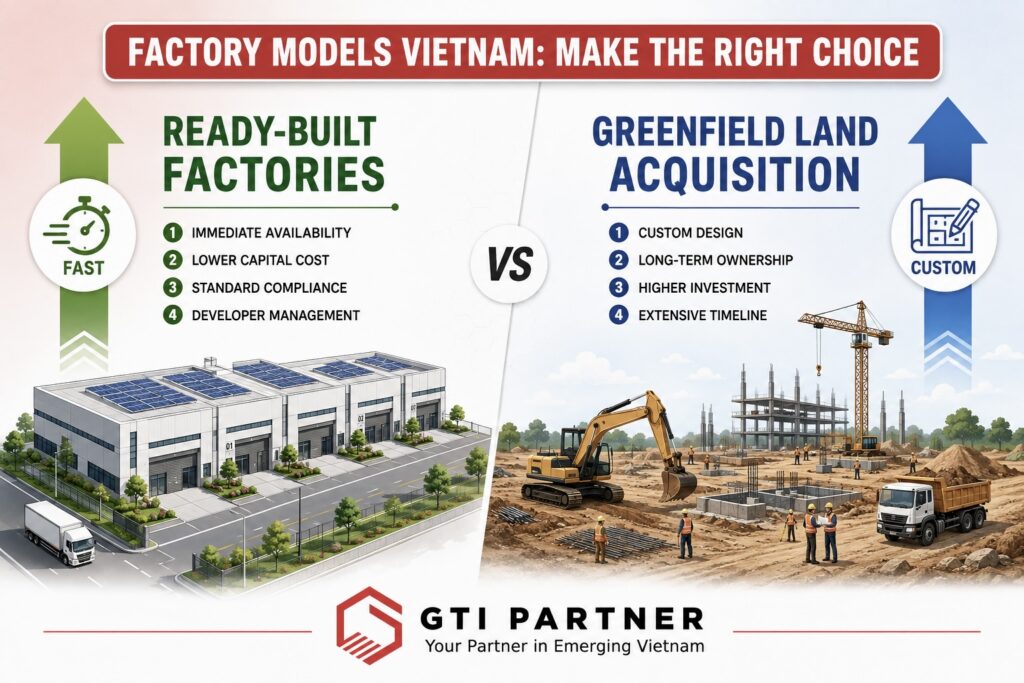
Ready-built factories vs greenfield land acquisition: Choosing the right model in Vietnam
Ready-built factories vs greenfield land acquisition: Choosing the right model in Vietnam When expanding manufacturing

Vietnam’s next generation of industrial parks: What foreign investors need beyond land and infrastructure
Vietnam’s next generation of industrial parks: What foreign investors need beyond land and infrastructure When
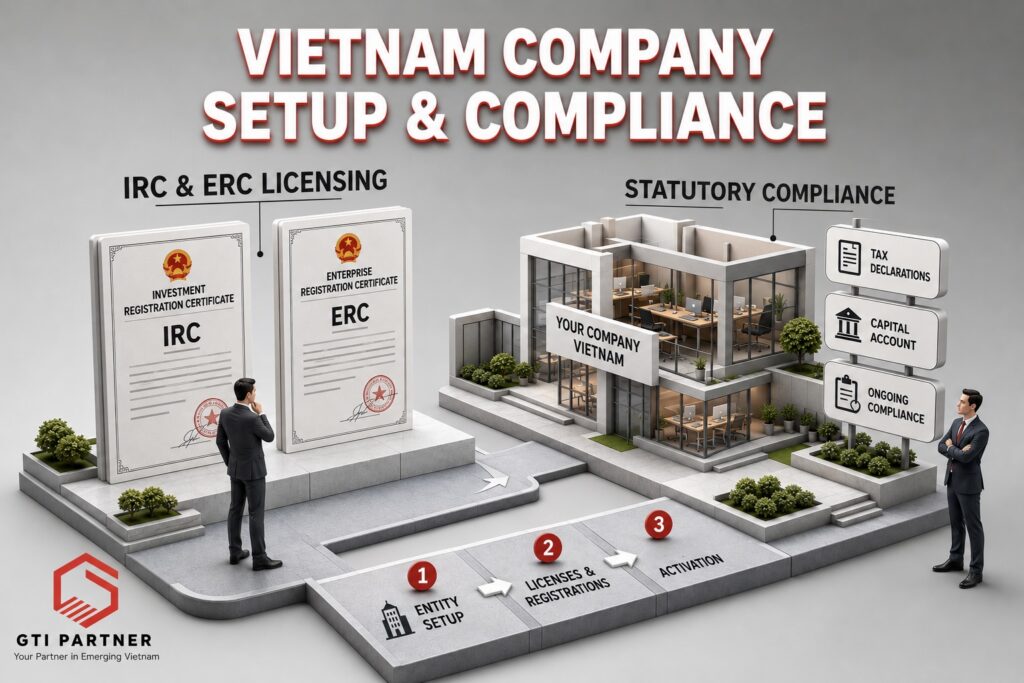
Company registration in Vietnam under the 2026 investment law
Company registration in vietnam under the 2026 investment law Starting a business in Southeast Asia