
Vietnam China Trade: 2026 Supply Chain Guide for SMEs
21/10/2025
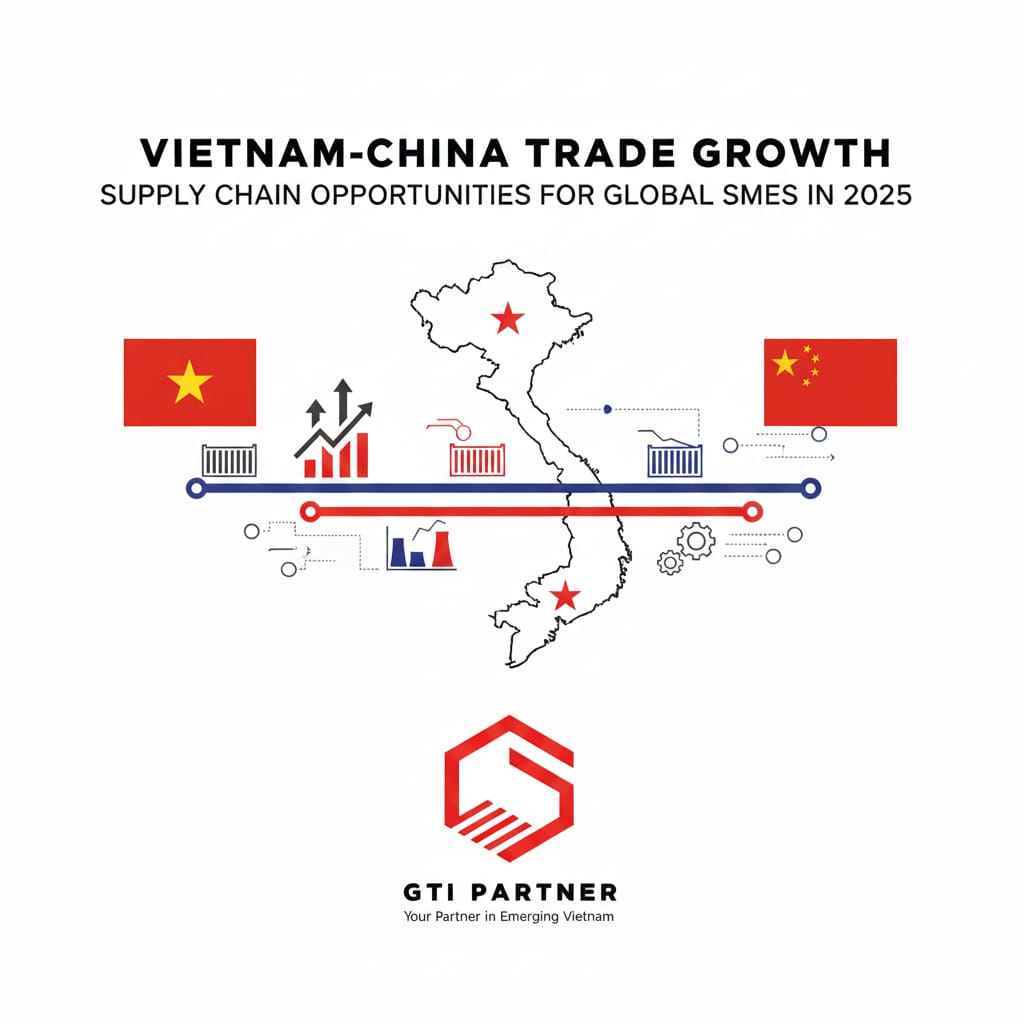
Strategic Framework for China-Vietnam Supply Chain Integration
In 2026, the economic corridor between Vietnam and China continues to deepen, marking one of the most dynamic bilateral trade relationships in Asia. As both countries move to strengthen manufacturing integration and digital trade connectivity, opportunities for foreign SMEs and investors are expanding faster than ever.
Vietnam – China: A Trade Powerhouse in Motion
Vietnam and China have maintained their positions as each other’s largest trading partners within ASEAN. According to Vietnam’s Ministry of Industry and Trade (MOIT), bilateral trade reached over USD 170 billion in 2024, representing a 6.2% year-on-year increase, driven primarily by machinery, electronics, textiles, and agricultural products.
- Vietnam’s exports to China exceeded USD 60 billion, led by agricultural goods, electronics components, and rubber.
- Imports from China topped USD 110 billion, with machinery, materials, and chemical inputs fueling Vietnam’s manufacturing base.
This steady growth underscores the strategic interdependence between both economies — where Vietnam’s industrial zones provide the ideal base for regional production, while China supplies critical upstream components and technology.
Shifting Supply Chains – and Vietnam’s Advantage
As global supply chains diversify due to market disruptions and geopolitical shifts, Vietnam has positioned itself as a key manufacturing alternative to China. Multinational firms are increasingly adopting the “China + 1” strategy — maintaining Chinese production but expanding into Vietnam for resilience, lower labor costs, and favorable trade access.
Recent data shows:
- FDI inflows from China into Vietnam surged 70% in 2024, ranking China as the 2nd-largest foreign investor in the country.
- Industrial hubs like Bac Ninh, Hai Phong, and Binh Duong now host hundreds of Chinese-backed suppliers producing electronics, batteries, and textiles for global markets.
Vietnam’s participation in multiple FTAs — including RCEP and the Vietnam–UAE CEPA — further enhances its export competitiveness beyond China’s borders.
Where the Opportunities Lie for Global SMEs
For international SMEs and investors, the evolving Vietnam–China trade dynamic opens three key opportunity streams:
- Manufacturing Partnerships: SMEs can collaborate with Chinese-invested factories in Vietnam for OEM/ODM production — benefiting from advanced technology and Vietnam’s cost-efficient labor.
- Cross-Border E-Commerce and Logistics: The China–Vietnam railway and land-port systems (e.g., Lang Son, Lao Cai) now enable faster logistics flow for goods heading into ASEAN and southern China markets.
- Green and Digital Supply Chains: With both governments prioritizing sustainability and smart manufacturing, new incentives are emerging for renewable energy, EV components, and clean-tech projects within industrial parks.
SMEs looking to mitigate supply chain disruption can review our structured vietnam market entry packages to establish local compliance frameworks quickly.
Trade Data Snapshot (2024 Highlights)
| Sector | Vietnam’s Exports to China | China’s Exports to Vietnam |
|---|---|---|
| Electronics & Machinery | $22B | $35B |
| Agricultural Products | $14B | $4B |
| Textiles & Footwear | $8B | $9B |
| Chemicals & Materials | $3B | $16B |
| Total (All Sectors) | $60B+ | $110B+ |
Source: General Department of Vietnam Customs, MOIT
Action Plan for SMEs: How to Leverage the Trend
- Assess your supply-chain exposure: Identify where Vietnam can complement your sourcing or assembly operations.
- Explore joint ventures: Many mid-tier Chinese suppliers in Vietnam seek financing or market partners abroad.
- Utilize trade facilitation programs: Vietnam’s industrial clusters offer tax incentives and fast-track licensing for export-linked projects.
- Work with professional market entry advisors: Compliance, licensing, and local partnerships remain critical to long-term success.
Ready to position your business in Vietnam’s supply chain?
Explore our specialized vietnam market entry services for manufacturing, logistics, or green-tech partnerships between Vietnam and China.
Related posts

Vietnam IT Outsourcing: How AI is Transforming the Industry
Vietnam IT Outsourcing: How AI is Transforming the Industry The landscape of Vietnam IT outsourcing

Vietnam Industrial Parks 2026: The Strategic FDI Playbook
Insights from the IMC 2026 keynote panel on navigating site selection, technical commissioning, and ESG
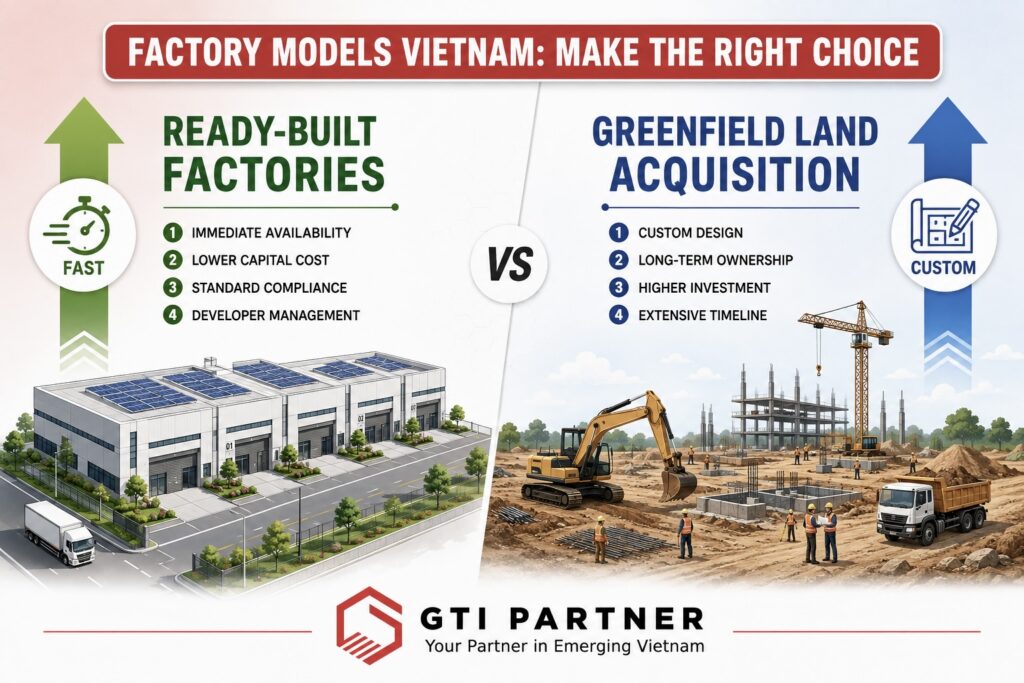
Ready-built factories vs greenfield land acquisition: Choosing the right model in Vietnam
Ready-built factories vs greenfield land acquisition: Choosing the right model in Vietnam When expanding manufacturing
Vietnam’s next generation of industrial parks: What foreign investors need beyond land and infrastructure
Vietnam’s next generation of industrial parks: What foreign investors need beyond land and infrastructure When
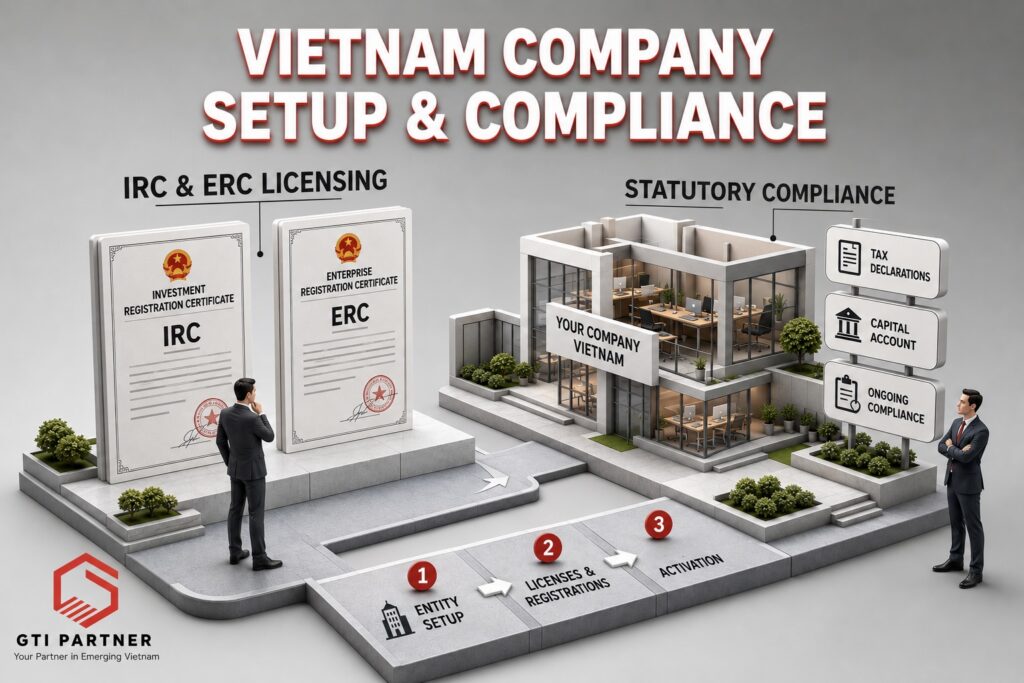
Company registration in Vietnam under the 2026 investment law
Executing a compliant company registration in Vietnam requires obtaining your official Enterprise Registration Certificate (ERC),