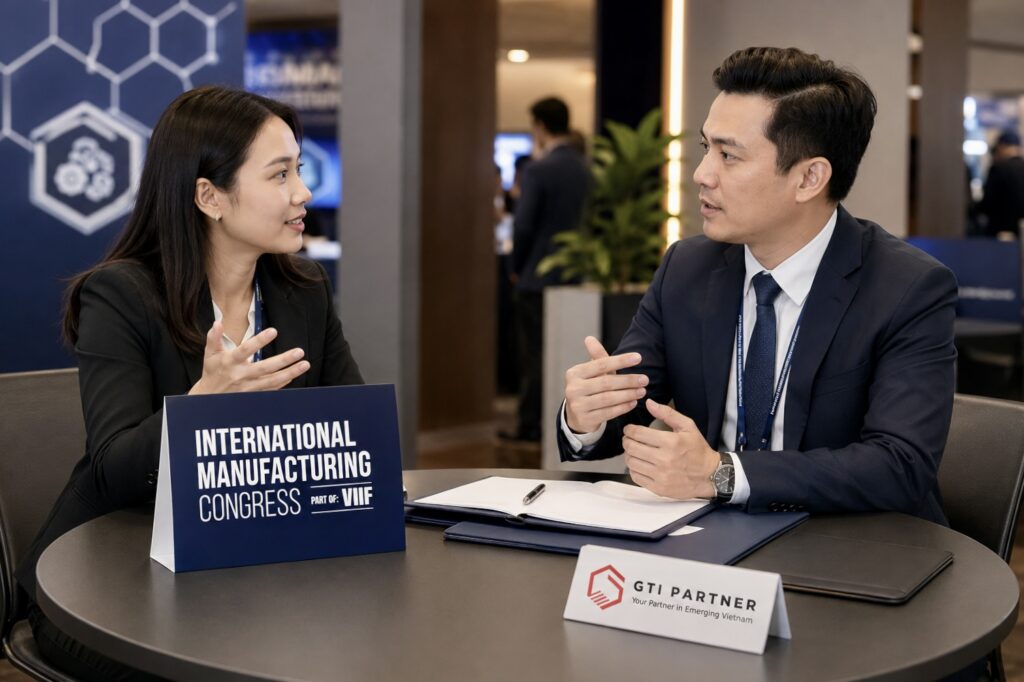
Vietnam’s next generation of industrial parks: What foreign investors need beyond land and infrastructure
20/08/2026
Vietnam’s next generation of industrial parks: What foreign investors need beyond land and infrastructure
When evaluating vietnam industrial parks, investors will find that the country operates more than 620 industrial zones across 61 provinces, making it one of the densest manufacturing networks in Southeast Asia. However, the rules of market entry are shifting rapidly. For years, foreign direct investment relied heavily on cost efficiency, cheap land, and low labor expenses.
As an industry moderator for forthcoming strategic discussions at the upcoming International Manufacturing Congress, I observe firsthand that global manufacturers no longer look at industrial real estate through a traditional lens. Land availability and basic utilities are baseline expectations rather than competitive advantages.

Vietnam industrial parks: The shift from land acquisition to integrated ecosystems
Experts and industry leaders emphasize that modern facilities can no longer limit themselves to providing physical manufacturing space. Instead, they must function as integrated ecosystems combining advanced technology, logistics, green energy, and a skilled workforce. Foreign firms must align their corporate structuring and corporate registration guidelines with these modern infrastructure demands.
- Speed to market: Ready-built factories and streamlined administrative approvals outweigh lower rental costs in strategic decision-making.
- ESG compliance: Environmental, social, and governance standards serve as a mandatory passport for global electronics and semiconductor supply chains.
- Value-added services: On-site customs support, shared utilities, and digital infrastructure lower initial operational frictions.
Watch the official introductory video for the International Manufacturing Congress (IMC) taking place in Hanoi from September 9 to 11, 2026 below:
Why vietnam industrial parks matter for foreign investors
Securing a plot of land is only the first step. To maintain long-term operational success, foreign enterprises require critical structural support:
- Reliable energy security: Stable power supplies and renewable energy options are non-negotiable for high-value manufacturing and tech assembly.
- Advanced logistics networks: Direct connectivity to deep-water ports, international airports, and modern warehousing hubs minimizes transit overhead.
- Streamlined regulatory processing: Transparent post-inspection frameworks and efficient local licensing prevent unexpected compliance bottlenecks.
Continuing the dialogue at the industry level
Addressing these infrastructure and ecosystem gaps requires active collaboration between policymakers, developers, and global investors. These strategic priorities form a core part of ongoing industry dialogues, including sessions at the International Manufacturing Congress, where regional leaders convene in Hanoi to shape the future of manufacturing growth.
About GTI Partner
GTI Partner supports foreign enterprises navigating market entry, licensing, and operational compliance in Vietnam. If you are planning your next expansion phase, contact our advisory team to discuss tailored compliance and setup strategies.
Related posts
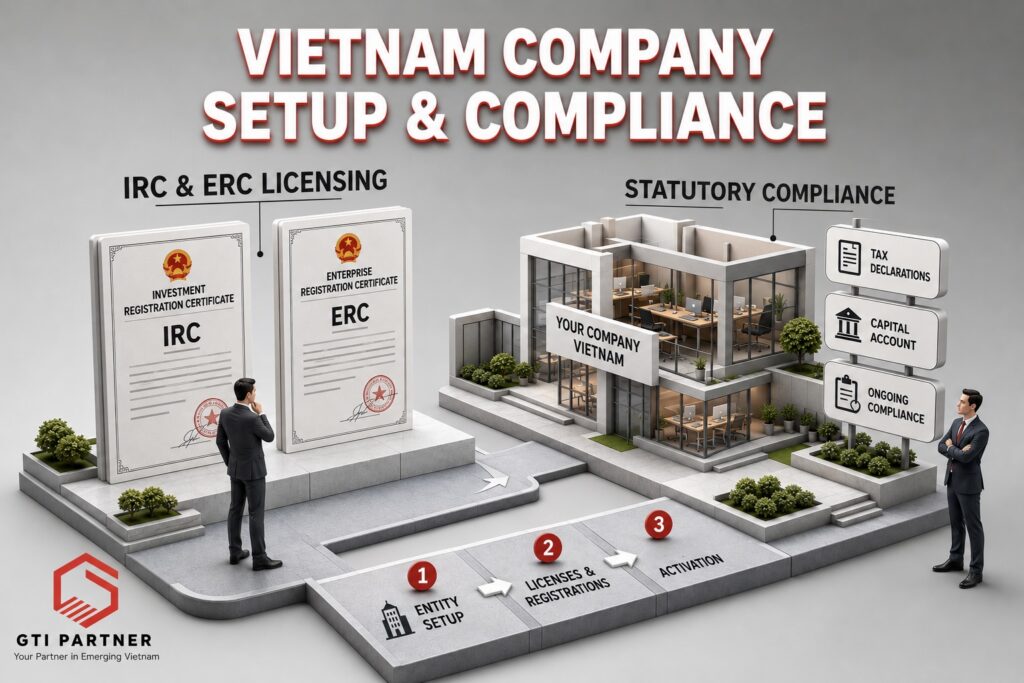
Company registration in Vietnam under the 2026 investment law
Company registration in vietnam under the 2026 investment law Starting a business in Southeast Asia
LLC vs JSC in Vietnam: Which Corporate Structure is Best for Foreign Investors?
LLC vs JSC in Vietnam: Which Corporate Structure is Best for Foreign Investors? Evaluating LLC
Vietnam Market Entry Strategy: 2026 Mistakes to Avoid
Vietnam business entry errors: 2026 Mistakes to Avoid Expanding your business into Southeast Asia requires