
3 Hidden Vietnam Market Entry Bottlenecks (Fix Your Strategy)
15/07/2026
3 Hidden Vietnam Market Entry Bottlenecks (Fix Your Strategy)
Many foreign SMEs view Vietnam through a lens of potential, seeing supply chain opportunities and a growing middle class. However, if your Vietnam market entry strategy doesn’t account for operational realities on the ground, you are hoping rather than planning.
At GTI Partner, we help foreign firms navigate the gap between “approved investment” and “operational revenue.” Based on our work with recent market entrants, here are the three hidden bottlenecks that freeze your capital – and how to bypass them.
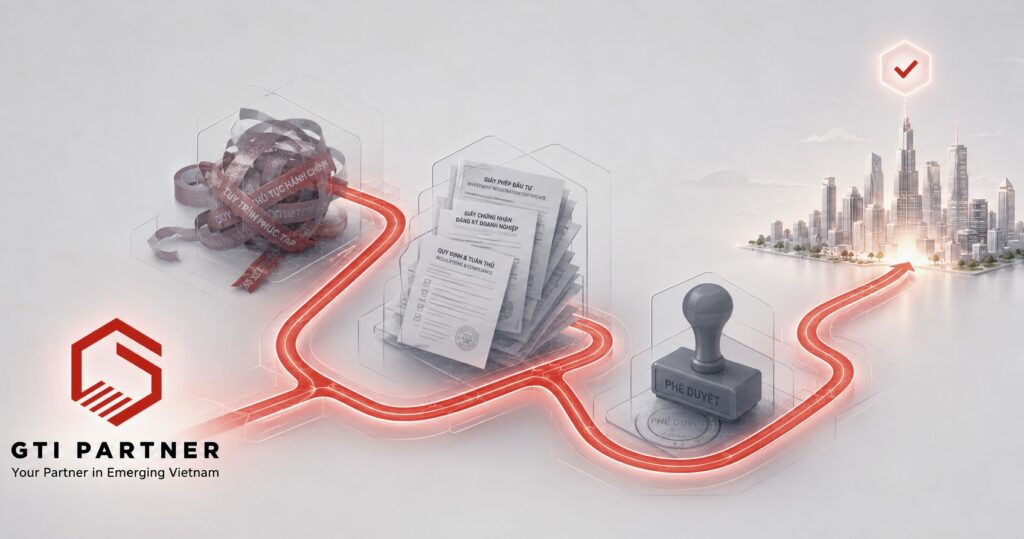
1. The Licensing Trap: Mistakes in Your Vietnam Market Entry Strategy
The most common mistake we see is foreign firms treating their Vietnam entity registration like a plug-and-play process.
In reality, your license type dictates your operational flexibility for the next five years. Choose the wrong classification, and you may find yourself unable to import specific equipment or restricted from providing certain services. See the official Ministry of Planning and Investment guidelines for reference.
The Fix: Don’t let your legal team register the entity in isolation. Your strategy must align your commercial goals with the licensing classification. If you ignore this during the pre-entry phase, you are setting up a costly administrative headache later.
2. The Labor Compliance Gap in Your Vietnam Market Entry Strategy
A common oversight during the “excitement phase” of entry is ignoring local labor nuances. Hiring staff is not just about finding talent; it is about managing the operational risk of labor compliance.
We recently published a full breakdown on the 2026 Vietnam Labor Compliance shifts, which highlights why a “western-style” contract is often unenforceable in Vietnam. Using the wrong frameworks leaves you vulnerable to disputes that can halt operations entirely.
3. Post-Establishment Vacuum: Overcoming Vietnam Market Entry Strategy Risks
Many consultants exit the project the moment the business license is signed. This is a critical failure.
The “Post-Establishment” phase is where most firms bleed cash. You have your entity, but you don’t have a local operational system.
- Financial Controls: Ensuring capital flow is tracked against local tax mandates.
- Supply Chain Continuity: Validating that your local contracts protect you from supplier turnover.
- Administrative Speed: Reducing the time it takes to process recurring compliance tasks.
Your Pre-Entry Checklist
Stop relying on generic advice. If you are serious about your expansion, validate your setup plan against the realities of the local market.
Not sure if your entry strategy is robust?
We offer a 15-minute Entry Feasibility Audit. We review your current plan and point out the specific “deal-killers” that will delay your launch.
Related posts
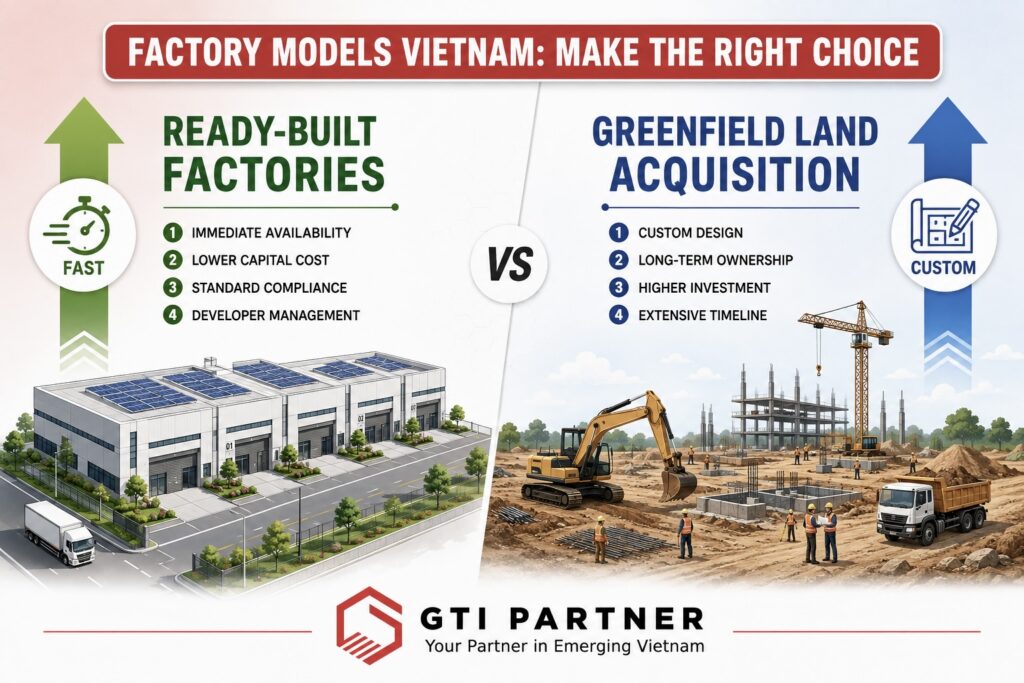
Ready-built factories vs greenfield land acquisition: Choosing the right model in Vietnam
Ready-built factories vs greenfield land acquisition: Choosing the right model in Vietnam When expanding manufacturing

Vietnam’s next generation of industrial parks: What foreign investors need beyond land and infrastructure
Vietnam’s next generation of industrial parks: What foreign investors need beyond land and infrastructure When
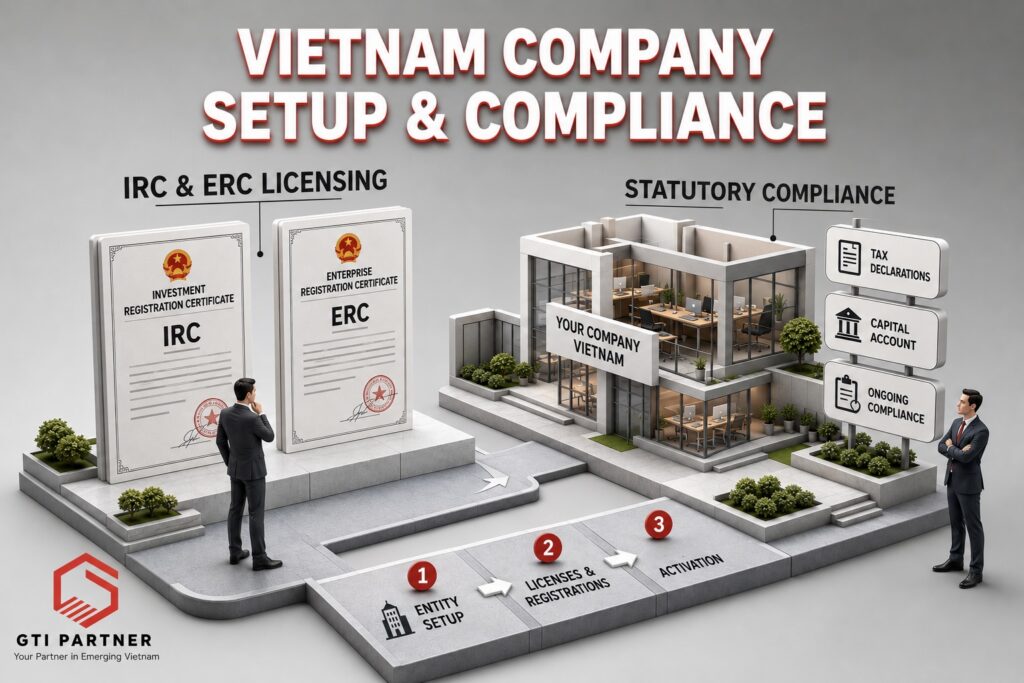
Company registration in Vietnam under the 2026 investment law
Company registration in vietnam under the 2026 investment law Starting a business in Southeast Asia
LLC vs JSC in Vietnam: Which Corporate Structure is Best for Foreign Investors?
LLC vs JSC in Vietnam: Which Corporate Structure is Best for Foreign Investors? Evaluating LLC

Vietnam Market Entry Strategy: 2026 Mistakes to Avoid
Vietnam business entry errors: 2026 Mistakes to Avoid Expanding your business into Southeast Asia requires