
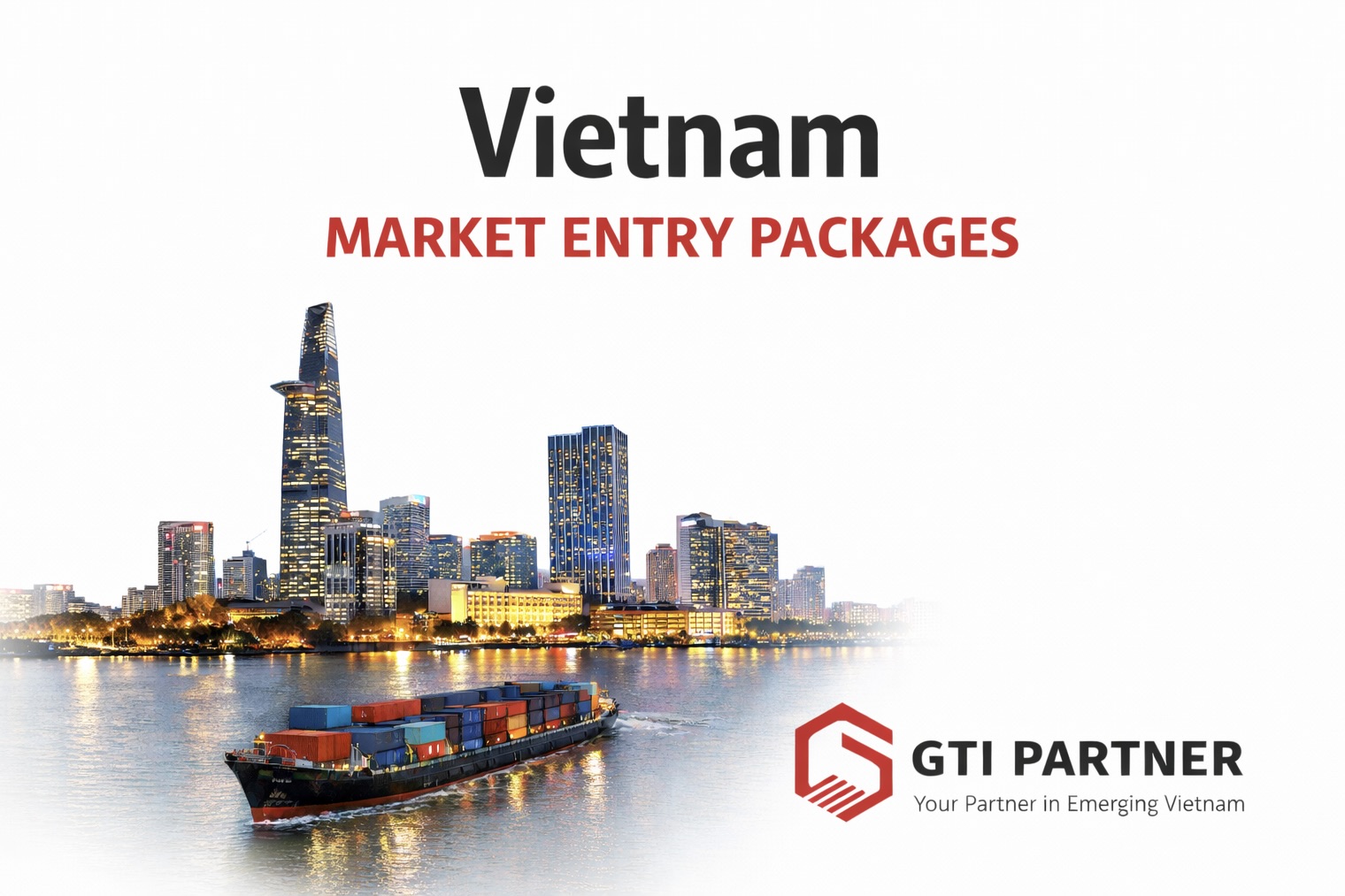
Vietnam Market Entry Packages: A Practical and End-to-End Approach for Global SMEs
03/02/2026
Execution-Focused Entry Models for International SMEs
Entering Vietnam remains one of the most attractive growth opportunities for international SMEs. Strong exports, rising foreign investment, and a rapidly developing industrial base continue to position Vietnam as a strategic hub in Asia.
Yet despite the opportunity, many market entry attempts fail or stall. The reason is rarely market demand. It is usually execution.
Too often, companies approach Vietnam through fragmented advisory services, unclear scopes, and open-ended engagements that feel theoretical rather than operational. What SMEs increasingly need is not advice alone, but structured, end-to-end execution.
This is where clearly defined Vietnam market entry packages make a measurable difference.
Why SMEs Struggle Without a Structured Entry Model
Vietnam market entry is not a single decision. It is a sequence of tightly linked steps.
Market validation, legal setup, operational readiness, and early commercial traction must all align. When handled separately or out of order, companies face delays, budget overruns, and compliance risk.
Common challenges include:
- Incomplete market validation before committing capital
- Legal structures that do not match operational goals
- Gaps between strategy and on-the-ground execution
- Local coordination issues across partners, regulators, and vendors
A package-based approach solves this by bundling outcomes, not just services.
What a Vietnam Market Entry Package Actually Delivers
A practical market entry package is not a report or a manual. It is a defined scope of work that delivers real-world progress.
Well-designed packages provide:
- Clear objectives and timelines
- Fixed scope with predictable cost ranges
- Local execution, not remote advisory
- Seamless transition from planning to action
For SMEs, this structure reduces uncertainty while accelerating decision-making.
Three Stages of Vietnam Market Entry, Delivered as Tangible Packages
At GTI Partner, Vietnam market entry is approached as a phased journey. Each phase is designed to produce concrete outcomes before moving forward.
Phase 1: Vietnam Market Entry Starter (In-Market Validation)
This package supports companies exploring Vietnam before committing significant capital. Instead of generic data, it delivers clear, industry-specific market clarity.
• Core Deliverables: Competitor land analysis, local regulatory barrier checks, and localized supply chain viability assessments.
• Timeline Range: 2 to 4 weeks.
Phase 2: Formal Market Entry & Setup (Corporate Execution)
Designed for companies ready to legally enter the country, this phase focuses entirely on administrative execution, licensing protocols, and legal setup.
• Core Deliverables: Enterprise Registration Certificate (ERC) coordination, Investment Registration Certificate (IRC) filing, and local bank account setup support.
• Entry Pathways: Structured setup options tailored for setting up a representative office in vietnam or a Wholly Foreign-Owned Enterprise (WFOE).
Phase 3: Operational & Scaling Readiness (Permanent Compliance)
For expanding SMEs already operating or preparing to launch physical production, this package ensures permanent corporate compliance.
• Core Deliverables: Chief Accountant compliance frameworks, local labor contract structuring, and environmental/customs permit readiness audits.
• Strategic Focus: Aligning local operations with international corporate governance requirements.
Together, these phases form a complete vietnam market entry services pathway, moving your project smoothly from first operational assessment to full execution on the ground.
Vietnam Rewards Companies That Execute Well
Vietnam is not a speculative market. It rewards preparation, strict regulatory compliance, and local execution.
Companies that enter Vietnam with a structured plan, supported by local expertise and defined deliverables, consistently outperform those relying on fragmented advisory input.
A well-designed Vietnam market entry package does not eliminate risk. It manages it, step by step.
Moving Forward with Confidence
Vietnam remains open, competitive, and full of opportunity. The difference between success and frustration often comes down to structure.
For SMEs seeking clarity, predictability, and real execution, a package-based approach to Vietnam market entry offers a practical and proven path forward.
Related posts
The Vietnam JV Governance Manifesto: Why “Legal Incorporation” Is Not Operational Control
The Vietnam JV Governance Manifesto: Why “Legal Incorporation” Is Not Operational Control Many foreign SMEs
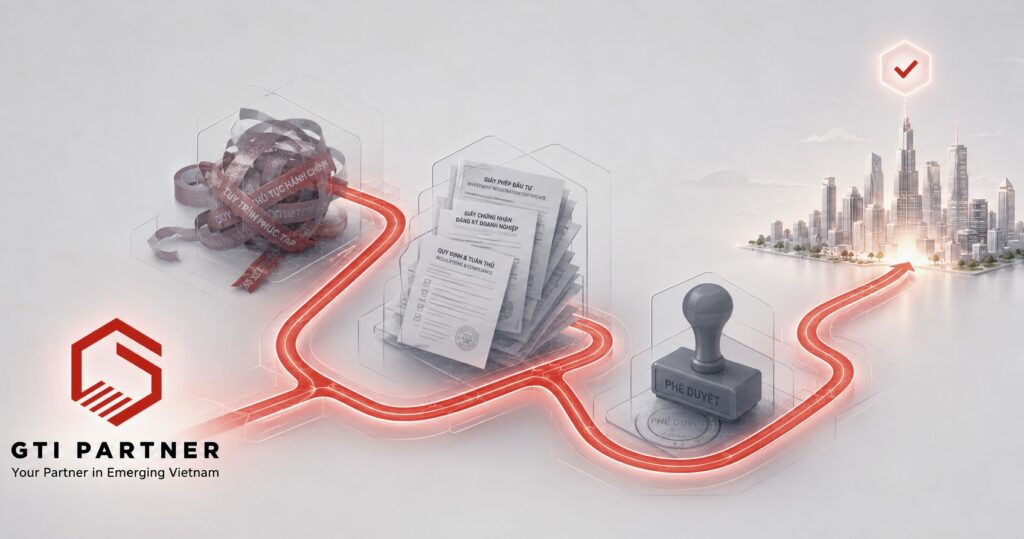
3 Hidden Vietnam Market Entry Bottlenecks (Fix Your Strategy)
3 Hidden Vietnam Market Entry Bottlenecks (Fix Your Strategy) Many foreign SMEs view Vietnam through

Corporate Governance Vietnam: 2026 Investor Guide
Strategic Context: To see how these operational topics connect within a unified control framework, read