
Vietnam Market Entry Checklist for SMEs – 2025 Edition
03/08/2025
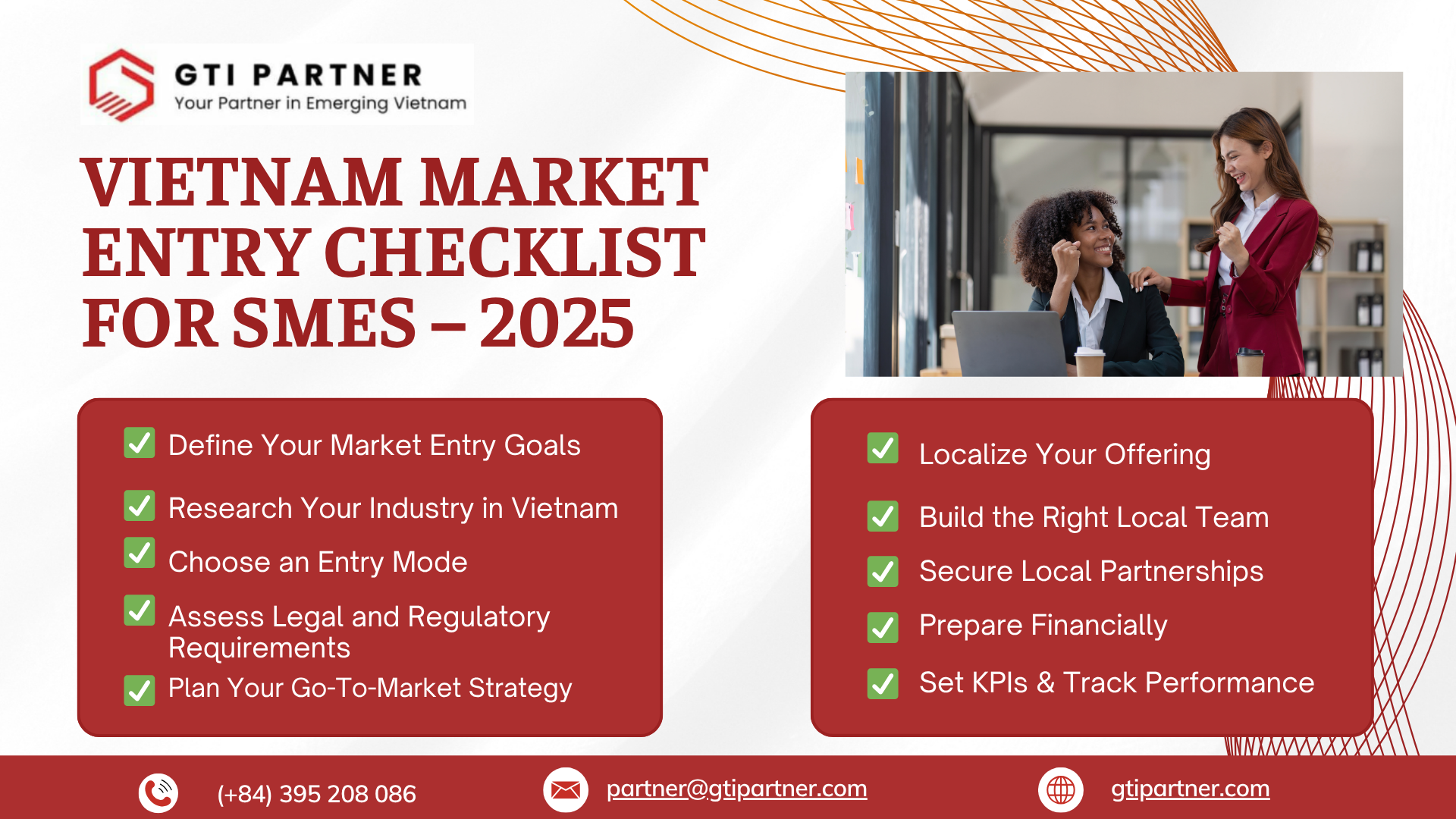
Vietnam Market Entry Checklist: 10 Steps for Foreign SMEs
Is your business truly prepared for expansion into Southeast Asia? This actionable vietnam market entry checklist outlines everything small and medium-sized enterprises need to prepare for a successful market launch—from legal structural setups to establishing local sales channels.
- Define Your Market Entry Goals: Determine your exact objective (sales office, sourcing hub, or manufacturing) and identify whether you are targeting B2B industrial clients or B2C consumers.
- Research Your Industry Landscape: Analyze real-time market sizes, consumer trends, competitor market shares, and specific regulatory barriers.
- Choose Your Corporate Entry Mode: Select the right structure: Representative Office (RO), Joint Venture (JV), Wholly Foreign-Owned Enterprise (WFOE), or local distribution partnerships.
- Assess Legal and Regulatory Requirements: Complete business registration, verify foreign ownership caps, secure sub-licenses, and plan for corporate tax obligations.
- Plan Your Go-To-Market Strategy: Establish distribution channels, formulate competitive localized pricing, and launch marketing campaigns on digital platforms.
- Localize Your Commercial Offering: Adapt product features for market fit, execute precise translations for packaging, and set up local after-sales support systems.
- Build the Right Local Operational Team: Recruit key personnel, establish HR compliance tracks, and draft legally sound, localized employment contracts.
- Secure Trusted Local Strategic Partnerships: Retain experienced legal advisors, join industry associations, and engage strategic consultants like GTI Partner.
- Prepare Financial and Capital Allocations: Calculate setup budgets, secure working capital reserves, and establish realistic ROI milestones.
- Set Clear KPIs and Performance Metrics: Monitor market share acquisition, define quarterly sales targets, and optimize customer acquisition costs (CAC).
Following a structured vietnam market entry checklist helps protect your business from costly errors. GTI Partner specializes in guiding international SMEs through every expansion phase—from validation to long-term post-launch support.
⚠️ Tip: Before diving into execution, ensure your team avoids these 5 critical vietnam market entry mistakes that slow down expansion.
Related posts
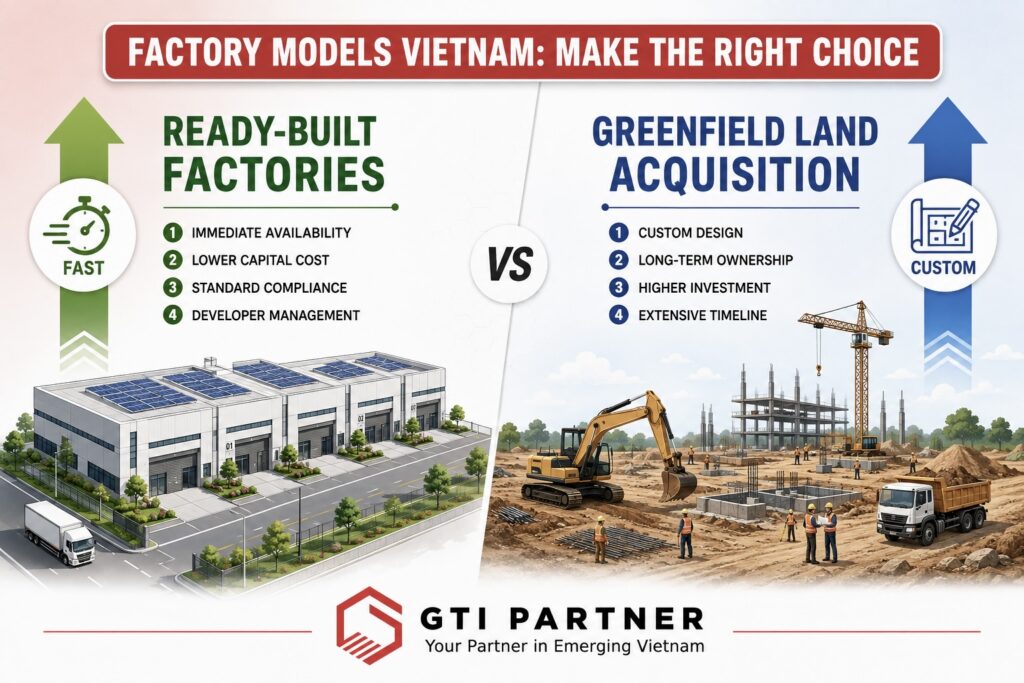
Ready-built factories vs greenfield land acquisition: Choosing the right model in Vietnam
Ready-built factories vs greenfield land acquisition: Choosing the right model in Vietnam When expanding manufacturing

Vietnam’s next generation of industrial parks: What foreign investors need beyond land and infrastructure
Vietnam’s next generation of industrial parks: What foreign investors need beyond land and infrastructure When
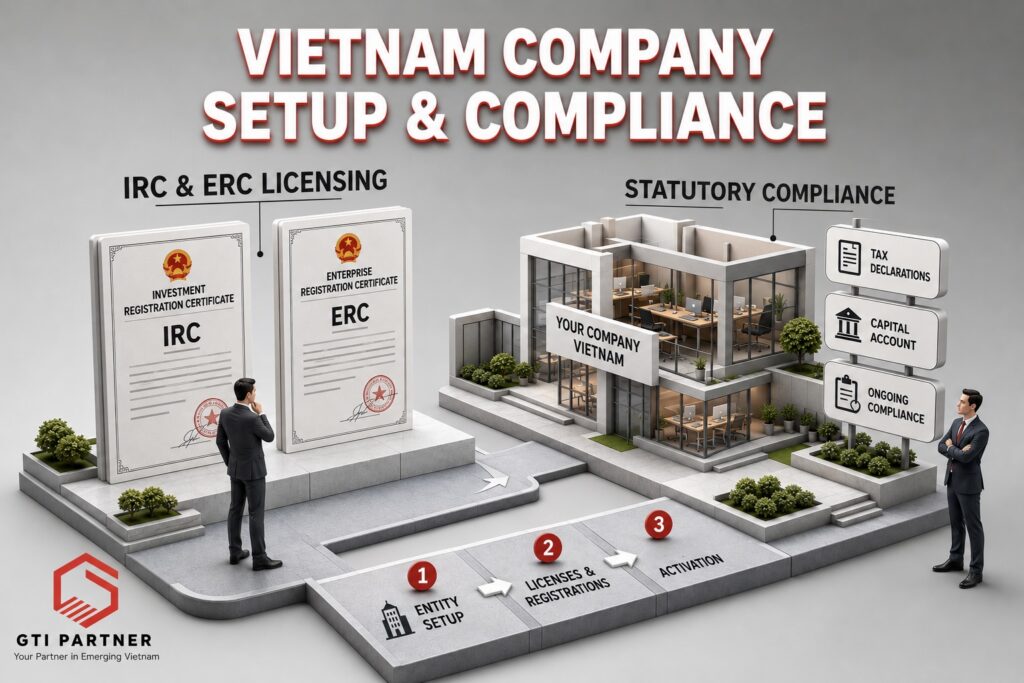
Company registration in Vietnam under the 2026 investment law
Company registration in vietnam under the 2026 investment law Starting a business in Southeast Asia
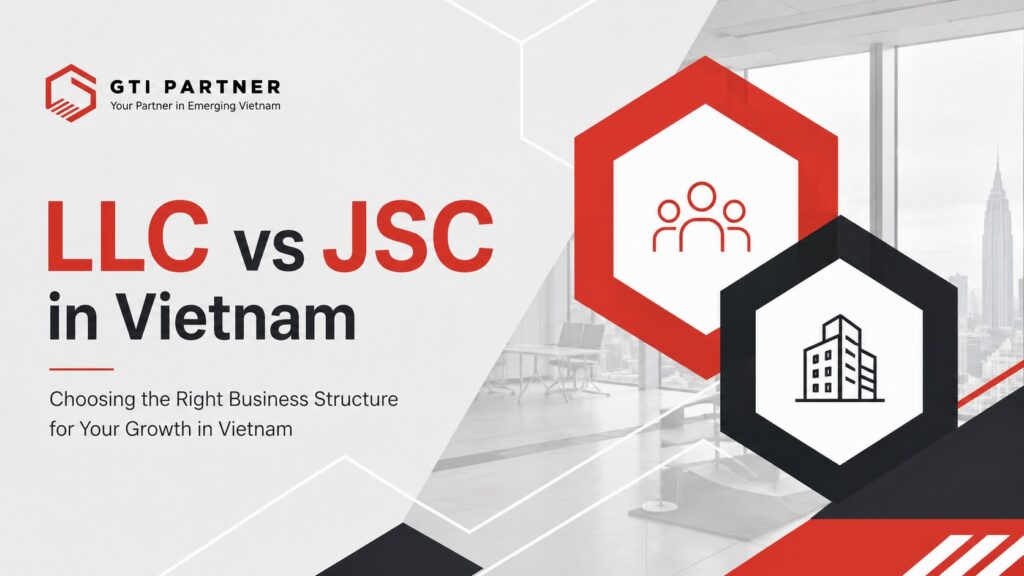
LLC vs JSC in Vietnam: Which Corporate Structure is Best for Foreign Investors?
LLC vs JSC in Vietnam: Which Corporate Structure is Best for Foreign Investors? Evaluating LLC
Vietnam Market Entry Strategy: 2026 Mistakes to Avoid
Vietnam business entry errors: 2026 Mistakes to Avoid Expanding your business into Southeast Asia requires