
Vietnam vs. Indonesia: Key Highlights for Global SMEs Considering Market Entry
17/09/2025
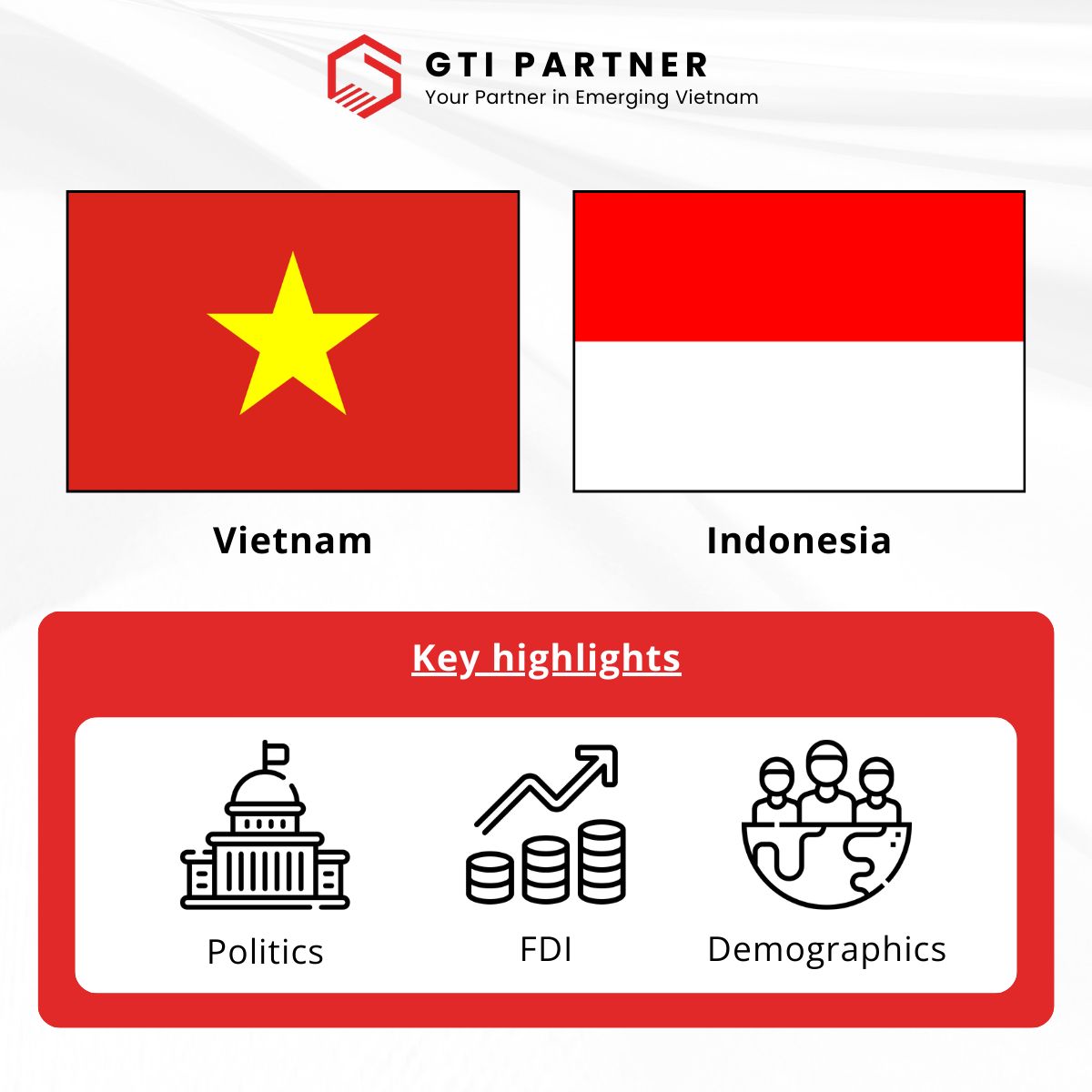
Southeast Asia is one of the fastest-growing regions in the world, and two markets consistently at the center of investor attention are Vietnam and Indonesia. While both countries present significant opportunities, they differ in economic structure, foreign direct investment (FDI) flows, and ease of doing business. For global SMEs evaluating their next move, understanding these distinctions is crucial.
You May Also Be Interested In:
📖 Vietnam vs. Thailand: Key Highlights for Global SMEs
1. Economic Size and Growth
-
Vietnam: With a GDP of approximately $450 billion (2024), Vietnam has built its growth story on manufacturing, exports, and integration into global supply chains. Its young workforce and government-backed industrial policies have positioned it as a key hub in electronics, textiles, and furniture.
-
Indonesia: Southeast Asia’s largest economy, Indonesia’s GDP exceeds $1.4 trillion (2024). Growth is supported by a large domestic market of 275+ million people, rich natural resources, and infrastructure development under the government’s long-term vision.
👉 SMEs should note: Vietnam is more export-oriented, while Indonesia offers a massive consumer market.
2. Foreign Direct Investment (FDI) Trends
-
Vietnam: FDI inflows reached nearly $36 billion in 2023, driven by high-tech manufacturing, logistics, and renewable energy. Global players such as Samsung, Foxconn, and LEGO have set up large operations.
-
Indonesia: FDI stood at $47 billion in 2023, with energy, mining, and infrastructure dominating. The government actively promotes downstream industries, particularly in nickel and EV battery production.
👉 For SMEs: Vietnam offers easier entry into export-led supply chains, while Indonesia provides access to resource-driven projects and infrastructure.
3. Ease of Doing Business
-
Vietnam: Ranked higher in global ease-of-doing-business indicators, Vietnam is known for streamlined company setup processes, tax incentives in industrial parks, and growing trade agreements (like CPTPP, EVFTA, and CEPA with UAE).
-
Indonesia: While reforms are ongoing, bureaucracy and licensing procedures can be more complex. However, recent Omnibus Laws aim to simplify investment regulations and attract more foreign investors.
👉 SMEs may find Vietnam faster to enter, while Indonesia requires more time and partnerships to navigate.
4. Workforce and Talent
-
Vietnam: Offers a large, young, and cost-competitive workforce, especially in manufacturing, IT outsourcing, and services. English proficiency is improving, particularly in business hubs like Ho Chi Minh City and Hanoi.
-
Indonesia: Has a larger overall labor pool, but wages are generally higher in urban centers like Jakarta. Talent is strong in finance, services, and natural resources, with growing emphasis on digital skills.
5. Infrastructure and Logistics
-
Vietnam: Strong logistics hubs along the North–South corridor, deep-sea ports, and proximity to global shipping routes. The country is also investing heavily in highways, rail, and airports to improve supply chain resilience.
-
Indonesia: As an archipelago, logistics can be complex and costly, though the government is improving seaport capacity and inter-island connectivity. For domestic market access, distribution networks are critical.
Conclusion: Where Should Global SMEs Invest?
Both Vietnam and Indonesia present compelling opportunities—the choice depends on your business model:
-
Choose Vietnam if your SME seeks export-driven growth, manufacturing outsourcing, or entry into high-growth global supply chains.
-
Choose Indonesia if your SME targets a massive domestic consumer base, resource-driven sectors, or long-term infrastructure projects.
At GTI Partner, we help international SMEs evaluate these opportunities with a clear, data-driven approach. Whether your goal is to expand into Vietnam or explore Indonesia as a strategic alternative, our experts provide hands-on support to reduce risk and accelerate growth.
📌 Contact us today to discuss your market entry strategy for Southeast Asia.
You May Also Be Interested In:
📖 Vietnam vs. Thailand: Key Highlights for Global SMEs
Related posts

How Foreign SMEs Can Use Vietnam as a Dual Hub for Export and ASEAN Expansion
Why Vietnam Is Emerging as a Dual Hub for Foreign SMEs For foreign small and
Vietnam’s Green Power Surge: Why Foreign Investors Are Positioning Early in Southeast Asia’s Fastest Energy Transition
Vietnam’s Green Power Surge: Why Foreign Investors Are Positioning Early in Southeast Asia’s Fastest Energy
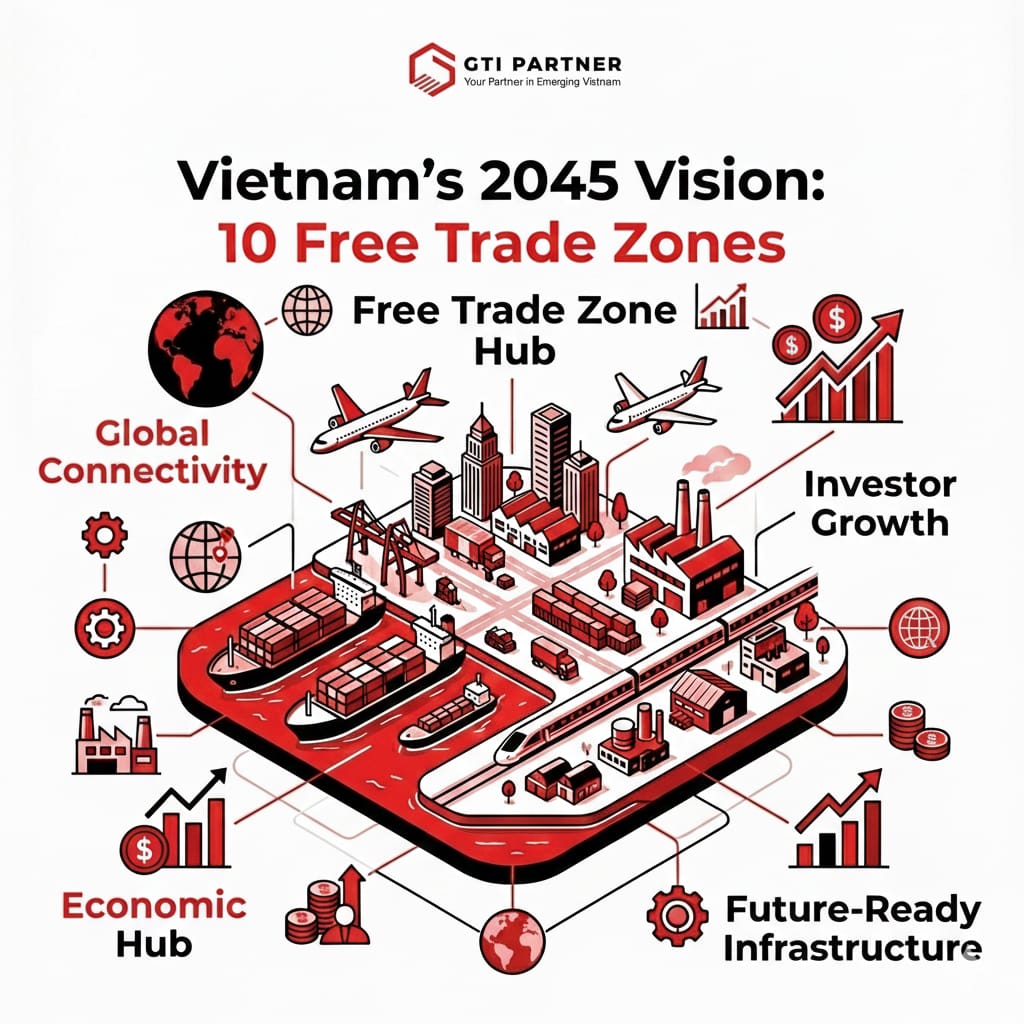
Vietnam Aims for Up to 10 Free Trade Zones by 2045 — What It Means for Investors
Vietnam Aims for Up to 10 Free Trade Zones by 2045 — What It Means
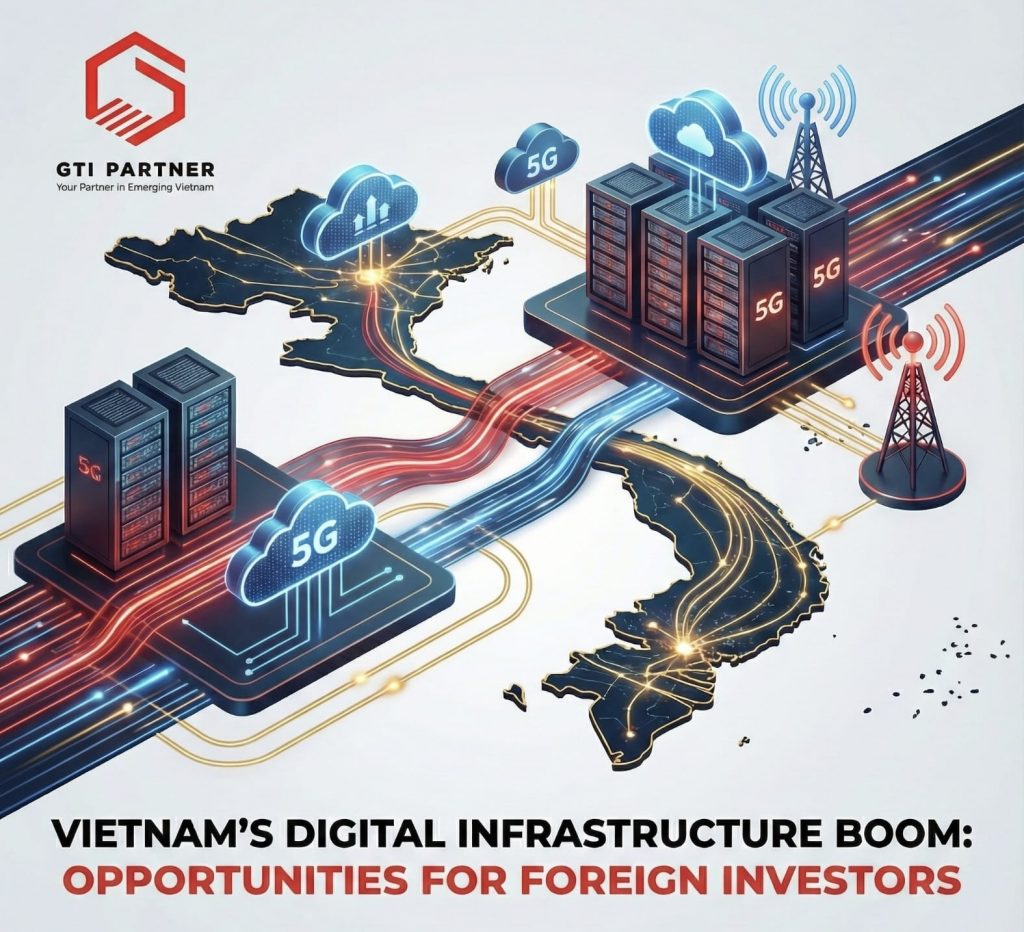
Vietnam’s Digital Infrastructure Boom: Opportunities in Data Centers, Cloud, and Telecom for Foreign Investors
Vietnam’s Digital Infrastructure Boom: Opportunities in Data Centers, Cloud, and Telecom for Foreign Investors Vietnam
Vietnam’s 2026 FDI Outlook: High-Tech and Green Growth
Vietnam’s 2026 FDI Outlook: High-Tech and Green Growth Vietnam is entering 2026 with strong momentum