
🌍 How U.S. Import Partners Have Shifted – Vietnam’s Rising Role
26/09/2025
🌍 How U.S. Import Partners Have Shifted – Vietnam’s Rising Role
Global trade flows are never static — they mirror geopolitics, supply chain resilience strategies, and shifting cost structures. The latest data on U.S. imports between 2017 and 2024 shows a striking realignment of partners, with Vietnam emerging as one of the biggest winners!
📉 Losing Ground
-
China: –1.2 percentage points
-
Japan: –0.6
-
Russia: –0.5
-
Saudi Arabia: –0.1
-
Philippines: –0.1
-
Indonesia: –0.1
📊 Stable Partners
-
Canada, Chile, Brazil: 0.0 (no net change)
📈 Winners
-
Turkey: +0.1
-
Cambodia: +0.2
-
EU: +0.3
-
Thailand & Singapore: +0.6 each
-
India: +0.7
-
South Korea: +1.1
-
Taiwan: +1.6
-
Vietnam: +2.0
-
Mexico: +2.2
🇻🇳 Vietnam’s Trade Momentum
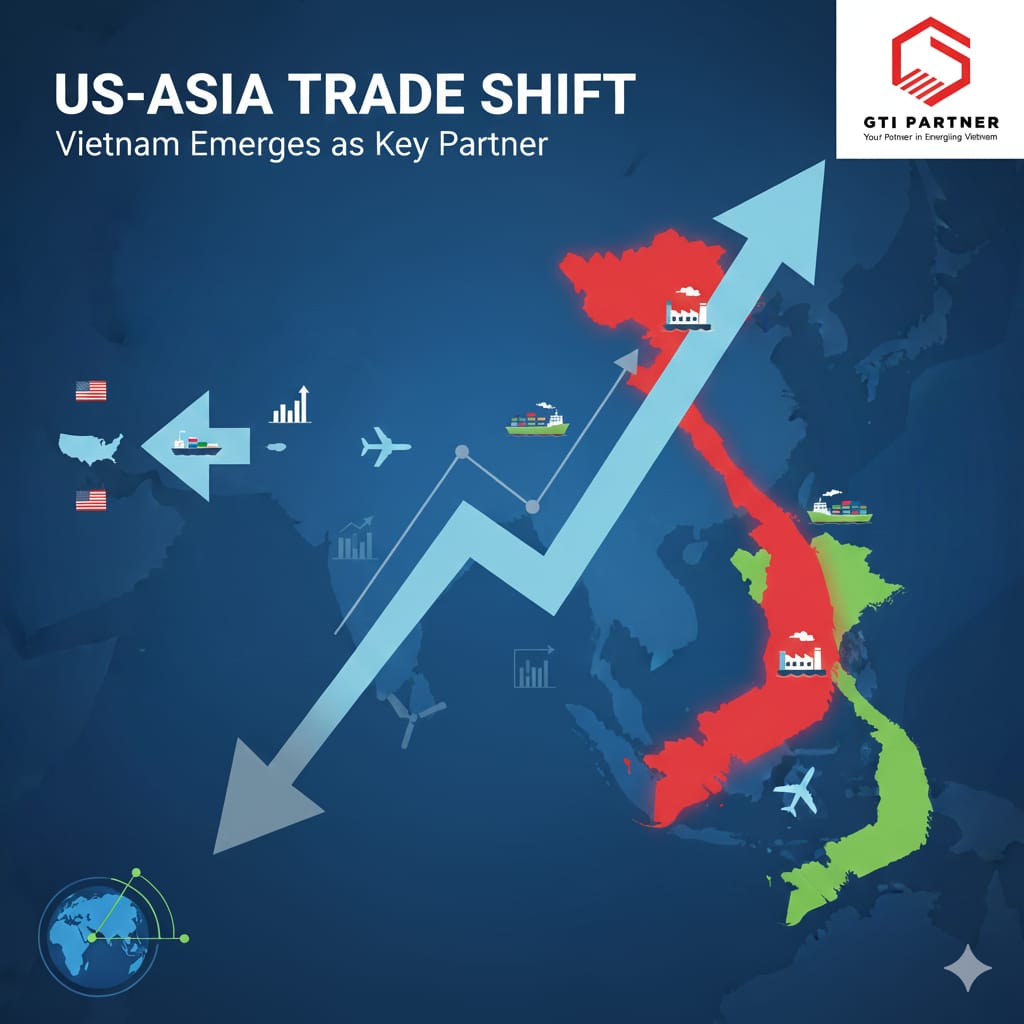
Vietnam stands out with a +2.0 percentage point increase — the second-largest gain after Mexico. This growth underscores Vietnam’s position as a strategic manufacturing hub and an increasingly preferred alternative to China for U.S. importers.
Several factors drive this momentum:
-
Diversification from China: Trade tensions and tariffs have accelerated the “China+1” strategy, with Vietnam a top beneficiary.
-
Competitive Manufacturing Base: Vietnam combines cost efficiency with improving infrastructure and a skilled labor force.
-
Global Trade Agreements: Participation in CPTPP, RCEP, and multiple bilateral agreements has made Vietnam more accessible to international businesses.
-
Sector Strengths: Electronics, textiles, footwear, and furniture continue to dominate, while tech-related supply chains are steadily expanding.
🔎 Key Takeaways for Trade & Business Strategy
- Nearshoring to Mexico – Mexico leads gains, reflecting U.S. companies’ push for shorter, more resilient supply chains.
- ASEAN Surge – Vietnam, Thailand, and Cambodia are strengthening their role as competitive manufacturing bases.
- India Rising – Strong demographics and policy reforms are helping India gain share.
- China’s Decline – Still dominant, but trade tensions, tariffs, and security concerns have reduced reliance.
- Supply Chain Rebalancing – Companies are actively recalibrating sourcing strategies to mitigate risks tied to geopolitics, logistics, and compliance.
💡 Why It Matters for Corporates & Traders
-
Fiduciary & Structuring: Companies sourcing from Vietnam must adapt their legal and corporate setups to fit local and international frameworks.
-
Compliance: New jurisdictions mean different taxation, regulatory, and reporting obligations.
-
Risk Management: Political, trade, and operational risk frameworks need continuous updating.
-
Logistics & Trade Finance: Vietnam’s ports, shipping lines, and financing systems are scaling up to meet rising demand.
👉 For businesses eyeing Asia, Vietnam’s rise is not just a trend — it’s a long-term shift in global supply chains. Proactive companies are already positioning themselves to leverage Vietnam’s growing role in U.S. trade.
👉 Is your business ready to seize Vietnam’s trade momentum? Explore how GTI Partner can help you structure, expand, and stay compliant in Vietnam to take advantage of this long-term shift in U.S. import dynamics.
𝑺𝒐𝒖𝒓𝒄𝒆: 𝑽𝒐𝒓𝒐𝒏𝒐𝒊 𝒃𝒚 𝑽𝒊𝒔𝒖𝒂𝒍 𝑪𝒂𝒑𝒊𝒕𝒂𝒍𝒊𝒔𝒕
Related posts
Vietnam’s Digital Infrastructure Boom: Opportunities in Data Centers, Cloud, and Telecom for Foreign Investors
Vietnam’s Digital Infrastructure Boom: Opportunities in Data Centers, Cloud, and Telecom for Foreign Investors Vietnam
Vietnam’s 2026 FDI Outlook: High-Tech and Green Growth
Vietnam’s 2026 FDI Outlook: High-Tech and Green Growth Vietnam is entering 2026 with strong momentum
🇻🇳 Vietnam’s 8% VAT Policy Extension: What It Means for SMEs and Investors in 2025–2026
🇻🇳 Vietnam’s 8% VAT Policy Extension: What It Means for SMEs and Investors in 2025–2026

Vietnam’s Manufacturing Talent Shift: How Workforce Upskilling Is Powering the Next Phase of Industrial Growth
Vietnam’s Manufacturing Talent Shift: How Workforce Upskilling Is Powering the Next Phase of Industrial Growth
Why Vietnam Is Becoming the Preferred Manufacturing Alternative to China in 2025
Why Vietnam Is Becoming the Preferred Manufacturing Alternative to China in 2025 Global supply chains