
Vietnam–UAE CEPA: What It Means for SME Exporters (2025 Guide)
01/09/2025
Vietnam & the UAE: CEPA Ushers In a New Era for SME Trade
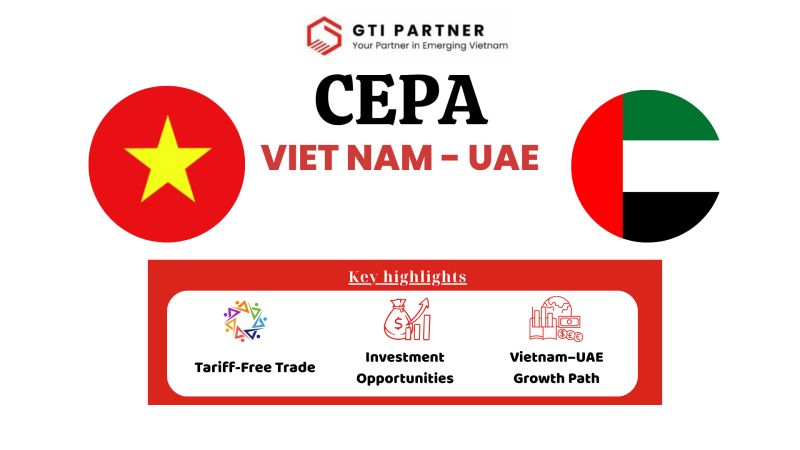
On October 28, 2024, Vietnam and the UAE signed the Comprehensive Economic Partnership Agreement (CEPA)—Vietnam’s first free-trade deal with a Middle Eastern country. The agreement was signed in Dubai and capped a year of negotiations.
What CEPA does (in brief):
-
Tariffs: UAE to phase out duties on 99% of Vietnam’s exports; Vietnam to remove tariffs on 98.5% of UAE exports.
-
Scope: 18 chapters, 15 appendices, and 2 bilateral letters covering goods, services & investment, rules of origin, TBT, SPS, customs facilitation, trade remedies, government procurement, IP, and legal/institutional provisions.
Trade momentum to watch:
-
Two-way trade was about US$4.7B in 2023 (↑6% YoY).
-
In H1 2025, non-oil trade reached US$7.02B (↑16.9% YoY), underscoring the corridor’s growth potential.
Status: CEPA is signed and moving through ratification/entry-into-force procedures; Vietnamese and UAE officials emphasized early ratification in 2025, and UAE statements this week still reference “once CEPA enters into force.” Businesses should prepare now for implementation.
Where SMEs Can Win (Vietnam ↔ UAE/GCC)
- Furniture & Hospitality Fit-outs
Vietnam’s cost-competitive, sustainable furniture pairs well with the UAE’s role as a GCC hospitality/logistics hub—CEPA cuts further improve landed pricing and speed market access. (Tariff cuts + customs facilitation under CEPA.) - Agri-Food (seafood, coffee, rice, spices)
Lower duties + clearer SPS/TBT rules can expand shelf space in UAE retail/HoReCa channels and re-exports into GCC. - Apparel, Electronics, Machinery
Tariff elimination and rules-of-origin (ROO) predictability should unlock larger orders via UAE free-zones and regional distributors. - Renewables & Tech Collaboration
The upgraded comprehensive partnership frames deeper cooperation in energy, logistics, and technology.
Action Checklist (Practical Steps)
-
Pick your GCC gateway: Use Dubai/JAFZA or KIZAD to stage Vietnam-made products for GCC. Align SKU selection with CEPA’s HS codes to capture zero/low tariffs from day one. (Tariff schedule + ROO in CEPA.)
-
Validate ROO early: Map your inputs and manufacturing steps against CEPA ROO to ensure eligibility; build supplier declarations into PO terms.
-
Plan SPS/TBT compliance: For food and regulated products, pre-clear labeling, halal, and testing requirements to avoid holds.
-
Structure the channel: For Vietnam → UAE → GCC, combine a UAE distributor with drop-ship from Vietnam at launch; then scale with UAE inventory for faster GCC delivery as volumes grow.
-
Time your pricing: Set launch price lists assuming staged tariff drops where immediate 0% does not apply; bake in duty-downside as margin upside over the next 12–24 months.
You may also like: GTI Partner is in search of a JV partner in UAE
Sources:
- Vietnam Law Magazine – Vietnam, UAE sign CEPA
- UAE Ministry of Economy – Press release on Vietnam–UAE CEPA
- WTO Regional Trade Updates – Vietnam’s trade with UAE 2025
Related posts

Vietnam’s Digital Infrastructure Boom: Opportunities in Data Centers, Cloud, and Telecom for Foreign Investors
Vietnam’s Digital Infrastructure Boom: Opportunities in Data Centers, Cloud, and Telecom for Foreign Investors Vietnam
Vietnam’s 2026 FDI Outlook: High-Tech and Green Growth
Vietnam’s 2026 FDI Outlook: High-Tech and Green Growth Vietnam is entering 2026 with strong momentum
🇻🇳 Vietnam’s 8% VAT Policy Extension: What It Means for SMEs and Investors in 2025–2026
🇻🇳 Vietnam’s 8% VAT Policy Extension: What It Means for SMEs and Investors in 2025–2026

Vietnam’s Manufacturing Talent Shift: How Workforce Upskilling Is Powering the Next Phase of Industrial Growth
Vietnam’s Manufacturing Talent Shift: How Workforce Upskilling Is Powering the Next Phase of Industrial Growth
Why Vietnam Is Becoming the Preferred Manufacturing Alternative to China in 2025
Why Vietnam Is Becoming the Preferred Manufacturing Alternative to China in 2025 Global supply chains