
Navigating Vietnam’s Trans-shipment Regulations: A Guide for Foreign Enterprises
15/08/2025
Vietnam’s integration into the global economy has opened tremendous opportunities for international businesses. Yet, certain regulatory frameworks—particularly around trans-shipment activities—require careful navigation to ensure compliance and avoid costly setbacks.
In Emidas Magazine’s latest edition, GTI Partner sheds light on the rules, limitations, and practical considerations for foreign enterprises engaging in trans-shipment within Vietnam.
What is Trans-shipment and Why It Matters
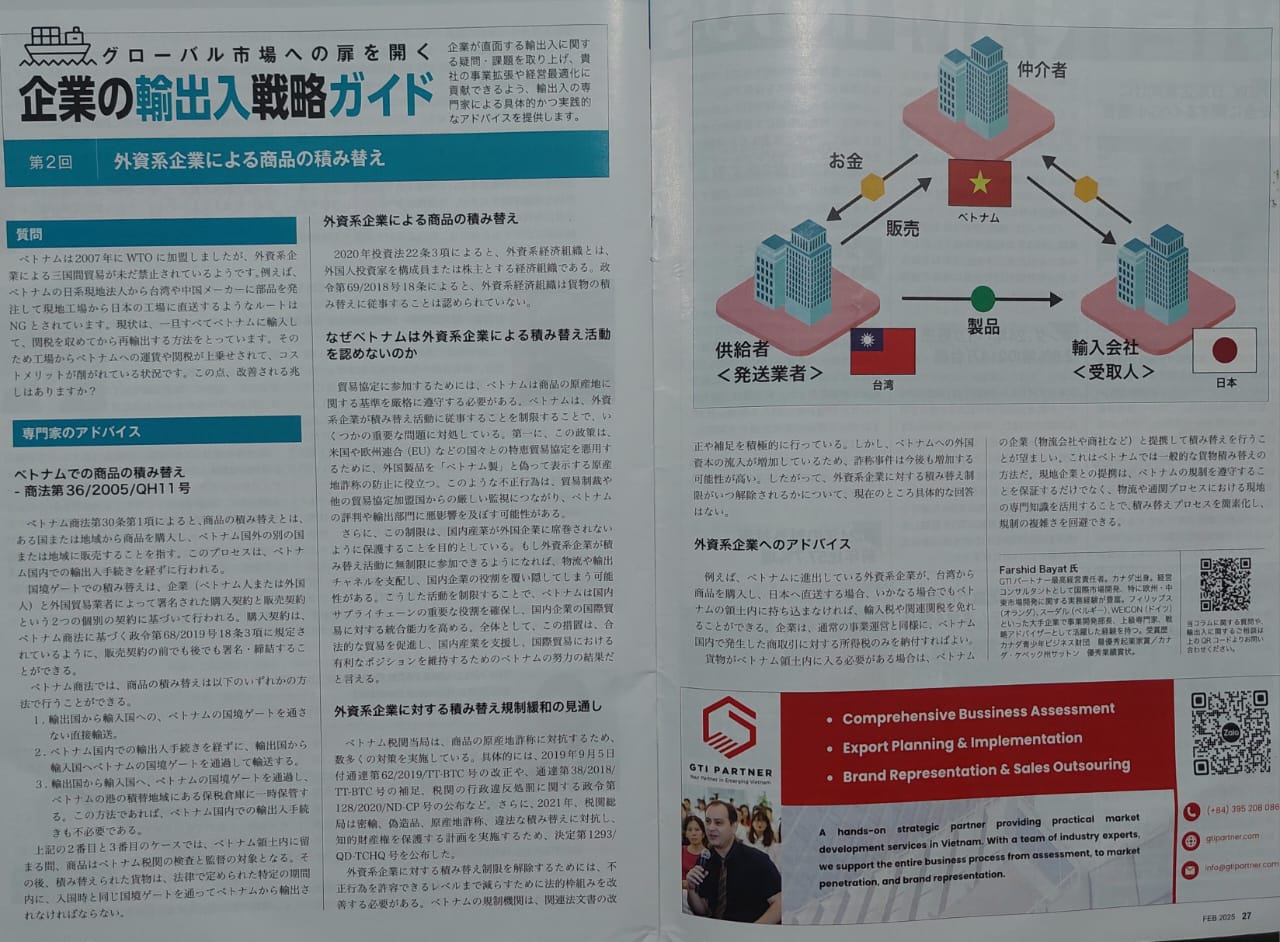
Trans-shipment involves goods being shipped through Vietnam from a supplier in one country to a buyer in another, without the goods being consumed or processed in Vietnam.
For example:
-
Supplier: Taiwan
-
Buyer: Japan
-
Intermediary Location: Vietnam
While common in global trade, this process in Vietnam is subject to specific legal restrictions, especially for foreign-invested enterprises (FIEs).
Read GTI Partner’s full (Japanese-language) article in Emidas (pages 26-27)
Why Foreign Enterprises Face Restrictions
Under Vietnam’s Commercial Law and related regulations, FIEs are generally not permitted to conduct pure trans-shipment activities—where goods simply pass through Vietnam without import/export procedures.
This is to:
-
Protect domestic trade and customs systems
-
Maintain accurate trade statistics
-
Ensure compliance with import/export tax frameworks
The Legal Framework You Must Know
Key legislative points include:
- Law No. 36/2005/QH11 – Vietnam’s Commercial Law sets the foundation for goods trading and related activities.
- Decree 69/2018/ND-CP and Decree 09/2018/ND-CP – Outline detailed rules on foreign business rights and conditions for trading in goods.
- Circular 11/2020/TT-BCT – Provides guidance on the implementation of trading rights for FIEs.
Foreign enterprises intending to move goods through Vietnam must structure transactions carefully—often involving licensed local entities to handle import/export stages.
Practical Advice for Businesses
GTI Partner recommends:
-
Early Legal Review – Assess your transaction model against Vietnam’s trade laws before signing contracts.
-
Partnering with Local Experts – Engage Vietnamese intermediaries who hold the necessary trading licenses.
-
Optimizing Trade Routes – Where possible, adapt supply chains to include compliant import/export steps in Vietnam.
How GTI Partner Can Help
Our team provides end-to-end market entry and compliance support:
-
Regulatory assessment of planned transactions
-
Structuring of compliant supply chain and sales channels
-
Coordination with customs, licensing authorities, and local partners
We ensure your business not only meets legal requirements but also maximizes efficiency and profitability in the ASEAN trade environment.
📞 Contact GTI Partner to discuss your Vietnam transhipment and trade strategies.
. 
Related posts
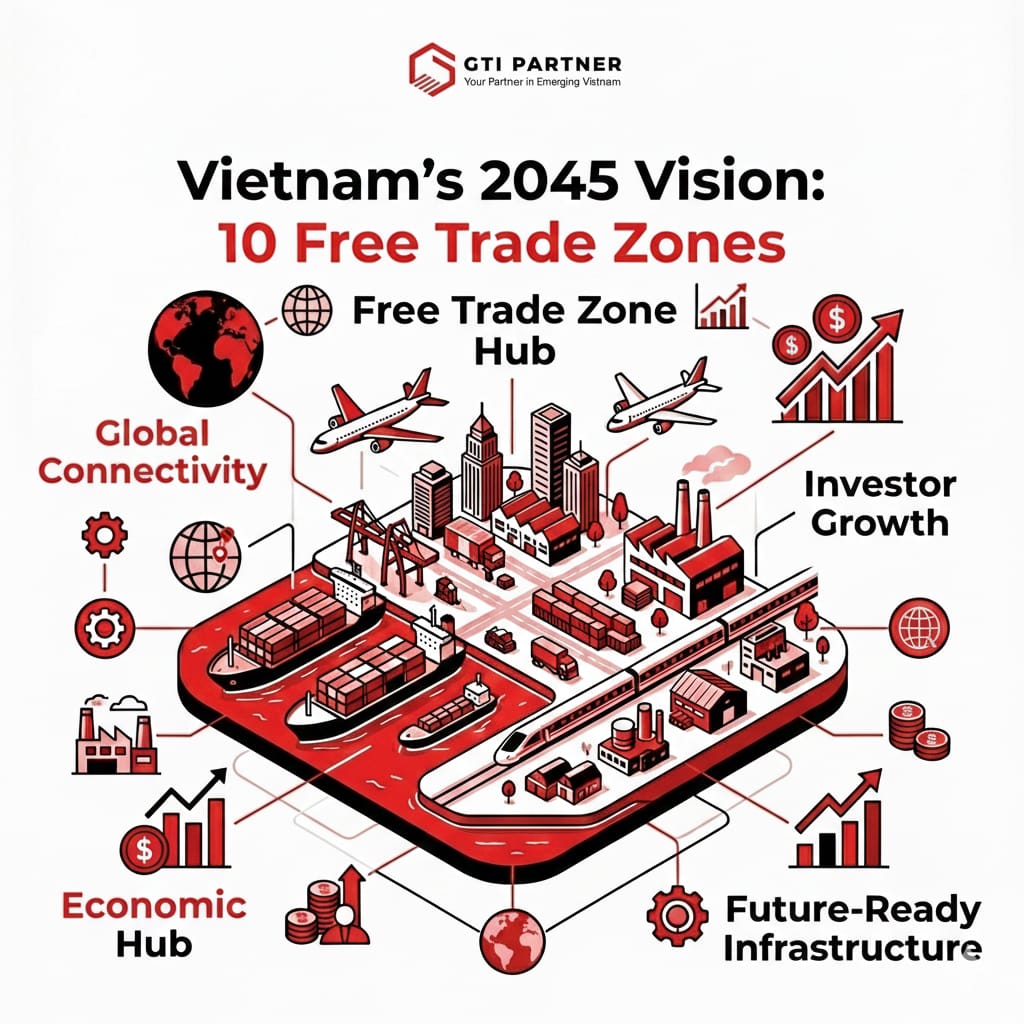
Vietnam Aims for Up to 10 Free Trade Zones by 2045 — What It Means for Investors
Vietnam Aims for Up to 10 Free Trade Zones by 2045 — What It Means

Vietnam’s Digital Infrastructure Boom: Opportunities in Data Centers, Cloud, and Telecom for Foreign Investors
Vietnam’s Digital Infrastructure Boom: Opportunities in Data Centers, Cloud, and Telecom for Foreign Investors Vietnam
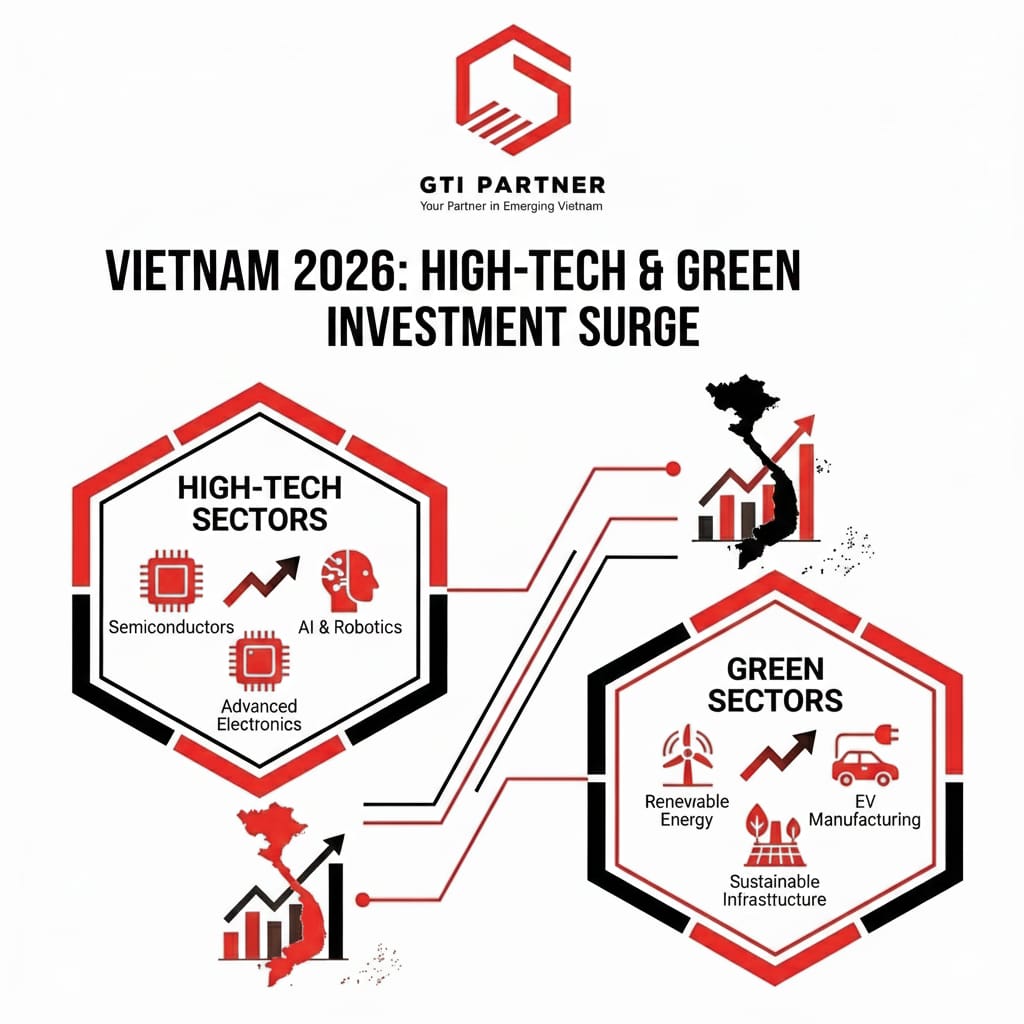
Vietnam’s 2026 FDI Outlook: High-Tech and Green Growth
Vietnam’s 2026 FDI Outlook: High-Tech and Green Growth Vietnam is entering 2026 with strong momentum
🇻🇳 Vietnam’s 8% VAT Policy Extension: What It Means for SMEs and Investors in 2025–2026
🇻🇳 Vietnam’s 8% VAT Policy Extension: What It Means for SMEs and Investors in 2025–2026

Vietnam’s Manufacturing Talent Shift: How Workforce Upskilling Is Powering the Next Phase of Industrial Growth
Vietnam’s Manufacturing Talent Shift: How Workforce Upskilling Is Powering the Next Phase of Industrial Growth