
Vietnam Aims for Up to 10 Free Trade Zones by 2045 — What It Means for Investors
09/12/2025
Vietnam Aims for Up to 10 Free Trade Zones by 2045 — What It Means for Investors
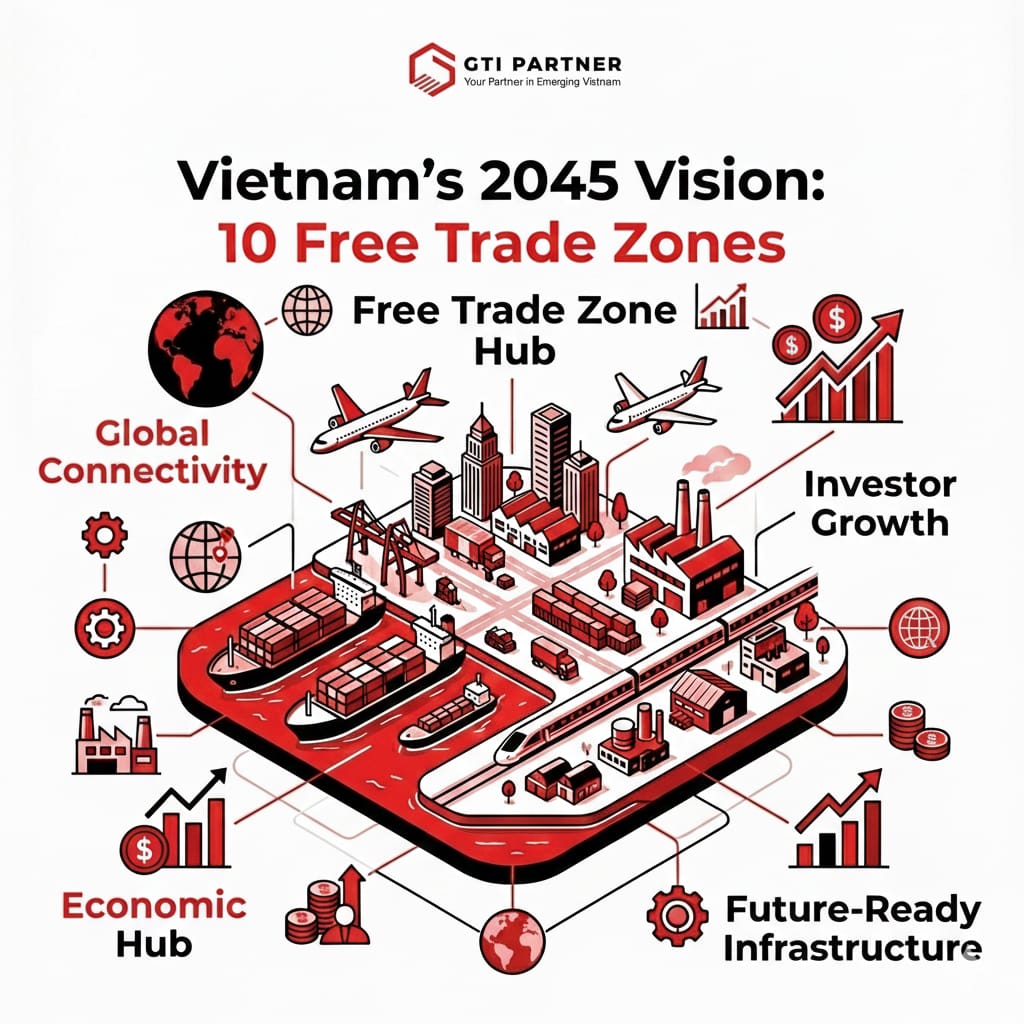
Vietnam has just unveiled one of its most ambitious economic initiatives in recent years — a plan to establish up to 10 internationally competitive free trade zones (FTZs) nationwide by 2045. Tuoi tre news
Under the new roadmap:
-
The first FTZs are expected in 2026 in Đà Nẵng, Hải Phòng and Ho Chi Minh City. vietnam.vn
-
By 2030, Vietnam aims to have 6–8 FTZs or similar special-economic-zone models across strategic localities.
-
By 2045, the plan is to achieve 8–10 FTZs that meet international standards, with these zones contributing 15–20% of national GDP.
This initiative signals a major structural shift in Vietnam’s economic strategy, with potentially far-reaching implications for foreign investors, exporters, manufacturers, and service providers.
Why Free Trade Zones — and Why Now?
🔹 Strategic Policy Focus
The government has framed FTZs as a new generation of economic growth engines — not just export hubs, but integrated zones for industry, services, trade, logistics, and innovation. FTZs are expected to test upgraded policies, offer streamlined regulations, and attract high-quality domestic and foreign investment.
🔹 Diversified Locations for Balanced Growth
Rather than concentrating solely in southern Vietnam, the planned zones span across north (Hải Phòng), central (Đà Nẵng), and south (HCMC), offering geographic diversity and broader regional access.
🔹 Global Benchmarks & Competitiveness
With over 7,000 free-economic and trade zones worldwide, Vietnam is positioning itself to adopt successful global practices. The government aims for these zones to be competitive with FTZs in East Asia, Southeast Asia, and beyond.
What This Means for Foreign Investors & Businesses
The FTZ rollout presents multiple strategic opportunities — especially for companies looking to establish, expand, or restructure operations in Vietnam. Key potential advantages:
✅ Lower Barriers for Import & Export
FTZs typically offer customs and tariff benefits, simplified logistics, and streamlined paperwork. For export-oriented manufacturers or trading firms, this could reduce cost, simplify supply chains, and speed up time-to-market.
✅ Access to Integrated Infrastructure & Services
These zones are likely to combine industrial, logistics, warehousing, commercial, and possibly tech-service facilities — useful for firms needing flexible supply-chain, storage, or distribution solutions.
✅ Attractive for High-Value Manufacturing & Export-Ready SMEs
Firms focused on export readiness, technology-intensive production, or global supply chains stand to benefit from improved infrastructure and regulatory support that FTZs may offer.
✅ Ideal for Service, Logistics, and Value-Added Sectors
FTZs may attract enterprises in logistics, warehousing, trade services, and after-sales operations — beyond manufacturing — offering new business windows.
✅ Potential for Long-Term Growth and Strategic Positioning
With FTZs targeted to contribute 15–20% of GDP, the government’s commitment suggests long-term stability, policy continuity, and increasing support for export and investment-oriented businesses.
What Businesses Should Do Now — Preparation & Strategy
If you’re considering tapping into Vietnam’s FTZ wave, here’s how to get ready:
-
Monitor legislation and FTZ definitions — As of now, Vietnam lacks a unified legal framework for FTZs; regulations and incentives may vary by zone and over time.
-
Identify suitable regions and zone-type — Distinguish between industrial FTZs, trading or logistics zones, and integrated economic zones depending on your business model.
-
Plan supply-chain, logistics, and export readiness — Use FTZs to optimize connectivity, storage, and export processes with minimal tariff and admin friction.
-
Align business offerings with zone incentives — High-tech, export-oriented, and value-added manufacturing or services often receive stronger policy support.
-
Engage local expertise for regulatory compliance — Understand land use, import/export licensing, customs, and potential requirements for foreign entities in FTZs.
-
Use GTI Partner for entry strategy and connections — We can help evaluate zone options, navigate regulations, connect with local partners, and align operations with FTZ incentives.
A Strategic Moment for Forward-Looking Investors
Vietnam’s ambition to build up to 10 international-standard free trade zones by 2045 marks a significant shift in long-term economic planning. For foreign investors, exporters, and companies seeking regional manufacturing or logistics hubs, this represents a rare window of opportunity — especially if entered with foresight, strategic planning, and local guidance. With informed execution and the right local partner, now is an opportune time to position for long-term growth in Vietnam.
Consult Our Vietnam Market Expert
Related posts

Vietnam’s Digital Infrastructure Boom: Opportunities in Data Centers, Cloud, and Telecom for Foreign Investors
Vietnam’s Digital Infrastructure Boom: Opportunities in Data Centers, Cloud, and Telecom for Foreign Investors Vietnam
Vietnam’s 2026 FDI Outlook: High-Tech and Green Growth
Vietnam’s 2026 FDI Outlook: High-Tech and Green Growth Vietnam is entering 2026 with strong momentum
🇻🇳 Vietnam’s 8% VAT Policy Extension: What It Means for SMEs and Investors in 2025–2026
🇻🇳 Vietnam’s 8% VAT Policy Extension: What It Means for SMEs and Investors in 2025–2026

Vietnam’s Manufacturing Talent Shift: How Workforce Upskilling Is Powering the Next Phase of Industrial Growth
Vietnam’s Manufacturing Talent Shift: How Workforce Upskilling Is Powering the Next Phase of Industrial Growth
Why Vietnam Is Becoming the Preferred Manufacturing Alternative to China in 2025
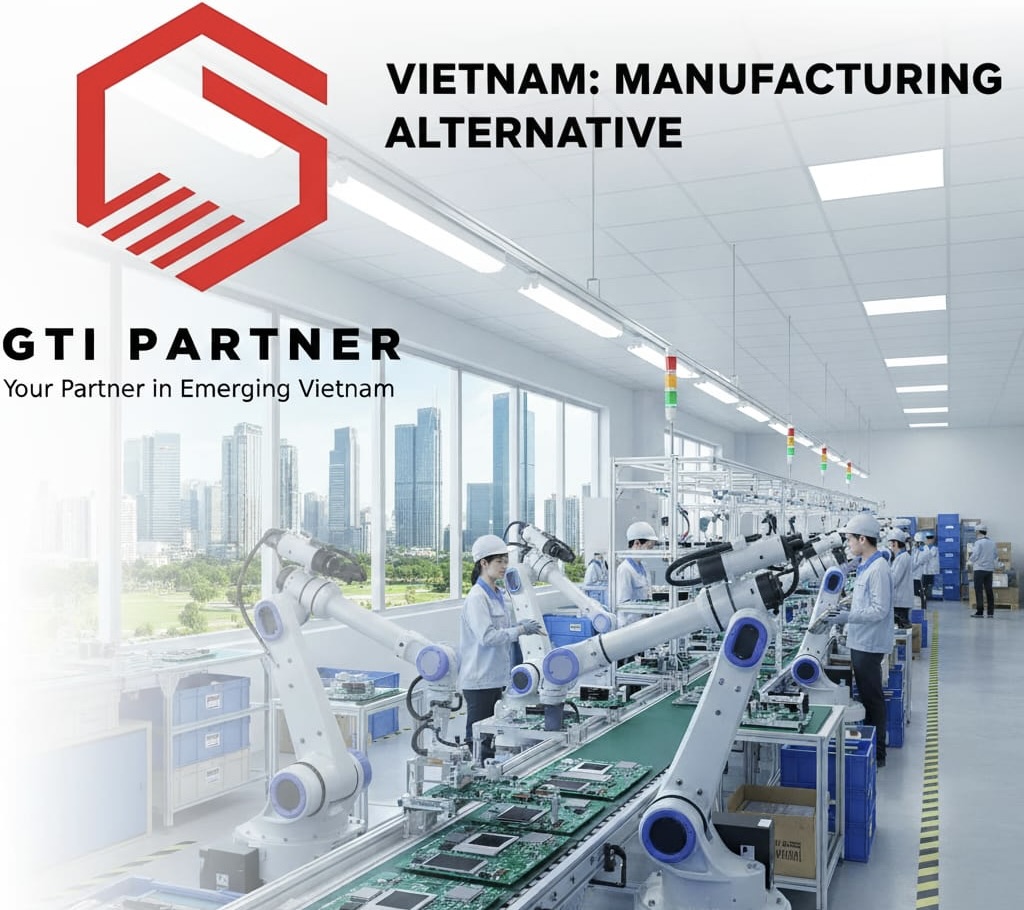
Why Vietnam Is Becoming the Preferred Manufacturing Alternative to China in 2025 Global supply chains