
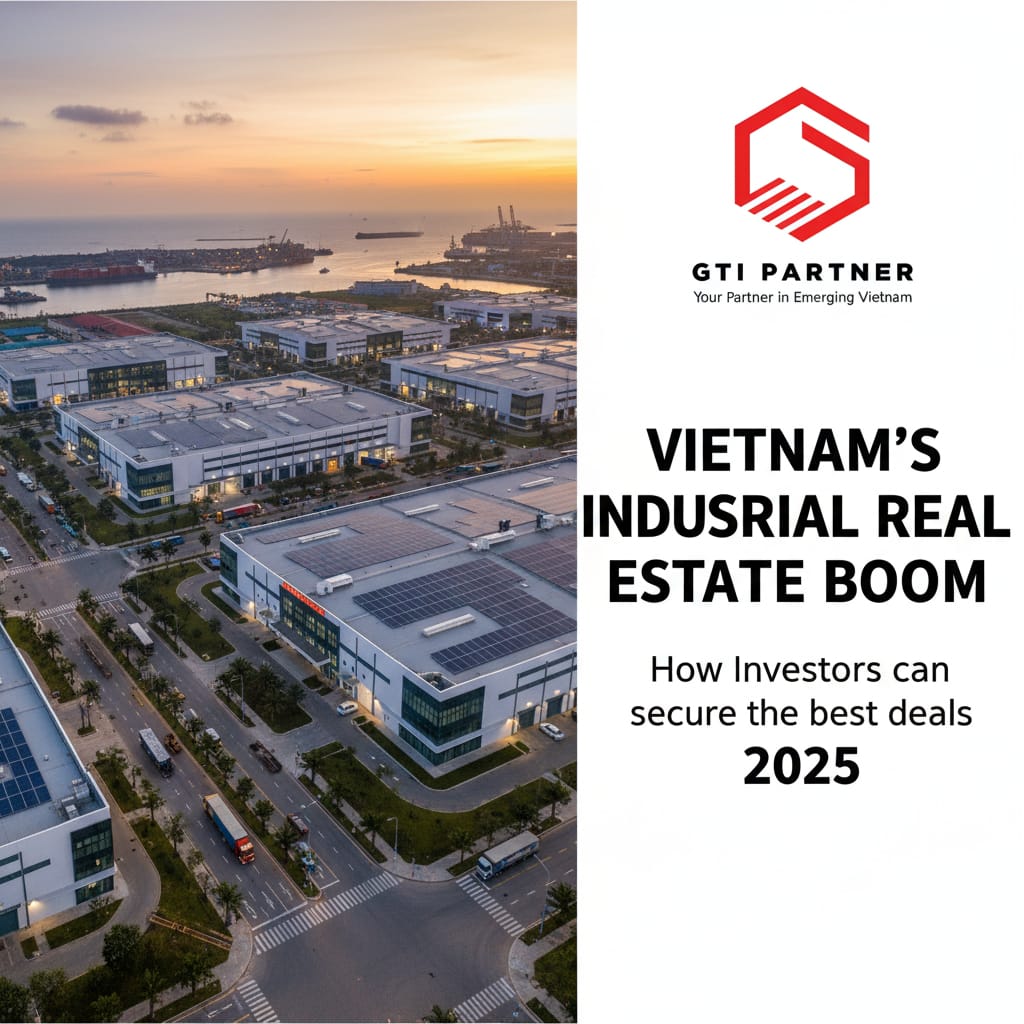
Vietnam’s Industrial Real Estate Boom: How Investors Can Secure the Best Deals in 2025
09/10/2025
Vietnam’s Industrial Real Estate Boom: How Investors Can Secure the Best Deals in 2025
Vietnam’s industrial real estate market is one of the clearest beneficiaries of Vietnam’s recent GDP and FDI momentum — and 2025 looks set to be another year of active leasing, new logistics supply and strong investor appetite. But opportunity is not automatic: site selection, logistics links, power and workforce planning, and correctly structured deals determine whether an investor captures value or inherits risk!
Market snapshot — the data that matters
- FDI and macro tailwinds: Vietnam’s FDI disbursement and overall FDI stock remain large engines for industrial land demand. Vietnam recorded robust FDI inflows and disbursements in 2024; disbursement reached about USD 25.35 billion in 2024, supporting factory expansion and logistics demand. Ministry of Planning and Investment
- Real estate outlook: Professional market reports (CBRE, JLL, Savills) show continued momentum in industrial leasing and rising interest in southern industrial corridors (Ho Chi Minh City, Binh Duong, Long An, Tay Ninh) while Central Vietnam hubs such as Da Nang are emerging as complementary growth nodes. These advisers report steady leasing demand and manageable vacancies through early-to-mid 2025. CBRE Vietnam Market Outlook 2025
- Regional dynamics: The south (Ho Chi Minh City and surrounding provinces) remains the largest demand center, driven by electronics and export manufacturing; Hanoi and the north keep capturing higher-tech FDI and a rising occupancy trend. CBRE and local market briefs point to falling vacancy and modest rent uplifts in major nodes in early 2025. CBRE Hanoi Figures Q1 2025
- Infrastructure & logistics: Port capacity and expressway upgrades (including investments around Cai Mep-Thi Vai, Cat Lai, new inland logistics parks, and improved road links) are directly reducing logistics cost and improving the attractiveness of industrial parks near deep-water ports and expressway interchanges. That integration is a major reason investors are targeting corridor locations rather than isolated plots. TPM Vietnam’s Logistics
What’s driving demand now (short list)
- Reshoring / China+1 moves: multinational supply chains continue to diversify manufacturing footprints away from single-country concentration.
- Export recovery & consumption: exporters and domestic distribution require warehouses and bonded logistics close to ports and urban centers.
- Infrastructure upgrades: port/deep-water capacity, expressways and industrial park utility investments materially cut lead times and logistics costs.
- Local policy & investment facilitation: provincial land administration and investor servicing (licensing, approvals) affect speed to market and therefore site desirability.
Where to look in Vietnam (practical hotspots)
- Southern Industrial Corridor (HCMC → Binh Duong → Long An → Tay Ninh): highest density of industrial parks, best port access to Cat Lai, Cai Mep. Ideal for export-oriented manufacturing and 3PL hubs. JLL
- Northern Corridor (Hanoi → Bac Ninh → Hai Phong): good for electronics and components, proximity to ports in Hai Phong and to the north-eastern supply chain.
- Central Vietnam (Da Nang, Quang Nam): attractive for firms seeking a central distribution node or reduced competition for land; growing FDI interest is driving new park supply. Savills
Practical checklist — how to secure the best industrial deal (step-by-step)
Before you commit
- Confirm the end-to-end logistics time-cost: model door-to-door lead times from supplier to port and the incremental cost of each site option (road congestion, night curfews, axle limits). Prioritize sites close to expressways or bonded logistics parks.
- Power & utilities due diligence: confirm available capacity, cost per kWh, and upgrade timelines. Many “ready-built” lots still require small substation works — price these early.
- Labour market fit: check local wage bands, shift availability, and worker training programs; for higher value assembly look for provinces with vocational training tie-ins.
- Legal land status & lease terms: confirm land use rights (LURs) vs. leasehold, allowed use class, sub-lease permissions, and break / early exit mechanics. Always require clean title searches and a legal opinion.
- Environmental & permitting pathway: check if the land requires environmental impact assessment (EIA) or special approvals for chemicals/processing. Factor time for EIAs into project timelines.
During negotiation
- Milestone payment & performance guarantees: prefer lease/sale contracts with staged payments tied to completion and utility connection milestones. Seek landlord commitments on infrastructure delivery dates.
Flexibility on fit-out & sublease: negotiate the right to sublease or assignment if you may scale down/up in 3–5 years. That preserves optionality.
Tax & incentive validation: confirm provincial incentives (reduced land rents, tax holidays) in writing and link incentives to performance milestones. Use local advisor to verify.
After signing
- Implement pre-production inspections: supplier audits, pre-shipment QC, and a town-hall recruitment plan to avoid opening delays.
- Continual compliance & relations management: maintain local engagement with provincial authorities to anticipate regulatory steps and secure faster problem resolution.
Deal structuring notes investors often overlook
- Lease vs. buy decision: in Vietnam, long-term leasehold with landlord CAPEX commitments is common and can be tax-efficient vs. freehold purchases which are limited and complex.
- Currency exposure: structure rents and long-term payments in USD or include currency pass-throughs for major capex to protect from VND volatility.
- Exit caps & assignment approvals: include explicit procedures for assignment to foreign buyers; absence of these clauses can reduce resale value.
- Force majeure & tariff risk: include clauses protecting both parties against sudden export tariff measures or logistical closures (important given 2024–25 tariff volatility and trade shocks).
Quick takeaways for investors in 3 lines!
- Demand remains strong and is backed by healthy FDI and infrastructure investment — but success depends on pragmatic site selection and contract structuring.
- Southern corridors remain the primary target for export manufacturing, while Central and Northern hubs provide strategic diversification.
- Use local advisors early to validate permits, incentives and logistics before signing — it materially reduces time-to-operational readiness.
Want help turning this into a project?
GTI Partner provides market entry, site selection, procurement readiness and negotiation support for industrial deals in Vietnam. We can produce a two-page site comparison for your preferred provinces (lead time, cost model, approvals required) within five business days.
- For practical market-entry steps and how GTI helps SMEs: How Global SMEs Can Overcome Barriers in Vietnam 2025.
- For local service and business setup support (quick contact for industrial projects): Vietnam Market Entry & Business Setup Services for SMEs
Related posts

Vietnam’s Digital Infrastructure Boom: Opportunities in Data Centers, Cloud, and Telecom for Foreign Investors
Vietnam’s Digital Infrastructure Boom: Opportunities in Data Centers, Cloud, and Telecom for Foreign Investors Vietnam
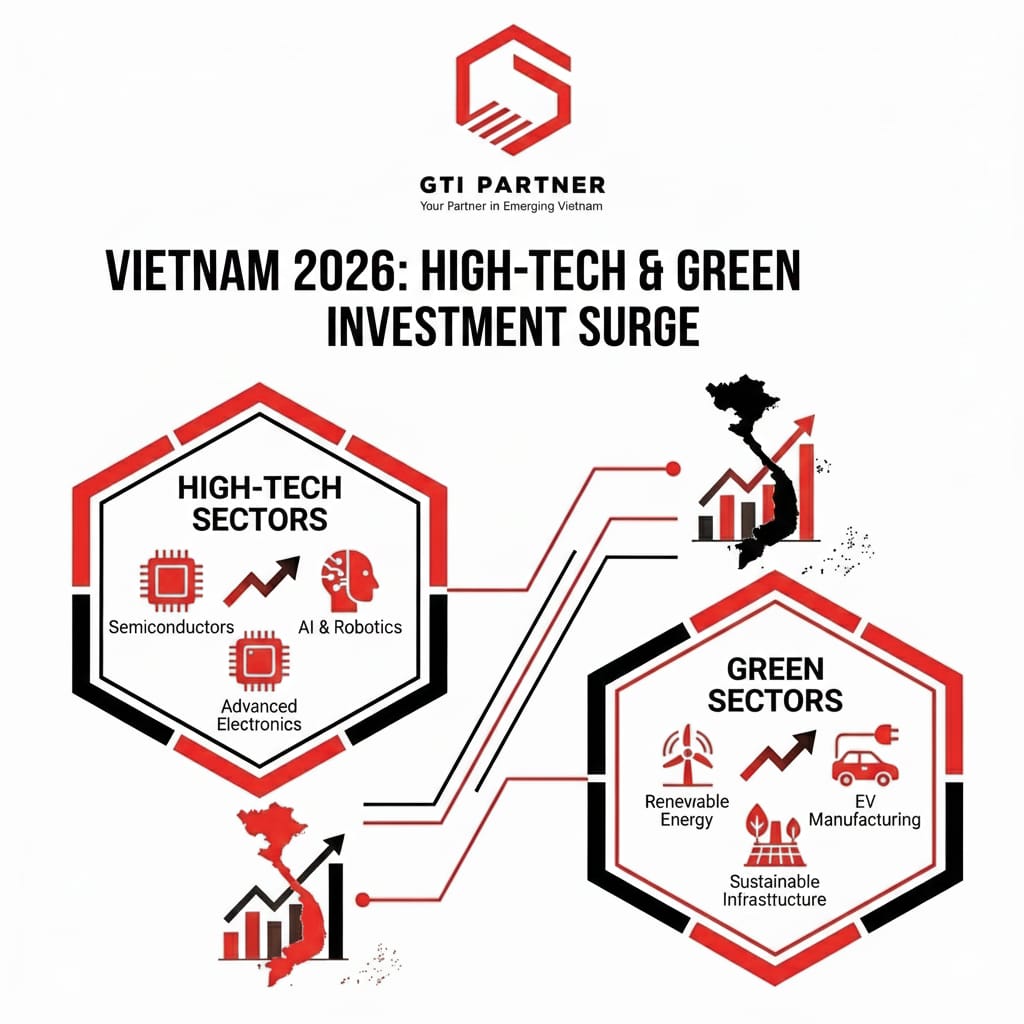
Vietnam’s 2026 FDI Outlook: High-Tech and Green Growth
Vietnam’s 2026 FDI Outlook: High-Tech and Green Growth Vietnam is entering 2026 with strong momentum
🇻🇳 Vietnam’s 8% VAT Policy Extension: What It Means for SMEs and Investors in 2025–2026
🇻🇳 Vietnam’s 8% VAT Policy Extension: What It Means for SMEs and Investors in 2025–2026

Vietnam’s Manufacturing Talent Shift: How Workforce Upskilling Is Powering the Next Phase of Industrial Growth
Vietnam’s Manufacturing Talent Shift: How Workforce Upskilling Is Powering the Next Phase of Industrial Growth
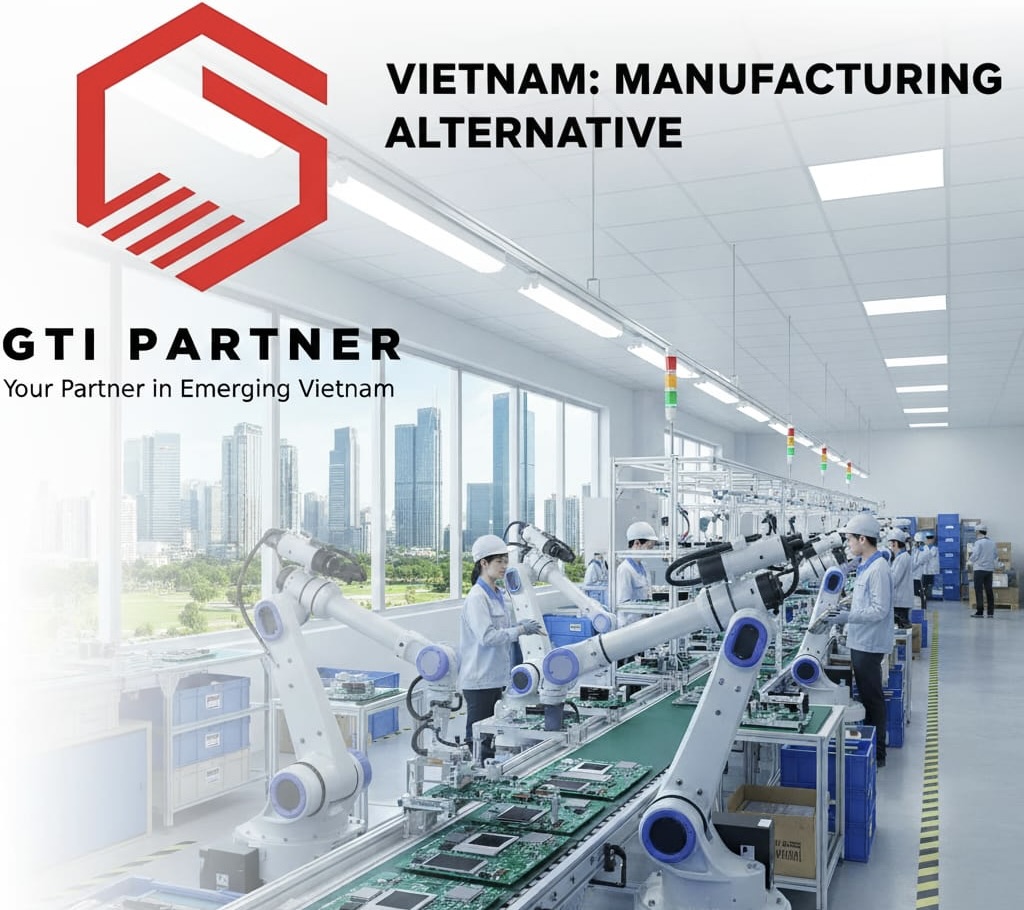
Why Vietnam Is Becoming the Preferred Manufacturing Alternative to China in 2025
Why Vietnam Is Becoming the Preferred Manufacturing Alternative to China in 2025 Global supply chains