
🇻🇳 Vietnam’s 8% VAT Policy Extension: What It Means for SMEs and Investors in 2025–2026
13/11/2025
🇻🇳 Vietnam’s 8% VAT Policy Extension: What It Means for SMEs and Investors in 2025–2026
Vietnam has taken another significant step to support businesses and stimulate domestic demand. The National Assembly recently approved the extension of the 2% value-added tax (VAT) reduction — meaning the standard 10% VAT rate remains temporarily lowered to 8% until the end of 2026.
This decision reflects Vietnam’s ongoing effort to maintain economic momentum, ease financial pressure on businesses, and sustain post-pandemic growth — all while reinforcing its position as one of Asia’s most business-friendly environments.
💡 What Is the VAT Reduction and Why It Matters
Initially introduced as part of Vietnam’s economic recovery plan, the VAT reduction aims to:
-
Lower operating costs for enterprises, particularly SMEs.
-
Boost consumer purchasing power and local demand.
-
Encourage continued domestic and foreign investment.
The government estimates that this move will inject billions of dong back into the economy over the next two years, supporting both manufacturing and service sectors.
🏭 Who Benefits from the 8% VAT Rate
The 8% VAT applies to most goods and services that were previously taxed at 10%, with some notable exceptions.
Included sectors:
-
Manufacturing and processing industries
-
Transportation and logistics
-
IT, retail, and hospitality services
-
Consumer goods and agriculture
Excluded sectors:
-
Banking and finance
-
Real estate and construction
-
Telecommunications
-
Mining, metals, and goods subject to special consumption tax
This selective application ensures that Vietnam’s productive sectors — especially those driving exports and domestic consumption — receive the most support.
🌏 Why It’s Good News for Investors
For foreign investors, this VAT extension sends a strong signal of policy stability and economic resilience. It reflects Vietnam’s balanced approach: stimulating short-term growth while keeping its tax system competitive in the region.
Moreover, Vietnam’s government continues to strengthen ties with strategic partners, such as GCC members, creating wider investment opportunities through trade agreements and funds like the Vietnam-UAE Comprehensive Economic Partnership Agreement (CEPA).
📊 The Broader Impact
The VAT cut helps businesses maintain liquidity, reduces pressure on production costs, and supports consumer spending — all vital for a growing market like Vietnam.
For SMEs, it’s an opportunity to reinvest savings into digital transformation, operational upgrades, or market expansion.
At a macro level, it reinforces Vietnam’s commitment to sustainable, inclusive growth, ensuring that both local and international enterprises continue to see the country as a secure and rewarding destination for long-term investment.
🤝 GTI Partner’s Perspective
At GTI Partner, we view the VAT extension as part of Vietnam’s broader pro-business strategy — combining fiscal relief, investment incentives, and regulatory modernization.
Our advisory team continues to assist foreign companies and SMEs in:
-
Understanding how tax policies affect cost structures;
-
Navigating compliance and documentation;
-
Identifying opportunities within Vietnam’s evolving business landscape.
Whether you are planning to enter the market or expand existing operations, understanding how policies like this influence your business decisions is crucial.
📈 Conclusion
Vietnam’s decision to maintain the 8% VAT rate until 2026 underscores its commitment to fostering a stable, investor-friendly economy. It’s a welcome move for SMEs, multinational firms, and investors alike — signaling that Vietnam is determined to sustain growth while supporting the private sector.
For businesses looking to explore or expand in Vietnam, now is the time to act strategically and take advantage of the favorable fiscal and trade environment.
Thẻ : foreign investment VAT reduction Vietnam economy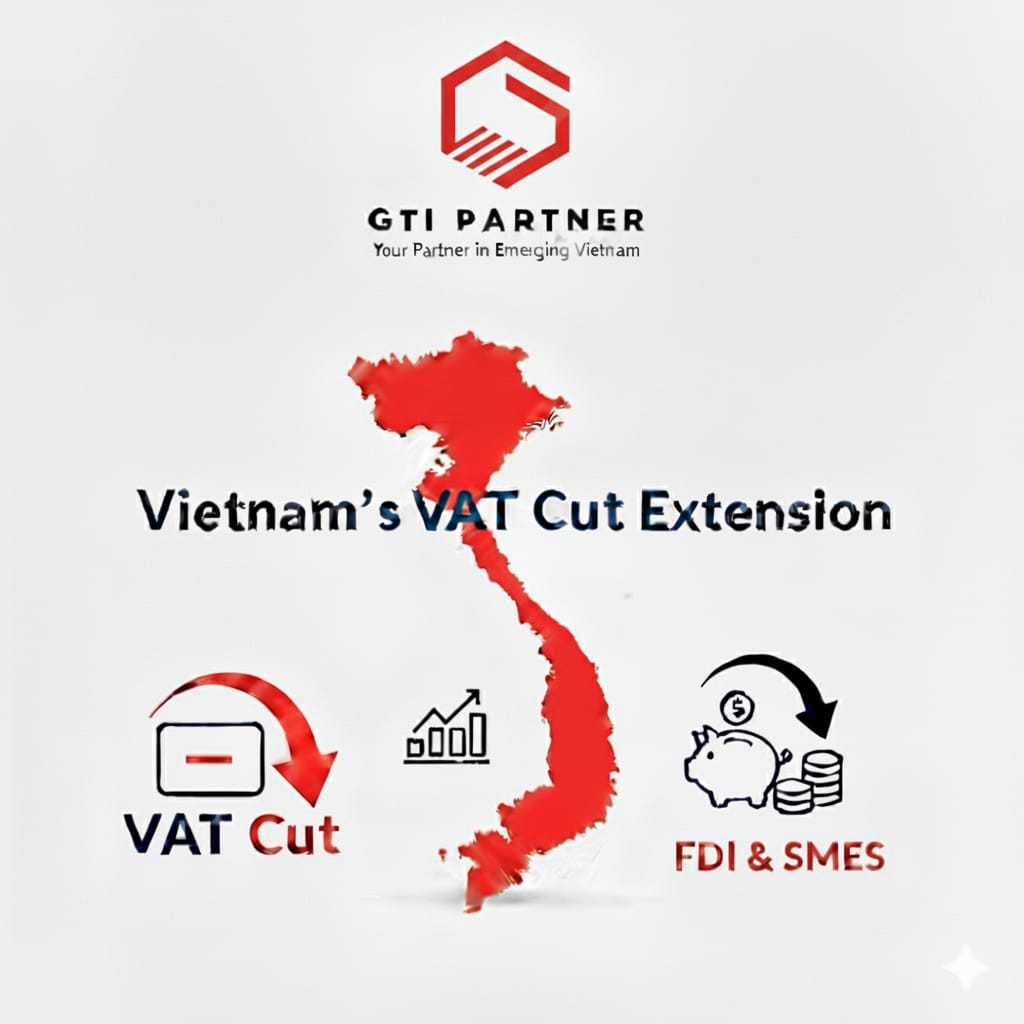
Related posts

Vietnam’s Digital Infrastructure Boom: Opportunities in Data Centers, Cloud, and Telecom for Foreign Investors
Vietnam’s Digital Infrastructure Boom: Opportunities in Data Centers, Cloud, and Telecom for Foreign Investors Vietnam
Vietnam’s 2026 FDI Outlook: High-Tech and Green Growth
Vietnam’s 2026 FDI Outlook: High-Tech and Green Growth Vietnam is entering 2026 with strong momentum

Vietnam’s Manufacturing Talent Shift: How Workforce Upskilling Is Powering the Next Phase of Industrial Growth
Vietnam’s Manufacturing Talent Shift: How Workforce Upskilling Is Powering the Next Phase of Industrial Growth

Why Vietnam Is Becoming the Preferred Manufacturing Alternative to China in 2025
Why Vietnam Is Becoming the Preferred Manufacturing Alternative to China in 2025 Global supply chains
Southeast Asia’s Ascent: Vietnam at the Forefront of the Next Global Supply Chain Hub
Southeast Asia’s Ascent: Vietnam at the Forefront of the Next Global Supply Chain Hub The