
🇻🇳🌏 Vietnam’s Logistics and E-commerce Boom: The Next Frontier for ASEAN Growth
24/10/2025
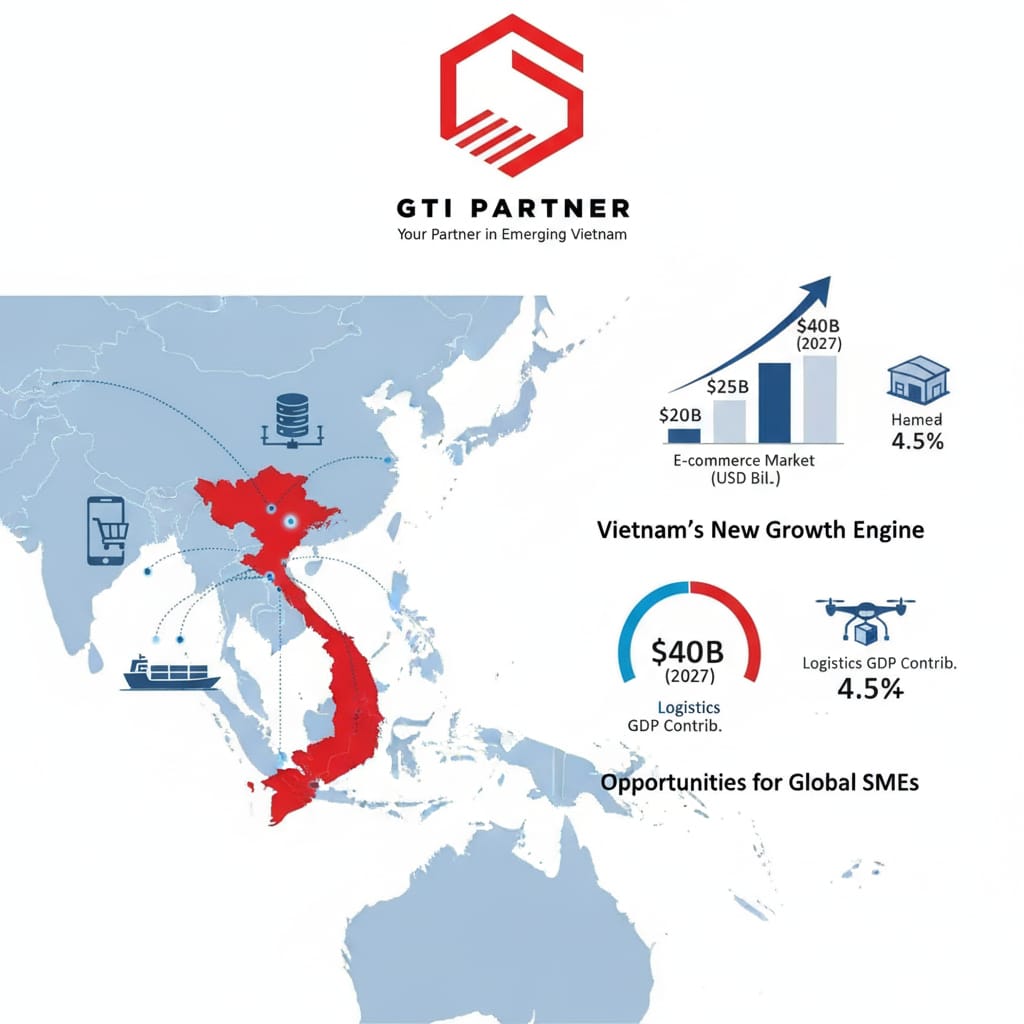
Vietnam’s New Growth Engine
Vietnam has rapidly evolved into one of ASEAN’s fastest-growing logistics and e-commerce markets. Fueled by rising consumer demand, regional integration, and strong FDI inflows, the country is redefining its role in Asia’s digital supply chain.
According to the Ministry of Industry and Trade, Vietnam’s e-commerce market surpassed USD 25 billion in 2024, growing nearly 20% year-on-year, with projections reaching USD 40 billion by 2027. Simultaneously, logistics now contributes over 4.5% to national GDP, supported by infrastructure upgrades and foreign investment from global logistics leaders such as DHL, Maersk, and CJ Logistics.
Key Growth Drivers
Digitalization and Mobile Commerce
With over 77% internet penetration and one of Asia’s youngest digital populations, Vietnamese consumers are increasingly shopping online. Platforms such as Shopee, Lazada, and TikTok Shop are seeing record sales volumes — supported by efficient last-mile delivery solutions and digital payment systems.
Strategic ASEAN Connectivity
Vietnam’s location makes it a central logistics hub linking China, ASEAN, and global trade routes. The ongoing expansion of deep-water ports (Cai Mep–Thi Vai), new expressways, and cross-border e-commerce zones near Lang Son and Lao Cai are positioning Vietnam as a critical gateway for regional trade.
Government Push for Smart Logistics
The Vietnamese government’s “National Logistics Development Strategy 2030” focuses on digital transformation, warehouse automation, and multimodal connectivity. Incentives and tax breaks are encouraging SMEs and foreign partners to invest in technology-driven logistics solutions.
Opportunities for Global SMEs
Global SMEs can leverage Vietnam’s growth momentum in several key areas:
- Cross-border fulfillment and distribution hubs
- Green and smart warehouse operations
- Cold chain logistics for food and pharmaceuticals
- Digital platforms for e-commerce analytics and payments
By partnering with local providers or establishing regional offices, foreign investors can capture the dual advantage of ASEAN market access and Vietnam’s competitive operational base.
Challenges and the Road Ahead
While opportunities abound, challenges persist — including fragmented logistics infrastructure, regulatory inconsistencies, and intense competition in the e-commerce space. Success requires strategic localization, strong partnerships, and cultural understanding — areas where expert guidance makes all the difference.
Conclusion
Vietnam’s logistics and e-commerce boom isn’t just a local success story — it’s an ASEAN-wide opportunity. For SMEs seeking scalable growth, Vietnam offers a unique mix of strategic geography, tech-driven consumer demand, and supportive policy frameworks.
Related posts
Vietnam’s Digital Infrastructure Boom: Opportunities in Data Centers, Cloud, and Telecom for Foreign Investors
Vietnam’s Digital Infrastructure Boom: Opportunities in Data Centers, Cloud, and Telecom for Foreign Investors Vietnam
Vietnam’s 2026 FDI Outlook: High-Tech and Green Growth
Vietnam’s 2026 FDI Outlook: High-Tech and Green Growth Vietnam is entering 2026 with strong momentum
🇻🇳 Vietnam’s 8% VAT Policy Extension: What It Means for SMEs and Investors in 2025–2026
🇻🇳 Vietnam’s 8% VAT Policy Extension: What It Means for SMEs and Investors in 2025–2026

Vietnam’s Manufacturing Talent Shift: How Workforce Upskilling Is Powering the Next Phase of Industrial Growth
Vietnam’s Manufacturing Talent Shift: How Workforce Upskilling Is Powering the Next Phase of Industrial Growth
Why Vietnam Is Becoming the Preferred Manufacturing Alternative to China in 2025
Why Vietnam Is Becoming the Preferred Manufacturing Alternative to China in 2025 Global supply chains