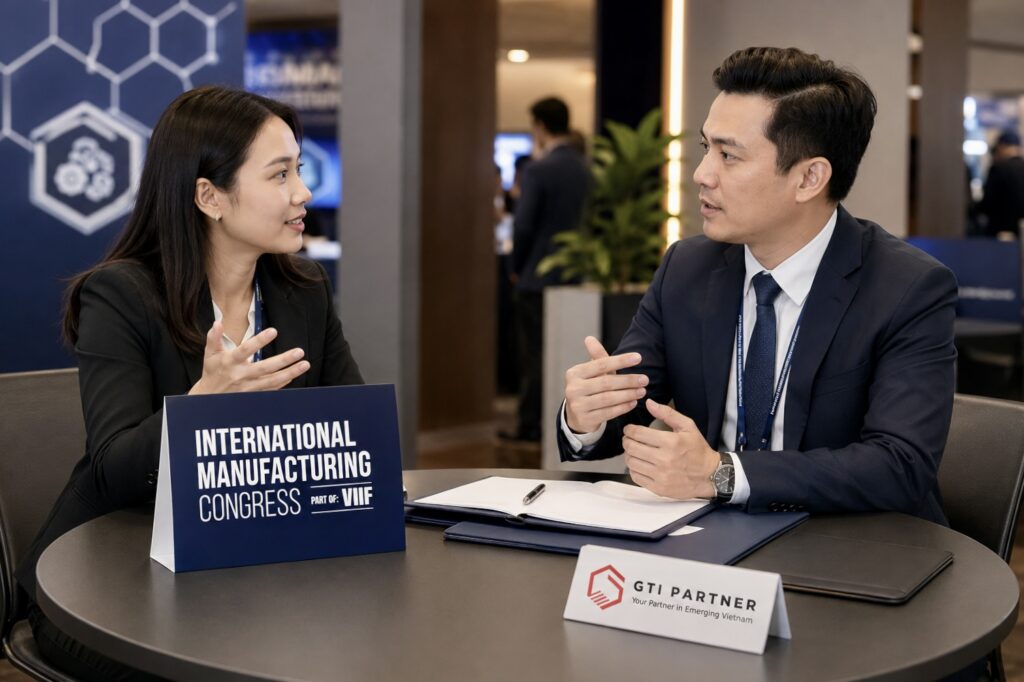
Enter Vietnam: Market Entry Strategy, Company Setup & Execution For Foreign SMEs Guide (2026)
18/02/2026
Strategic Feasibility Framework (2026 Executive Guide)
Many foreign SMEs ask how to enter Vietnam market successfully while reducing risk and setup delays. Entering Vietnam offers strong growth potential for foreign SMEs, but success rarely comes from registration alone. Companies that perform well usually follow a clear sequence: validate the market, choose the right structure, set up correctly, and execute locally with discipline.
This guide outlines the practical path used by SMEs that move from planning to operational success.
Why Foreign SMEs Choose to Enter Vietnam Market
Foreign SMEs are increasingly attracted to Vietnam for its business-friendly momentum, expanding middle class, and strategic position within Southeast Asia.
But the biggest reason companies choose Vietnam is practical opportunity. With the right setup and execution approach, SMEs can build meaningful market presence without the heavy overhead seen in larger markets. Success, however, depends less on opportunity alone and more on entering with a clear, structured plan.
Check out the latest statistics on Foreign Direct Investment (FDI) inflows: Vietnam Ministry of Planning and Investment.
Step 1: How to Enter Vietnam Market with Strategy & Validation
Before any registration or investment decisions, SMEs should validate their market assumptions.
Key questions include:
- Is there real demand for the product or service?
- Who controls distribution and partnerships?
- What local regulations influence entry speed?
A strong market entry strategy helps avoid costly structural mistakes later. This is where many companies benefit from structured Vietnam Market Entry consulting and practical assessment before committing resources.
Step 2: Choosing the Right Entry Structure (FDI vs Other Models)
Once the market opportunity is validated, the next decision is choosing the correct entry model.
Common options include:
- Foreign direct investment structures and corporate setups
- Joint ventures with local entities
- Establishing a Representative Office in Vietnam for market research
- Local partnership and distributor models
The right structure depends on commercial goals, risk tolerance, and long-term plans. Choosing too complex a model too early can slow execution, while choosing too lightly can limit growth.
Businesses comparing models should review dedicated FDI & Market Entry support guidance before deciding.
Step 3: Company Setup and Registration Process
After strategy and structure are clear, formal company setup begins.
Typical steps include:
- Selecting the optimal legal entity type
- Securing an Investment Registration Certificate (IRC) where required
- Completing the Enterprise Registration Certificate (ERC) phase
- Licensing and corporate compliance setup
- Tax registration and operational readiness
Proper sequencing matters. Many delays happen because companies treat setup as paperwork instead of part of a broader execution strategy.
For detailed setup guidance, businesses often review practical resources related to Company Setup in Vietnam and the IRC process before submitting applications.
Step 4: Execution on the Ground (Where Most SMEs Struggle)
This is the stage where many market entry plans fail.
Common execution challenges include:
- Local coordination gaps
- Regulatory follow-through
- Partner misalignment
- Operational realities differing from strategy
Execution requires local presence, active management, and ongoing adjustment. Companies that succeed usually work with partners who combine strategic guidance with practical implementation support.
Planning alone does not create market traction. Execution does.
Common Mistakes Foreign SMEs Make
Several patterns appear repeatedly:
- Moving into registration before validating market assumptions
- Choosing structures based only on cost
- Underestimating licensing timelines
- Separating setup decisions from operational execution
- Relying only on advisory support without local follow-through
Avoiding these mistakes saves both time and capital.
How GTI Partner Supports Execution
GTI Partner supports foreign SMEs by combining strategy, setup, and execution into one continuous process.
The approach focuses on:
- Practical market entry planning
- Clear structural decisions
- Coordinated company setup
- Local execution support aligned with real business objectives
Rather than treating market entry as a checklist, the focus is on helping SMEs move from planning to sustainable operations inside Vietnam.
If you are evaluating expansion, start by reviewing the relevant service areas and selecting the approach that fits your current stage of growth.
Consult Our Vietnam Market Expert
Related posts

Vietnam’s next generation of industrial parks: What foreign investors need beyond land and infrastructure
Vietnam’s next generation of industrial parks: What foreign investors need beyond land and infrastructure When
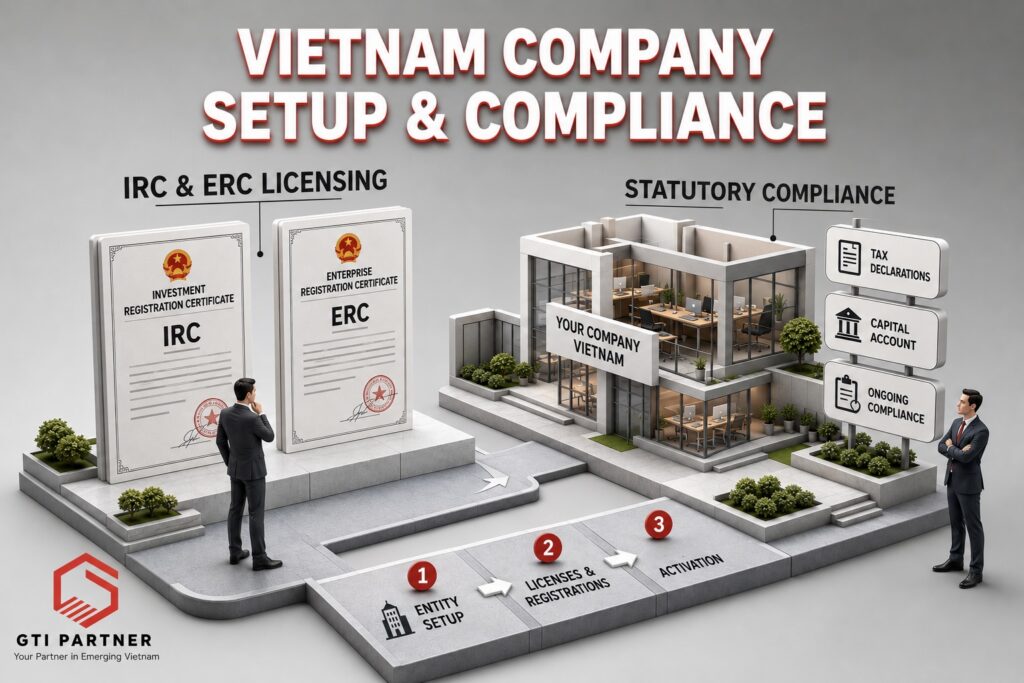
Company registration in Vietnam under the 2026 investment law
Company registration in vietnam under the 2026 investment law Starting a business in Southeast Asia
LLC vs JSC in Vietnam: Which Corporate Structure is Best for Foreign Investors?
LLC vs JSC in Vietnam: Which Corporate Structure is Best for Foreign Investors? Evaluating LLC

Vietnam Market Entry Strategy: 2026 Mistakes to Avoid
Vietnam business entry errors: 2026 Mistakes to Avoid Expanding your business into Southeast Asia requires