Shareholder Deadlocks in Vietnam joint ventures require careful pre-planning and clear legal frameworks. Without pre-engineered exit mechanisms, foreign investors risk severe financial entrapment and prolonged operational paralysis.
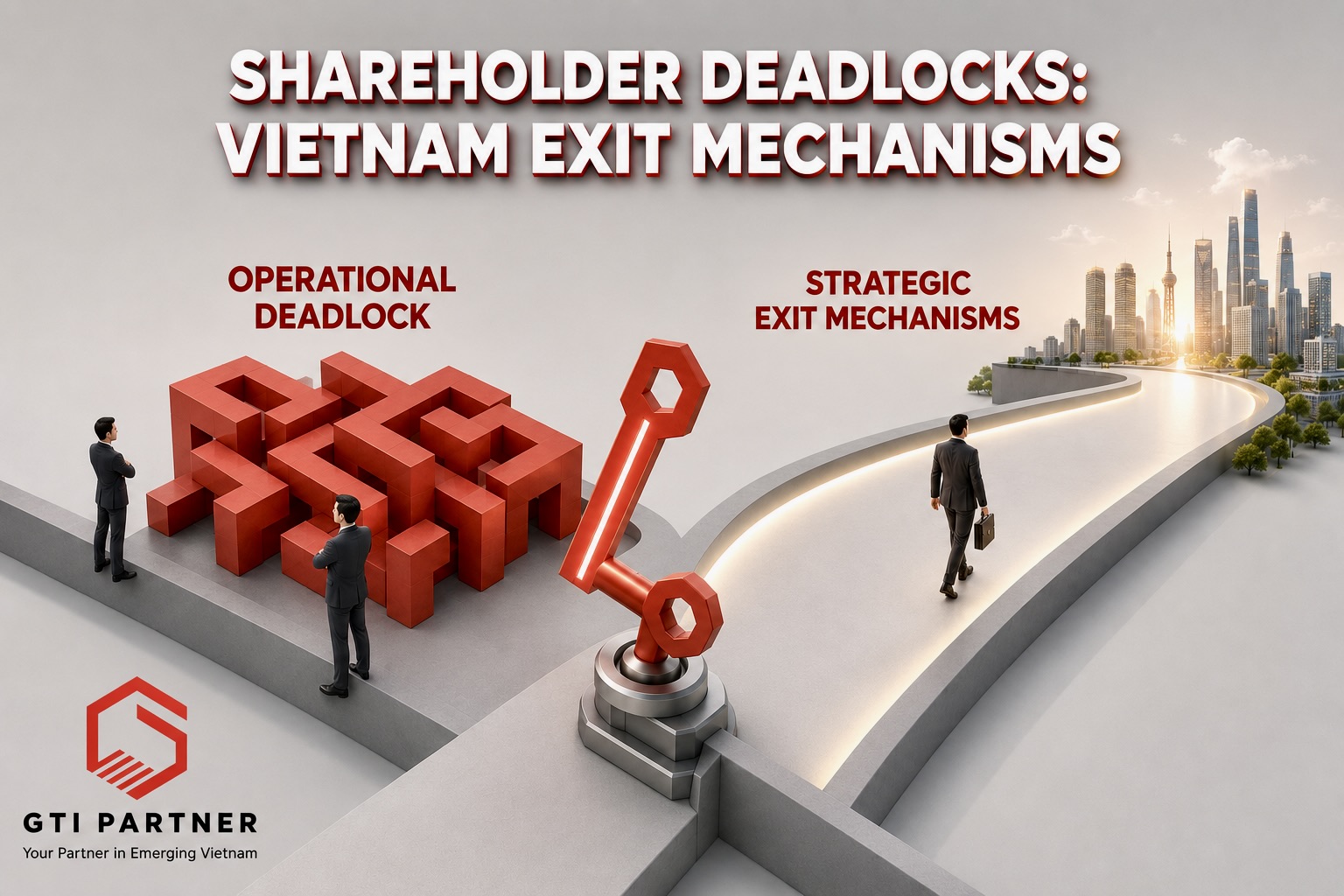
Resolving Shareholder Deadlocks in Vietnam
When foreign and local partners hold equal equity or conflicting operational visions, standard corporate decision-making halts completely. Relying on statutory dispute resolution under local regulations is slow, expensive, and unpredictable for foreign stakeholders navigating cross-border investments. You can review regional legal frameworks through external references like the ASEAN Secretariat to better understand cross-border corporate compliance standards. Operational gridlock typically manifests during capital call disagreements, strategic pivots, or management deadlocks. Without contractual pre-planning, companies face prolonged litigation or total asset paralysis that threatens overall enterprise value.
Essential Exit Mechanisms to Prevent Shareholder Deadlocks in Vietnam
To protect your capital, your shareholder agreement must incorporate clear, enforceable buy-sell mechanisms before incorporation takes place.
- Put and Call Options: Define precise performance or timeline triggers that compel a local partner to buy out your stake or sell theirs at a pre-calculated valuation.
- Russian Roulette Clauses: Establish a fair bidding system where one party names a share price, forcing the other party to either buy out the initiator or sell their own shares at that exact valuation.
- Drag-Along and Tag-Along Rights: Protect majority holders by forcing minority partners to join a beneficial third-party sale, while securing minority protection if a majority partner sells out.
Navigating Regulatory Hurdles and Shareholder Deadlocks in Vietnam
Private shareholder agreements must be drafted to survive strict scrutiny from local licensing authorities. Foreign equity transfers require explicit approval updates and amendments to your Enterprise Registration Certificate. Local courts may refuse to enforce foreign-style penalty clauses if they conflict with mandatory domestic corporate rules. Precision in contract drafting ensures your exit mechanisms remain legally binding under local jurisdiction for all participating stakeholders.
Need Expert Guidance on Your Vietnam Joint Venture?
Protect your capital and structure airtight governance frameworks with GTI Partner.