
Corporate Governance Vietnam: 2026 Investor Guide
02/07/2026

When entering the Vietnamese market, understanding Corporate Governance in Vietnam is the most critical step for foreign investors. Long-term success is rarely determined by the ease of entity registration; it is determined by the robustness of your control framework. Whether you are a manufacturing firm scaling production or a technology service provider, the gap between owning a legal entity and maintaining actual control over its operations is where most cross-border joint ventures succeed or fail. For official regulatory standards, you can refer to the Viet Nam Corporate Governance Code 2026 published by the State Securities Commission.
This guide provides a strategic architecture for Corporate Governance in Vietnam to protect your capital, intellectual property, and operational intent.
Corporate Governance Vietnam: The Strategic Architecture of a Joint Venture
A Joint Venture in Vietnam is not merely a business arrangement; it is a legal vehicle requiring a dual-layered management approach. You must clearly distinguish between Operational Control and Governance Control to succeed. For more on your initial entry path, align this framework with our Vietnam Market Entry Strategy 2026 guide.
Corporate Governance Vietnam: Key Mechanisms for Reserved Matters
The foundation of any robust Corporate Governance Vietnam strategy is the Reserved Matters matrix. This document dictates which decisions require unanimous approval, effectively granting you a veto over critical local partner decisions. For a deep dive into creating an enforceable list of veto rights, read our guide on Corporate Governance in Vietnam: A Guide to Reserved Matters.
Structuring Your Joint Venture for Governance Success
Governance is only as strong as your initial FDI Control Framework. Investors often mistakenly believe that local law dictates their governance structure, but the Charter and Shareholder Agreement provide significant flexibility. Integrate the security protocols detailed in our FDI Control Framework: Governance and IP Security in Vietnam guide.
Operational Security and Corporate Governance in Vietnam
While governance is your primary defense, operational stability protects your day-to-day capital. Your architecture must account for specific regional risks:
- IP Protection: Treat IP security as a continuous governance strategy rather than a one-time filing. Learn more in our Securing Your Intellectual Property in Vietnam: Proactive Governance guide.
- Labor and Compliance: Review the latest data in our Vietnam Industrial Labor Rates: HCMC vs. Adjacent Zones guide.
- Land and Infrastructure: Compare your options in our Industrial Land Lease in Vietnam: Comparing Tier 1 and Tier 2 Zones guide.
- Financial Integrity: Follow our Capital Injection and Banking Compliance for Foreign Investors in Vietnam guide.
Ready to Audit Your JV Structure?
Governance is an evolving requirement. Let our experts review your current framework to ensure your investment is fully protected.
Related posts
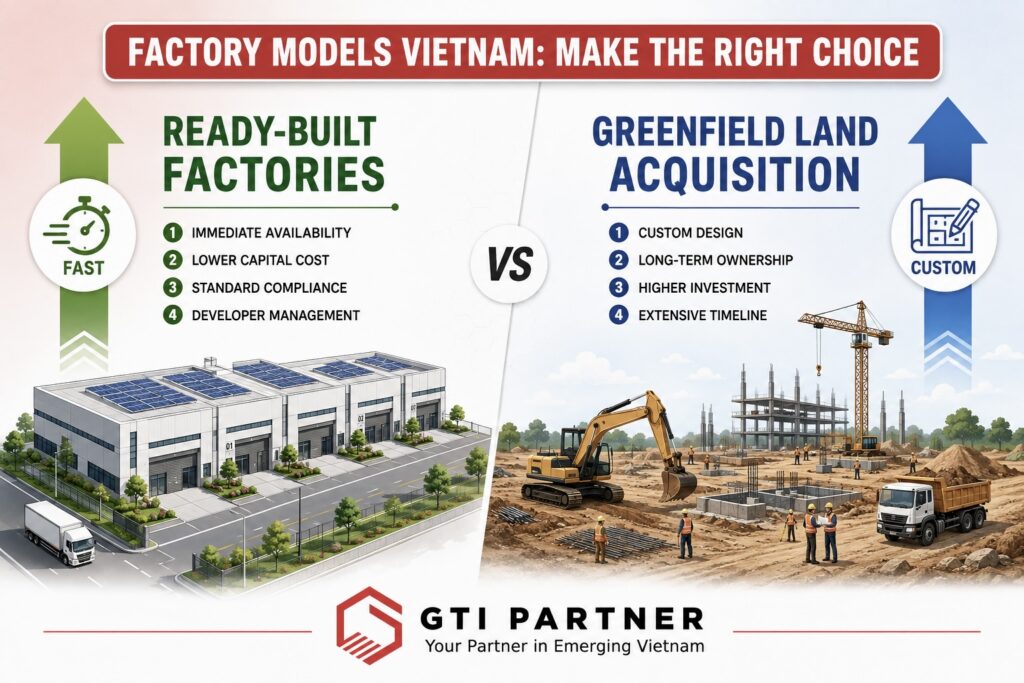
Ready-built factories vs greenfield land acquisition: Choosing the right model in Vietnam
Ready-built factories vs greenfield land acquisition: Choosing the right model in Vietnam When expanding manufacturing

Vietnam’s next generation of industrial parks: What foreign investors need beyond land and infrastructure
Vietnam’s next generation of industrial parks: What foreign investors need beyond land and infrastructure When
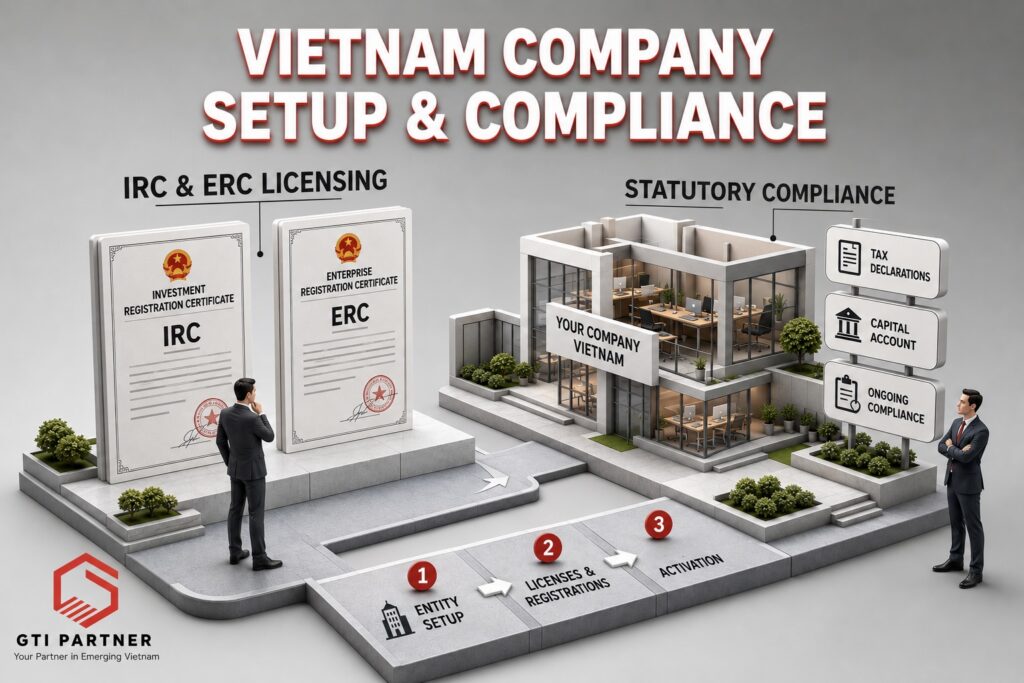
Company registration in Vietnam under the 2026 investment law
Company registration in vietnam under the 2026 investment law Starting a business in Southeast Asia
LLC vs JSC in Vietnam: Which Corporate Structure is Best for Foreign Investors?
LLC vs JSC in Vietnam: Which Corporate Structure is Best for Foreign Investors? Evaluating LLC
Vietnam Market Entry Strategy: 2026 Mistakes to Avoid
Vietnam business entry errors: 2026 Mistakes to Avoid Expanding your business into Southeast Asia requires