
Vietnam Supply Chain Resilience: Scaling Manufacturing in 2026
03/06/2026
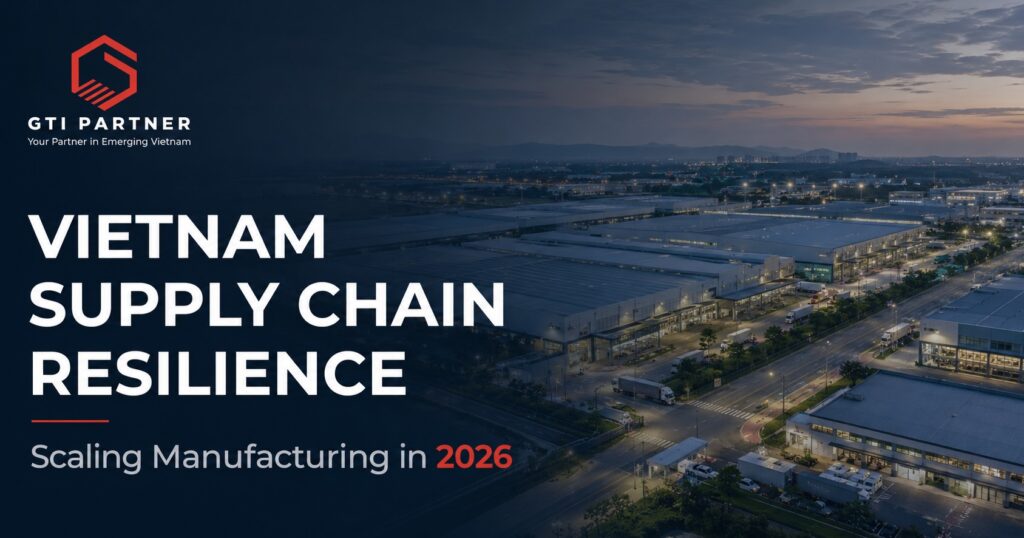
Vietnam Supply Chain Resilience: Scaling Manufacturing in 2026
As manufacturing hubs across Asia face increasing volatility, foreign-invested enterprises in Vietnam are shifting their focus from simple speed-to-market to long-term operational stability. Building Vietnam supply chain resilience is now the defining factor for companies looking to scale production successfully in 2026.
Diversifying for Vietnam Supply Chain Resilience
The days of relying on a single-source supplier are over. To maintain continuity, manufacturers must diversify their vendor network, ensuring that raw material inputs are sourced from both local providers and reliable regional partners. For official policy updates on trade and investment, refer to the Ministry of Planning and Investment.
Enhancing Vietnam Supply Chain Resilience via Integration
Modern industrial parks are no longer just physical spaces; they are digital ecosystems. Leveraging infrastructure that integrates IoT and real-time logistics tracking allows facility managers to:
- Monitor inventory flow with precision to reduce overhead costs.
- Identify bottlenecks in the production cycle before they escalate.
- Improve coordination with local customs and logistics providers.
This level of integration is essential for those who have already established their land lease structures and are now moving into the growth phase of their business.
The GTI Partner Approach to Resilience
Vietnam is evolving from a destination for simple assembly into a hub for value-added manufacturing. Enhancing your Vietnam supply chain resilience requires moving toward localized value chains. By investing in local human capital and adopting advanced production standards, you not only comply with local regulations – such as those detailed in our industrial zone compliance checklist – but you also create a more agile and responsive operation.
Conclusion: Planning for Long-Term Stability
True operational success in the Vietnamese market requires a shift from reactive problem solving to predictive planning. By continuously refining your logistics and maintaining a strict focus on compliance, your firm can successfully weather regional economic fluctuations. This proactive posture is what separates thriving global manufacturers from those constantly struggling with operational gaps. We are here to help you build that foundation today.
Optimize your supply chain strategy
Related posts
The Vietnam JV Governance Manifesto: Why “Legal Incorporation” Is Not Operational Control
The Vietnam JV Governance Manifesto: Why “Legal Incorporation” Is Not Operational Control Many foreign SMEs
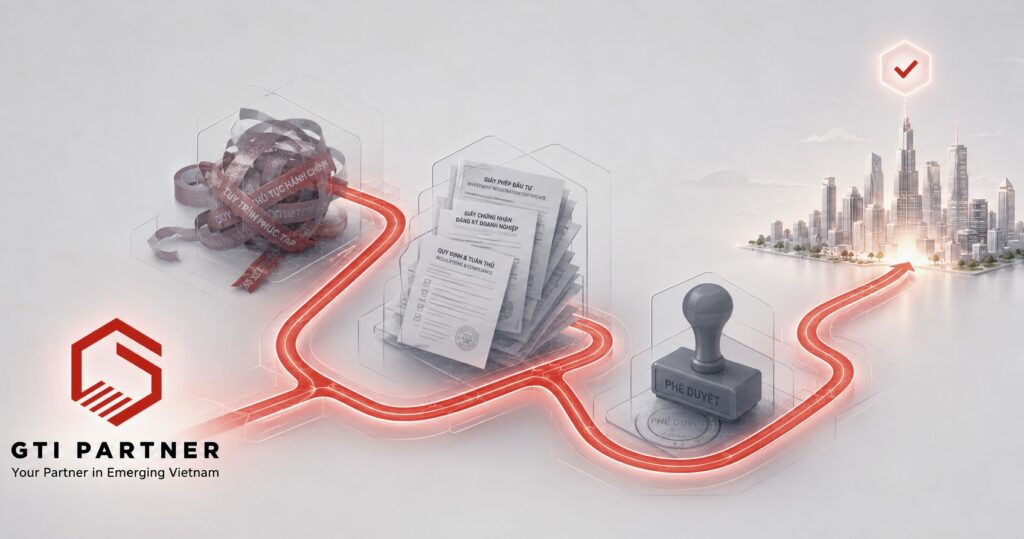
3 Hidden Vietnam Market Entry Bottlenecks (Fix Your Strategy)
3 Hidden Vietnam Market Entry Bottlenecks (Fix Your Strategy) Many foreign SMEs view Vietnam through

Corporate Governance Vietnam: 2026 Investor Guide
Strategic Context: To see how these operational topics connect within a unified control framework, read