
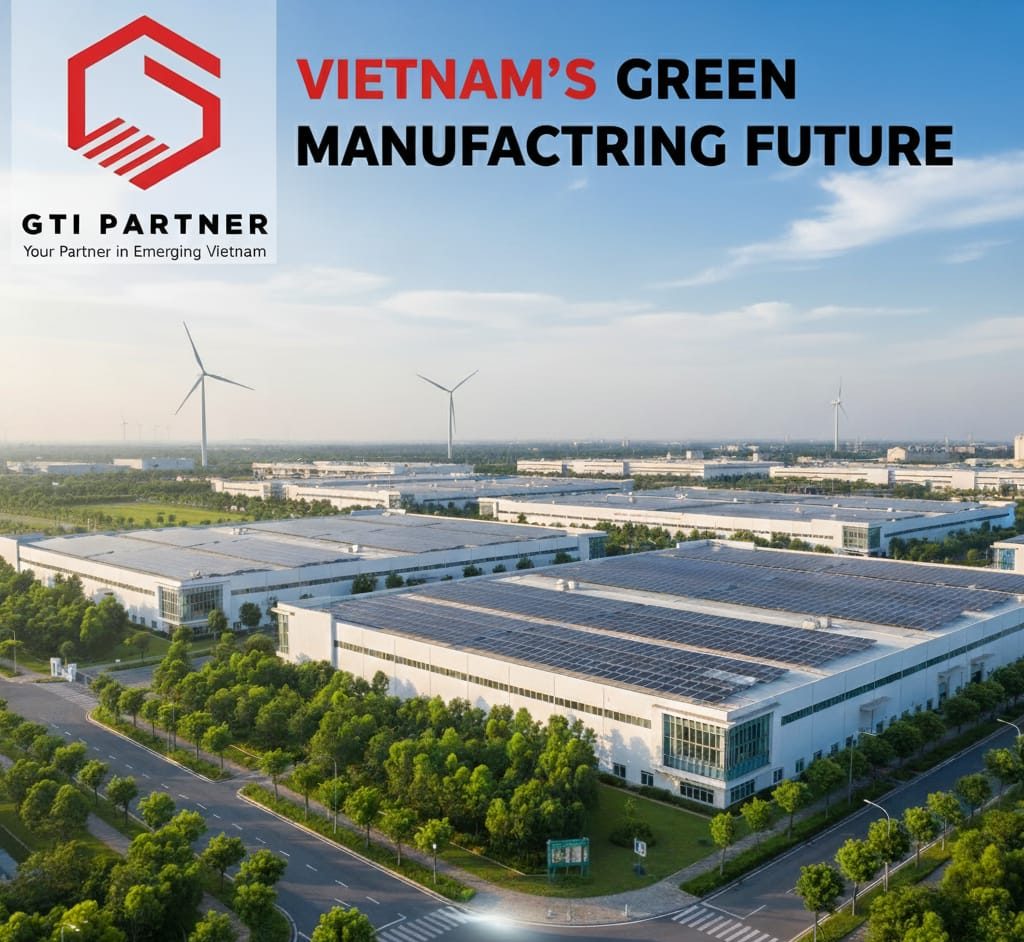
Vietnam’s Green Manufacturing Transition: Driving the Next Wave of Sustainable Growth
14/10/2025
🌿 Vietnam’s Green Manufacturing Transition: Driving the Next Wave of Sustainable Growth
Vietnam’s manufacturing sector has become one of Asia’s most dynamic, but the next phase of its evolution will be defined by sustainability. As global supply chains shift toward low-carbon production and ESG compliance, Vietnam’s factories and industrial parks are rapidly adapting to meet new green standards.
The Shift Toward Sustainable Manufacturing
In recent years, Vietnam has made decisive moves toward cleaner and more efficient production. Under its National Green Growth Strategy (2021–2030), the government targets a 15% reduction in energy intensity by 2030 and aims for renewable energy to account for 32% of total power generation.
International investors are responding. According to the Ministry of Planning and Investment, over 45% of new FDI projects approved in 2024 included commitments to sustainable production or renewable power sourcing. Global manufacturers such as Samsung, Lego, and Foxconn have announced significant green investments — from solar rooftops to carbon-neutral operations.
Why This Matters for SMEs and Investors
SMEs looking to enter or expand in Vietnam’s industrial landscape must now align with ESG and carbon-reduction expectations from international buyers.
-
Export Advantage: EU and North American markets are increasingly enforcing carbon border adjustment mechanisms (CBAM). Factories using renewable energy or efficient systems will retain cost and trade advantages.
-
Investment Incentives: The Vietnamese government offers corporate tax reductions, land lease discounts, and green financing options for certified eco-industrial projects.
-
Supply Chain Security: Multinational firms now prioritize sustainable local partners to meet their global reporting and compliance obligations.
Emerging Green Industries
The transition is also creating new growth opportunities in:
-
Renewable energy technology manufacturing (solar panels, battery storage, EV components)
-
Circular economy practices (recycling, waste-to-energy)
-
Green industrial parks, such as the DEEP C Industrial Zones in Hai Phong, designed with renewable energy systems and water recycling facilities.
💡 You might also be interested in:
Vietnam’s Industrial Real Estate Boom 2025
What’s Next
For Vietnam to sustain its competitiveness, the integration of sustainability into industrial policy, infrastructure, and skills training must continue. The challenge lies in enabling SMEs — which make up 97% of Vietnam’s businesses — to access green financing and technology upgrades. At GTI Partner, we help international investors and SMEs develop tailored market entry and sustainability strategies, ensuring alignment with Vietnam’s evolving regulatory ESG frameworks.
Your Vietnam Market Strategy Starts Here
Related posts
Vietnam’s Digital Infrastructure Boom: Opportunities in Data Centers, Cloud, and Telecom for Foreign Investors
Vietnam’s Digital Infrastructure Boom: Opportunities in Data Centers, Cloud, and Telecom for Foreign Investors Vietnam
Vietnam’s 2026 FDI Outlook: High-Tech and Green Growth
Vietnam’s 2026 FDI Outlook: High-Tech and Green Growth Vietnam is entering 2026 with strong momentum
🇻🇳 Vietnam’s 8% VAT Policy Extension: What It Means for SMEs and Investors in 2025–2026
🇻🇳 Vietnam’s 8% VAT Policy Extension: What It Means for SMEs and Investors in 2025–2026

Vietnam’s Manufacturing Talent Shift: How Workforce Upskilling Is Powering the Next Phase of Industrial Growth
Vietnam’s Manufacturing Talent Shift: How Workforce Upskilling Is Powering the Next Phase of Industrial Growth
Why Vietnam Is Becoming the Preferred Manufacturing Alternative to China in 2025
Why Vietnam Is Becoming the Preferred Manufacturing Alternative to China in 2025 Global supply chains