
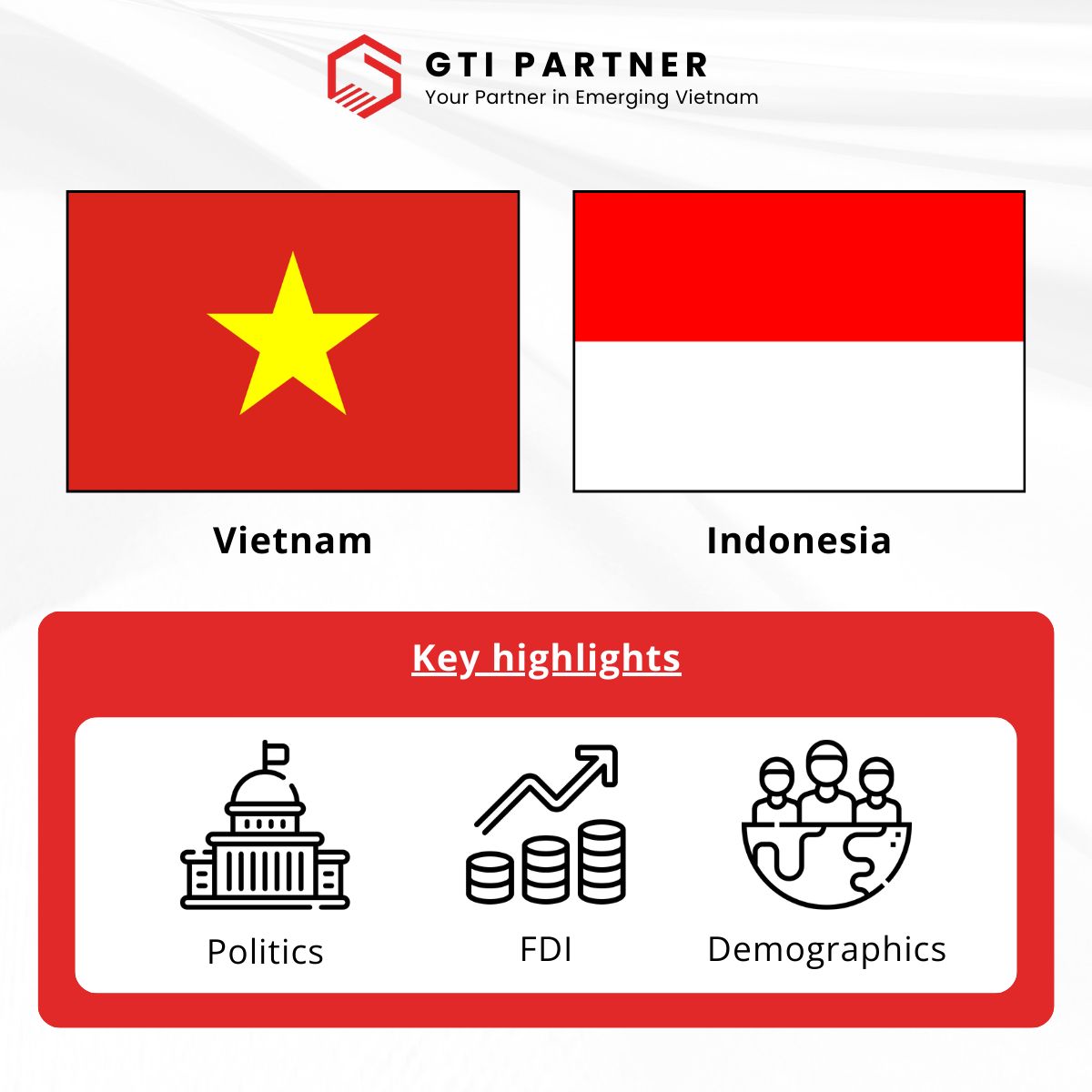
Vietnam vs. Indonesia: Key Highlights for Global SMEs Considering Market Entry
17/09/2025
Southeast Asia remains one of the fastest-growing economic regions in the world, and two strategic markets consistently sitting at the center of corporate board attention are Vietnam and Indonesia. While both countries present substantial investment opportunities, they differ significantly in their baseline economic structures, foreign direct investment (FDI) inflows, and ease-of-doing-business indicators. For international small and medium enterprises (SMEs) evaluating their next regional expansion step, analyzing the core parameters of vietnam or indonesia is crucial for risk mitigation and long-term commercial success.
Vietnam or Indonesia: Structural Market Entry Comparison
When engineering an expansion roadmap across Southeast Asia, corporate decision-makers must evaluate key operational differences. Below is a structured analysis of how both economies stack up across vital commercial investment pillars.
| Strategic Factor | Vietnam | Indonesia |
|---|---|---|
| Economic Profile | GDP: ~$450 Billion. Highly export-driven, manufacturing centric, deeply integrated into global electronics supply chains. | GDP: ~$1.4 Trillion. Massive domestic consumption, heavy focus on commodities, energy sectors, and internal infrastructure. |
| FDI Concentration | Driven by high-tech manufacturing, logistics, and electronics assembly. Hosts mega-hubs for Samsung, Foxconn, and LEGO. | Dominating fields include mining, raw resource extraction, and downstream manufacturing like nickel and EV battery plants. |
| Regulatory Climate | Streamlined company configuration paths, competitive industrial park tax holidays, expansive FTA network (EVFTA, CPTPP). | Historically complex bureaucracy. The ongoing rollout of the Omnibus Law actively targets regulatory simplification. |
| Workforce & Labor | Young, highly adaptable, cost-competitive labor pool with excellent positioning in software development and technical fields. | Massive labor pool exceeding 140 million. Higher wage baselines in tier-1 metros, strong in banking and resource operations. |
| Logistics Networks | Strategic coastal links along major shipping lanes. Heavy capital investments into highway corridors and deep-sea ports. | Archipelagic geography naturally complicates internal transit chains, making localized distribution partnerships critical. |
Strategic Summary: Choosing Between Vietnam or Indonesia
Deciding whether vietnam or indonesia aligns with your business objectives depends heavily on your operational model and ultimate target market:
- Select Vietnam if your enterprise requires immediate entry into global high-tech supply chains, export-driven corporate structures, highly competitive labor brackets, or rapid trade pathways into Western consumer markets via active free trade agreements.
- Select Indonesia if your target goals focus on addressing an immense domestic market, deploying mineral or natural resource extraction ventures, or participating in long-term public infrastructure development campaigns.
How GTI Partner Accelerates Your ASEAN Expansion
At GTI Partner, we guide international corporations through detailed, data-backed market analysis to remove operational friction. Whether your firm is ready to establish local entities in Vietnam or explore strategic alternatives within the wider ASEAN region, our execution specialists provide hands-on mitigation tracks covering corporate licensing, tax structural engineering, and supplier compliance mapping. Choosing the right jurisdiction is only the first step. To safely navigate your setup, review our structured vietnam market entry consulting services to secure your corporate expansion assets.
See How We Support SMEs Entering Vietnam
Related posts
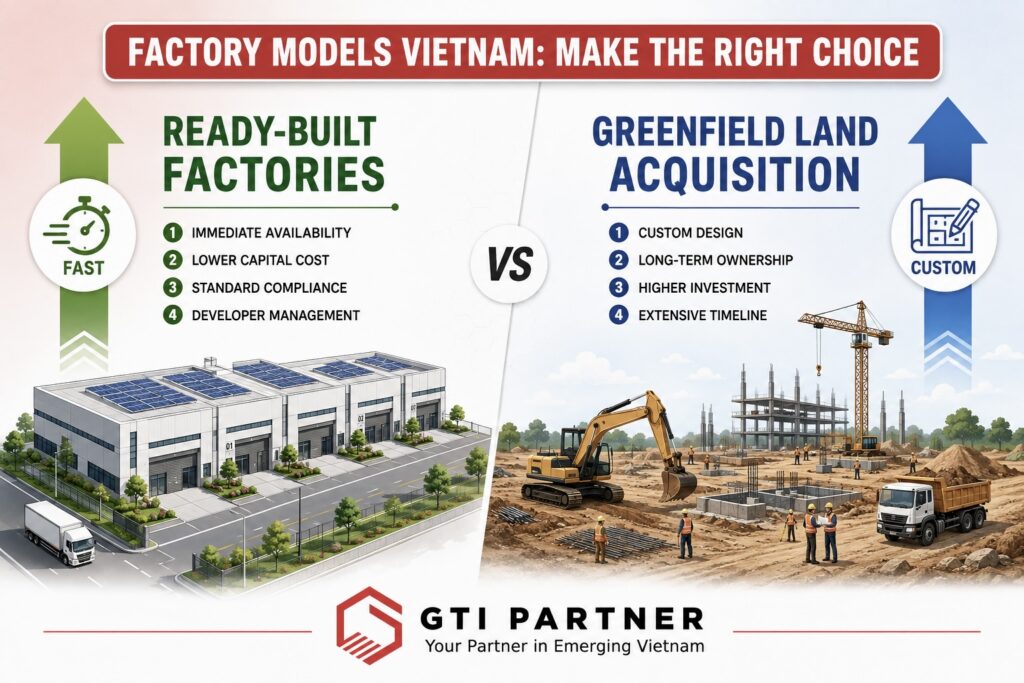
Ready-built factories vs greenfield land acquisition: Choosing the right model in Vietnam
Ready-built factories vs greenfield land acquisition: Choosing the right model in Vietnam When expanding manufacturing
Vietnam’s next generation of industrial parks: What foreign investors need beyond land and infrastructure
Vietnam’s next generation of industrial parks: What foreign investors need beyond land and infrastructure When
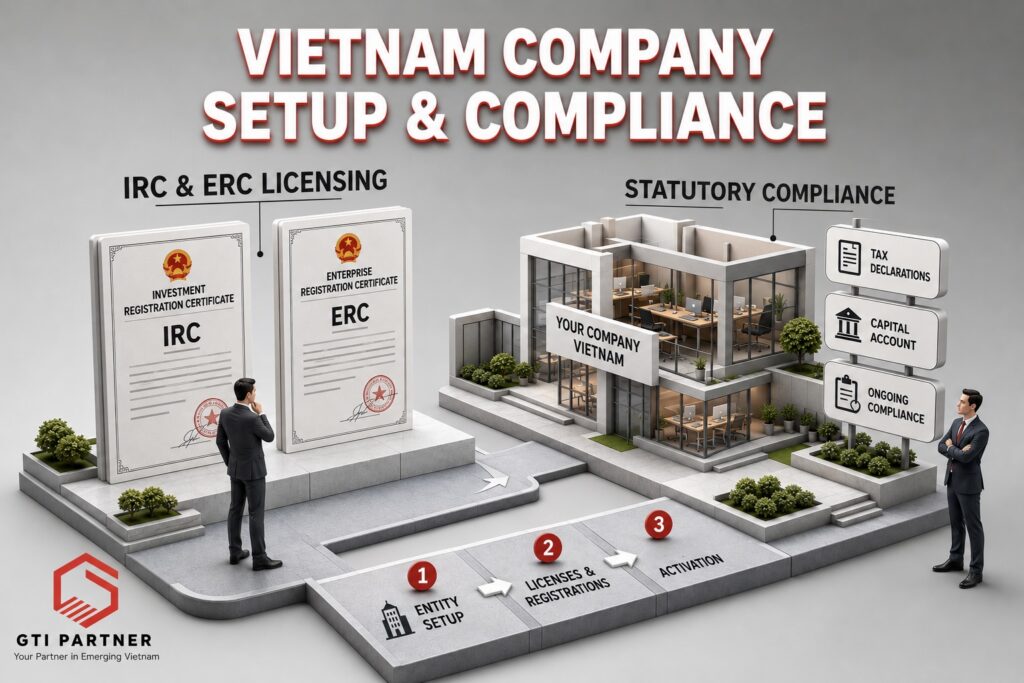
Company registration in Vietnam under the 2026 investment law
Company registration in vietnam under the 2026 investment law Starting a business in Southeast Asia
LLC vs JSC in Vietnam: Which Corporate Structure is Best for Foreign Investors?
LLC vs JSC in Vietnam: Which Corporate Structure is Best for Foreign Investors? Evaluating LLC
Vietnam Market Entry Strategy: 2026 Mistakes to Avoid
Vietnam business entry errors: 2026 Mistakes to Avoid Expanding your business into Southeast Asia requires